T h e S u d v a l k i a n W a r s
The nature of the region led to many rivalries and conflicts as the centuries unfolded, but none became as infamous and monumental, both culturally and both in consequences, than the two decades which history labels as ‘The Sudvalkian Wars’. A series of battles, misfortunes, and turmoil that bled into another, filling a goblet of blood that became known as the League Wars.
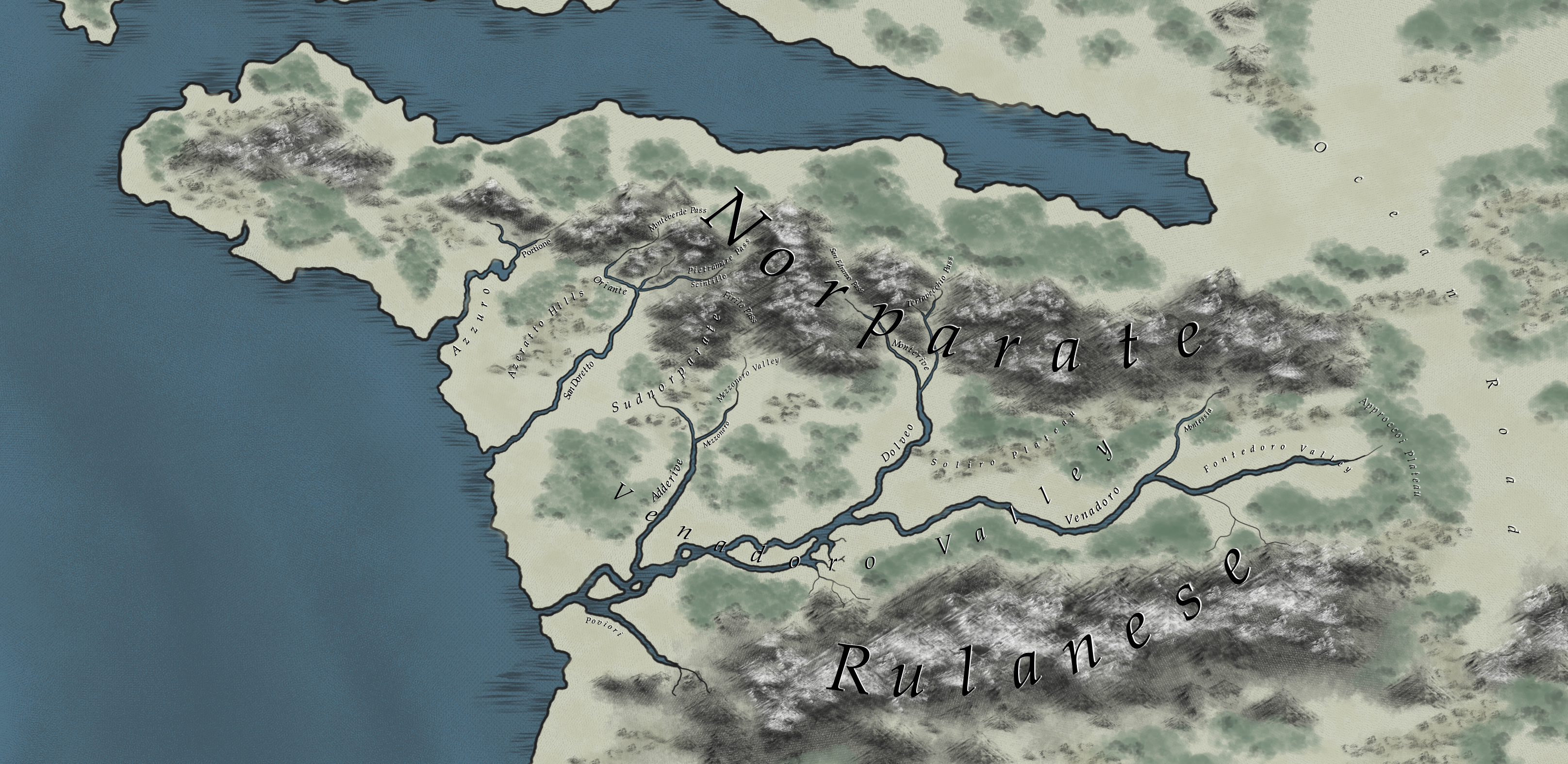
The recognized start of the entire Sudvalkian Wars were the War of the Bleeding Crowns (1606-1608) and the War of the Seven Lilies (1607-1609). These wars led to the formation of the League of Revanta in 1610 between Iscalda and Convanouva, which prompted Castariva and Arinomonte to form the League of the Golden Veil in 1611. These leagues, alongside the already existing League of the Bourbon Seal came to be the major players of the wars to come, as each side eyed up another, waiting for a favorable moment. The already tense situation worsened under what came to be known as the Harrowing Frost (1611-27), a shift in climate in the region that dropped temperatures, bringing harsh winters, bad harvests, and outbreaks of plagues. And even worse, the freezing of the Venadoro and other major rivers on long sections, completely stalling trade between city-states.
In 1612 the League of Revanta marched south, Iscalda seeking to recapture Il Bastione and lay siege to Castariva herself, whilst Arinomonte crossed the Firilo Pass to lay siege to Rivascura, belonging to Convaouva. Months later the League of the Bourbon Seal marched against Arinomonte in hopes of freeing up the territory lost years prior.
The League Wars had begun.
Contrary to later stages of the wars, the fighting mainly centered around sieges and armies chasing another, seeking decisive battles in hopes of forcing the other side to surrender. Battles such as Siege of Castariva, Folten-shallows, and Pietromare Pass were reminiscent of fights years prior, but the cold never lifted. As the years dragged on, the attrition led to the increased employment of mercenaries, and even levying up peasants from all around the lands, each year younger and younger soldiers filling the ranks.
As the continued bad harvests and lack of hands to tend to farms lead to outbreaks of famines, cities began to stockpile supplies en masse to feed their own population over the countryside, paying exceedingly larger sums and further deepening the problem. Furthermore the stalling of trade by the freezing of the rivers, the wars ravaging the lands, and the increased employment of mercenaries began to rapidly consume the coffers of the leading states, causing further breakdown of trade and delaying the payment of the hired forces.
In 1620, the starving and unpaid mercenaries of San Angenni, Arinomonte, Castariva and many other states defected and began raiding towns and villages for supplies, causing widespread destruction and devastation, and even dragging San Valerica and the Federation of the Silk into the wars, forcing them to raise their forces in the defence of their own. Soon the fighting states had to rely on pillaging as means to secure supplies for their armies, as no one seemed willing to strike peace.
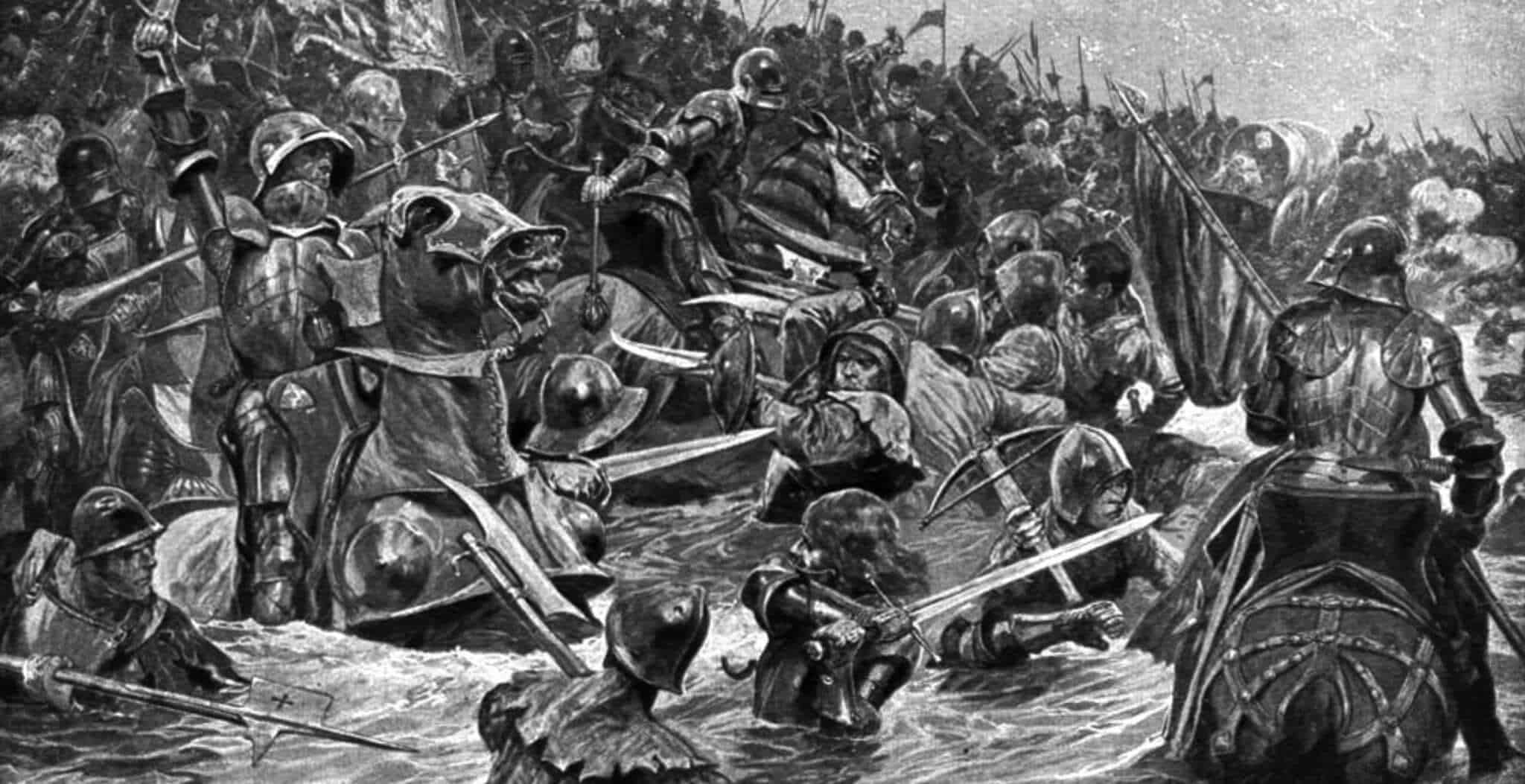
Battle of Towton by Richard Caton
The Battle of the Five Lilies
1622 is notable for two events: first, the largest and bloodiest battle of the entire conflicts, the Battle of the Five Lilies, and second, the Siege of Lirenzia by a Castarivan force. More commonly known as the Battle of Red Crossing between San Angenni, Arinomonte, and the Federation, the Battle of the Five Lillies was a three way battle. In a span of several hours, a combined force of mercenaries, levied troops, and professional soldiers, numbering nearly 70,000-80,000, suffered tremendous losses due to gambles, brutality, and even incompetence on both sides. So much so, that the Venadoro ran red with their blood. The defeated San Angenni army was forced to withdraw, whilst Arinomonte’s and the Federation’s fight remained inconclusive. The Siege of Lirenzia, meanwhile, is notable for the fall and burning of Lirenzia after the attackers lost command over their soldiers.
In 1623 San Angenni and Rivascura (again) were laid to siege by Arinomonte while Castariva lost control of Lirenzia after half of their fleet was burned by Porto Bianco’s defenders. Lirenzia fell under the occupation of rogue mercenaries, who continued their reign of pillage and terror. Seeing the turmoil, the region collapsing in on itself, and fearing the conflict may spread to other parts of the Empire, King-Emperor Rayan IV demanded all sides to cease hostilities at once, and began gathering the Red Fists to enforce his decrees, forcing his way through the Terravecchio Pass to see to it himself. The ravaged, exhausted and fully depleted states, even if they tried, would’ve failed at any attempt to resist these demands, most fighting ceasing inconclusively, with the last battles of the wars playing down outside the walls of Rivascura and San Angenni, with Arinomonte’s army being annihilated by the Red Fists. Some states worked alongside the King-Emperor to liquidate any remaining rogue mercenary companies that were still pillaging the lands or were exerting control over towns and forts.
Whilst officially the war with the Peace of Capo Corvo ended in a status quo ante bellum in 1624, conflict still continues as imperial forces declared any and all mercenary companies inside Sudvalkia illegal, leading to the Valley War with Montesenna...
P e a c e & R e b u i l d i n g
The war's devastation had rippling effects through society, culture, and even in other parts of the Empire as people fled the region. Many towns and villages to this day stand abandoned and destroyed, charred fields and hills stretching out and bodies scattered across the lands without soil to find solitude in. Becoming dependent in an effort to rebuild, most of the autonomy and privileges the rich city-states held were dreams forgotten, becoming further integrated into the Empire as a whole as officials began exerting imperial authority in the ruling of the lands. Further decrees were made, disbanding the leagues and preventing any conflicts that could lead to further bloodshed among the states.
It is estimated that the region lost one third of its entire population in two decades, with most being civilian and indirect deaths due the untended plagues and famines. Total losses are estimated to be 1,450,000-2,500,000 lives.
The biggest export of the wars was lives and soldiers. Those who fought left their homes or what remained of them disillusioned and devastated. Seeing their sacrifices as made for nothing, many became sellswords or mercenaries in other parts of the Empire, their lives and destinies forever reshaped to be that of war. This ‘Diaspora of Sudvalkians’ led to the formation of many Sudvalkian enclaves in imperial cities as people sought a new home in peaceful and stable regions…
|