“Creatures of the grave. Not allowed a true rest, they find themselves tormented in death, oft due to their inability to find peace at the end of their life. What a sick, twisted existence.”
Necrophages
{ Also known as “undead,” “blighted,” “the living dead,” etc. }
Travellers must not only beware the perils posed by man and beast, but also what becomes of them after death—for not all find rest. Scholarly scrolls and drunkards’ tales alike can attest to this, describing cadavers that rise and seek prey to feast on. Fresh carcasses stand in defiance of reason, uncaring of the grievous wounds that decorate their pallid skin. Even with the passage of time, long after their rotten flesh has thinned and exposed the bone beneath, they advance, entrails and jawbones swaying with each step.
Throughout the ages, the names for these entities have morphed, and even from culture to culture, the name often varies simply based on their appearance. Yet, one particular term has persisted through the ages, instilling fear in both villagers and caravan-goers alike: the necrophage, meaning “eater of the dead” in an ancient tongue. This was chosen for their enigmatic hunger, as it was observed that not only did necrophages prey on the living, but on the dead too. Breaking into crypts and coffins and tearing flesh from freshly buried bodies, they hunger endlessly, ravenous for more and more. Bereft of thought, feeling, or any true sentience, they shamble toward their next victim. It’s this undying, unrelenting hunger that drives them forth, clawing their way out of graves, wandering across abandoned battlefields without end.
The Blight
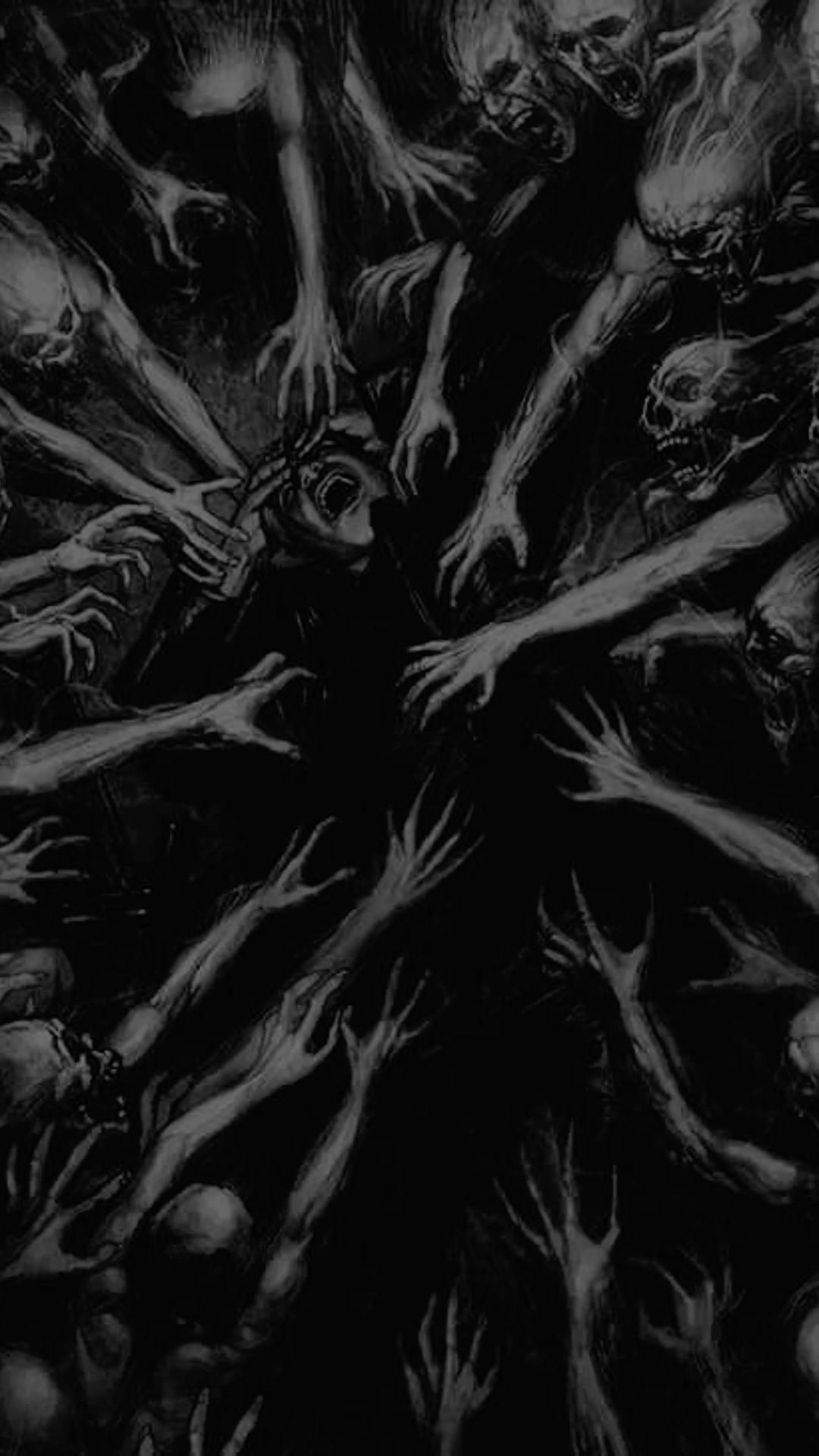
None can say for certain what spawned it or how to rid it from the world. It persists throughout the realm, deterred by neither the sweltering heat of the Ashlands nor the blinding blizzards of the Amafell mountains. Even the depths of the sea are not free of it: the Blight. Though illicit necromancy can also raise the dead to walk once more, it is this natural phenomenon that fuels the perpetual plague of undead. Not even are beasts free from this horror after death, as stories of creatures roaming long after death, still bearing their wounds, are all too common.
Should the dead try to claw their way out, almost no site of burial is safe. Even the most modest cemeteries are subject to this danger. But it is sites of atrocities and tragedies—mass plagues, bloody battles, and acts of intense violence—that become the most potent breeding grounds for necrophages. Corpses do not stir on their own. Rather, the innate anima present within every living creature can become corrupted after death, festering with negative emotions born from the circumstances of its passing. A peaceful demise in one’s sleep, or even the slow death from an illness, rarely gives rise to a necrophage. No, what spawns a necrophage is a death of cruel suffering. One of torment and pain that would corrupt its inner anima so deeply that it would seek to lash out against the living.
To Rest In Peace
Though an individual necrophage may not be much of a threat, its ability to spread the Blight to other corpses can quickly make for peril. It takes just one corpse among the dead to rise as a necrophage for a horde to quickly form. Battlegrounds left untended are the perfect spawning ground for necrophages. A proper burial can be enough to prevent this, though: coffins are typically reinforced enough to prevent something from breaking in or out, and buried much too deep for a necrophage to dig to or from. However, proper funerals are costly, more than justifiably so for much of the realm.
To that end, unique burial traditions have developed over many millennia that suit the respective places they are born from, attempts to curb the spread of the Blight in more reliable ways: the Valks are known to burn their dead to ash, while Stonerunners leave their dead to be scavenged and naturally decay under the stars. During wartime, corpse-haulers may also be employed: people that take on the unpleasant job of cleaning up the dead and giving them proper burial rites. Although the job is temporary for most, during times of plague, famine, and other mass casualty events, corpse-haulers are soon to follow. As well, those carrying a Fable’s blessing may take extreme precautions and consecrate gravesites, leaving offerings and asking for those Fables to watch over the body.
Appearance
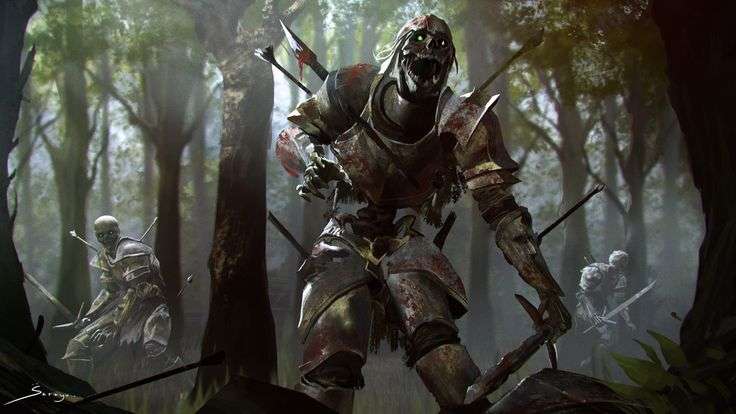
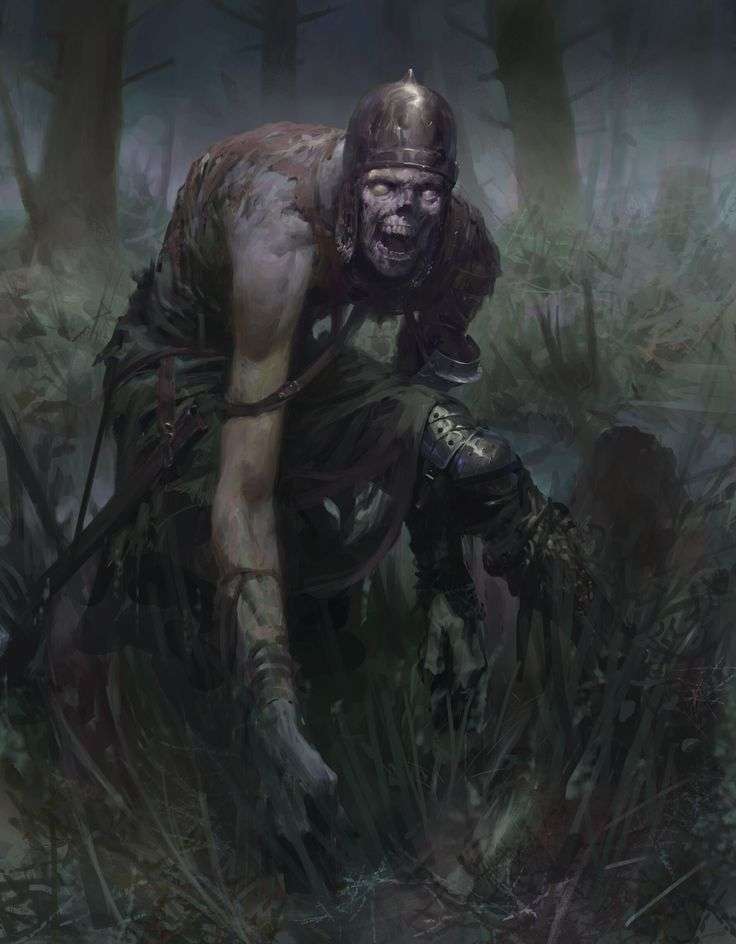
Though oft little more than rotted corpses, shambling like the marionettes of a poor puppeteer, necrophages tend to adapt to the environs of their ‘resting’ place. Fallen warriors don the armour they were slain in, and pick up the same armaments they and their comrades did in life. With iron grips and chanced, graceless swings, they roam, seeking retribution. Unlucky rangers and their bestial prey become enveloped with the undergrowth they bled out in, their bodies becoming more robust with bark and bough. Vines weave in and out of their cadaverous forms, adorned with the flora and thorns they were submerged in. Similarly, seaweed, corals, and even marine life embed themselves in the pallid, bluish flesh of the drowned.
Beneath those specificities, though, necrophages are ultimately just corpses. Empty eye sockets, soft tissue rotted away, a state of general disarray—these are the qualities of the reanimated. “Fresher” necrophages appear akin to a body post mortem, but quickly lose flesh as they actively decompose. This leads to an array of appearances, even near-skeletal if a corpse is left to wander for long enough.
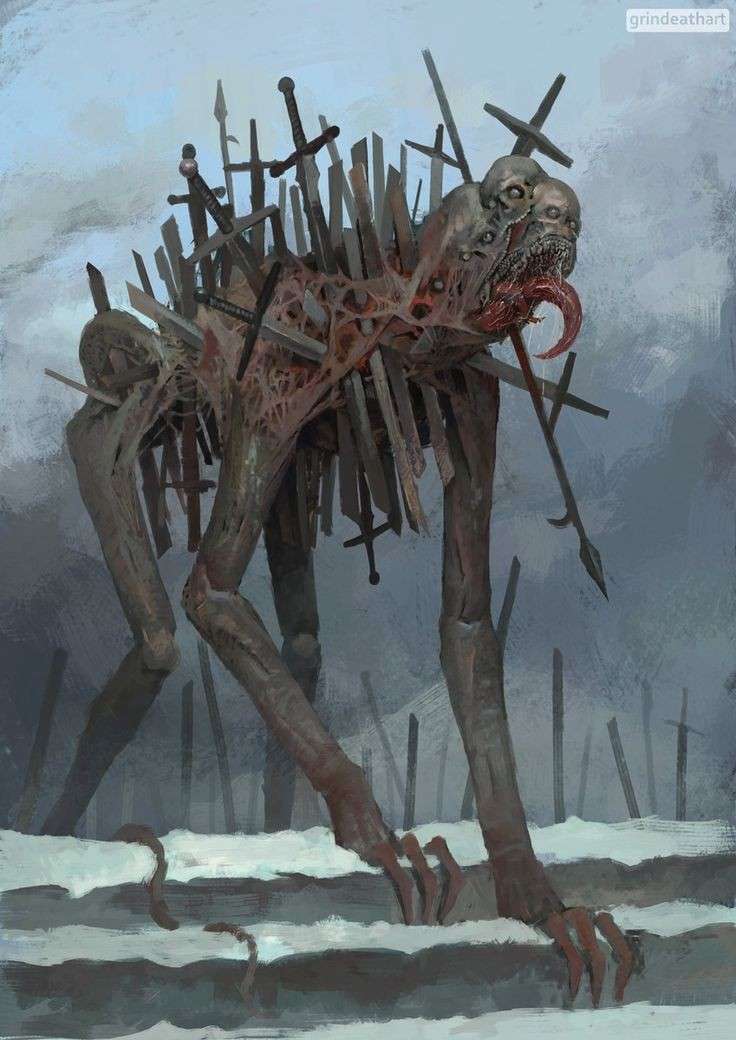
Scattered rumours exist that many don't dare to believe, of untold powers and ghastly, chilling sights. Whispers of sorcerers who trifled with volatile, fickle magic only to end up torn asunder by their own spells… but, of course, refusing to stay dead. Their mastery of arcana lingers in their husks, even if the souls inhabiting them had long since left. Worse yet – borne out of mass graves of soldiers, great hulking monstrosities that lumber through the night, composed of countless corpses whose flesh and bone have melded and become one.
Behaviour
When charting a course, there are certain locales that veteran travellers know to steer clear of, lest they cross paths with roving hordes of undead. Rising from battlefields or the rubble of burnt homesteads, necrophages wander tirelessly in search of corpses to devour. Or more preferably, living mortals, so that they may meet the same fate; for flesh is to be consumed, whether it be torn from the living or from the dead. Some stories also claim that necrophages lie in wait – dormant yet vigilant, within crypts or among nature. Unmoving for epochs, hungering for the heedless. In all things, they are motivated by it, this hunger. Necrophages cannot quite ‘think’ or form thoughts like mortals, as they are not sentient beings. Yet still, enough mindless undead together can be the end for even the most intrepid warrior.
Written by Electric, Tidepod, and ShinyBlue