
The trusty steeds and stubborn mules of our stories.
OOC: The breeds listed below are simply the most noteworthy – but there can be vague ‘off-brand’ ones within the same categories located elsewhere. For example, destriers (extremely expensive warhorses) can exist in the North and Fallstone, but won’t be the same renowned, high-quality breeds of Valkia. Same for workhorses – Fallstone doesn’t have a monopoly on them, they just happen to have the strongest, most enduring ones.
Midlands Charger
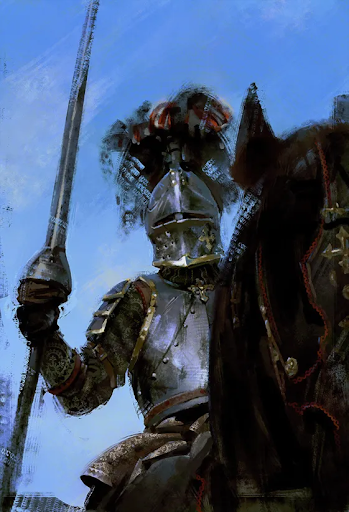
A good horse carries a man through battle. A Charger carries him home... it asks not where the road leads, but how swiftly it may carry you there.
A fundamental element of the Midlands knight’s arsenal. Bred for strength and trained for warfare, it is one of the few horses that can easily withstand the weight of a fully armoured rider whilst also being clad in the heavy barding itself. Contrary to popular belief, they do not tower over other breeds, as the mighty draught horses in a farmer’s field easily outclasses them in height. They are steadfast, however, and capable of bold, thunderous charges towards the opposing army. Their resolve is famous across the world – but has been known to waver in the face of a disciplined enemy formation, thus they must be deployed strategically so that they can be used to devastating effect.
They have contributed to many military victories throughout history, and play important roles in the idyllic folktales that arose from these otherwise gruelling battles.
Roughly 14-15 hands tall, with weights reaching over 1,000 lbs. Tend to have coats of chestnut, bay, dapple-grey with hues of iron or silver. Occasionally, pure black and white – a sign of prestige.
Imperial Destrier
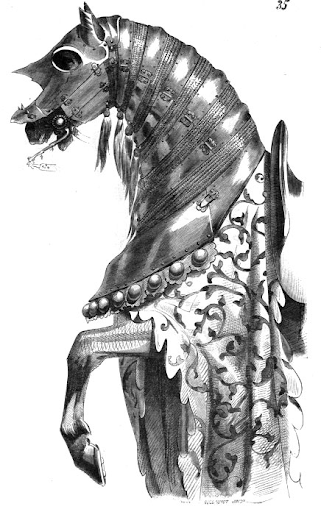
There are horses that bear a rider, and there are horses that bear a kingdom. An Imperial Destrier knows neither fear nor retreat, and in a knight's arsenal, this steed is as iconic as his shining, sharpened sword or Valkian Steel suit of armour.
Of unrivaled preeminence, even amid all of the King-Emperor's legions, stables, and estates. Records of their origins have been lost to time, but Imperial Destriers are said to come from a long line of exhaustively chosen warhorses of the highest calibre, perhaps from even before the birth of the first Nua Sidhe kingdoms. Immune to the sight of fire, the scent of bloodshed, the sound of agony – almost apathetic to the very notion of death – this beast is truly an instrument of conquest.
Knowing no equal, this fearless steed contributed to Mariza's rise above its neighbours, enabling Valkia to carve out one of the largest empires in the known world. Seldom found outside of the possession of affluent nobles and the greatest knights, this is a mount essentially reserved for the upper echelons of society, as its price sometimes reaches values eightfold that of an ordinary horse.
Around 15-16 hands tall, weighing roughly ~1,200 lbs, with an appetite to match. Feeding these steeds costs a fortune of its own. White patterns along the face and legs are possible, but rarely on the body, as this is seen as a sign of more ‘common’ pedigree.
Amafell Garrons
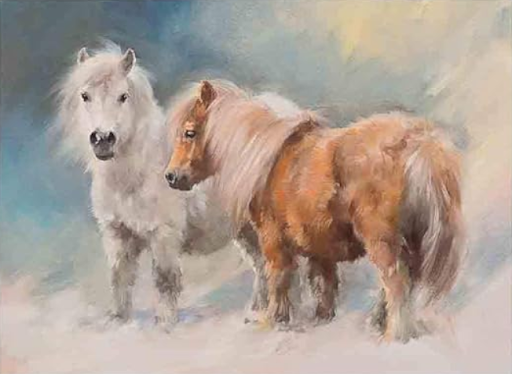
When the road ends, the Garron does not. Trust them with your provisions, your burdens, and even your life.
A hardy, cold-resistant horse of smaller stature, at ease in the rough landscape and howling winds of the Grandmother Mountains. Although too small to support the mass of the Greatlings, it is deceptively strong, and thus mostly used as a packhorse. Carrying heavy cargo is a perilous task in the steep slopes and uneven footing of the highlands, and since many beasts of burden are incompatible with the region’s weather, Amafell Garrons prove to be invaluable travel companions. Although they have accompanied the Stonerunners tribes for generations, no one could say for certain which confederacy they originally hail from.
They possess long shaggy manes, thick coats for winter, and feathering (long silky hair above the hooves). An ideal gift for children too, exported to foreign lands for their docile temperaments, fuzzy fur, and apprentice-friendly height.
They often have coats of grey, buckskin, white, dun, and roan, quaintly matching the palettes of their stone surroundings. Other than typical feed like hay and grass, they also supplement their diet with hardy pioneer plants like ferns, lichen, and moss. Can subsist on less than most other breeds, being only 10-12 hands tall at 800 lbs.
Fallstone Draught
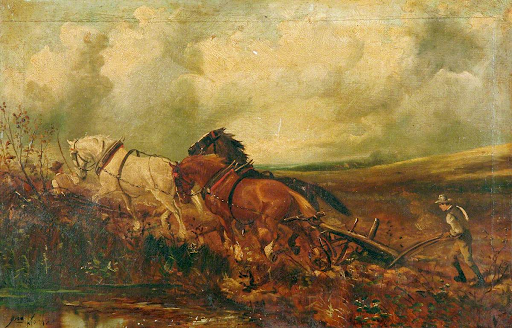
When the burden is heavy and the work hard enough to make a dozen horses break, there is no finer companion than a Fallstone Draught. The Valkians would have taken and bred these as warhorses already, if not for their reputation as "gentle giants."
A thickset, tall, and powerful horse essential to the Falstoner lifestyle, used for ploughing their golden wheat fields and pulling their caravans across the vast distances of the Faded Steppe. They are the best workhorses across both continents and the isles between – sometimes being exported to haul siege equipment and war machines. Despite their imposing physique, these horses have formidable patience; any intimidation factor they might possess is belied by their docile personalities. They are also coveted by the raiders of neighbouring Stonerunner tribes, as this breed is one of the few sturdy enough to bear a Greatling rider. They aren't usually deemed ideal war mounts, however, as they tend to be gentle giants.
White facial and leg markings are prevalent, as are various pinto and skewbald pattern. All shades of brown, sometimes gray, black, white. Standing at 16-18 hands tall, with weights ranging between 1,500 and 2,000 lbs.
Gudaha Courser
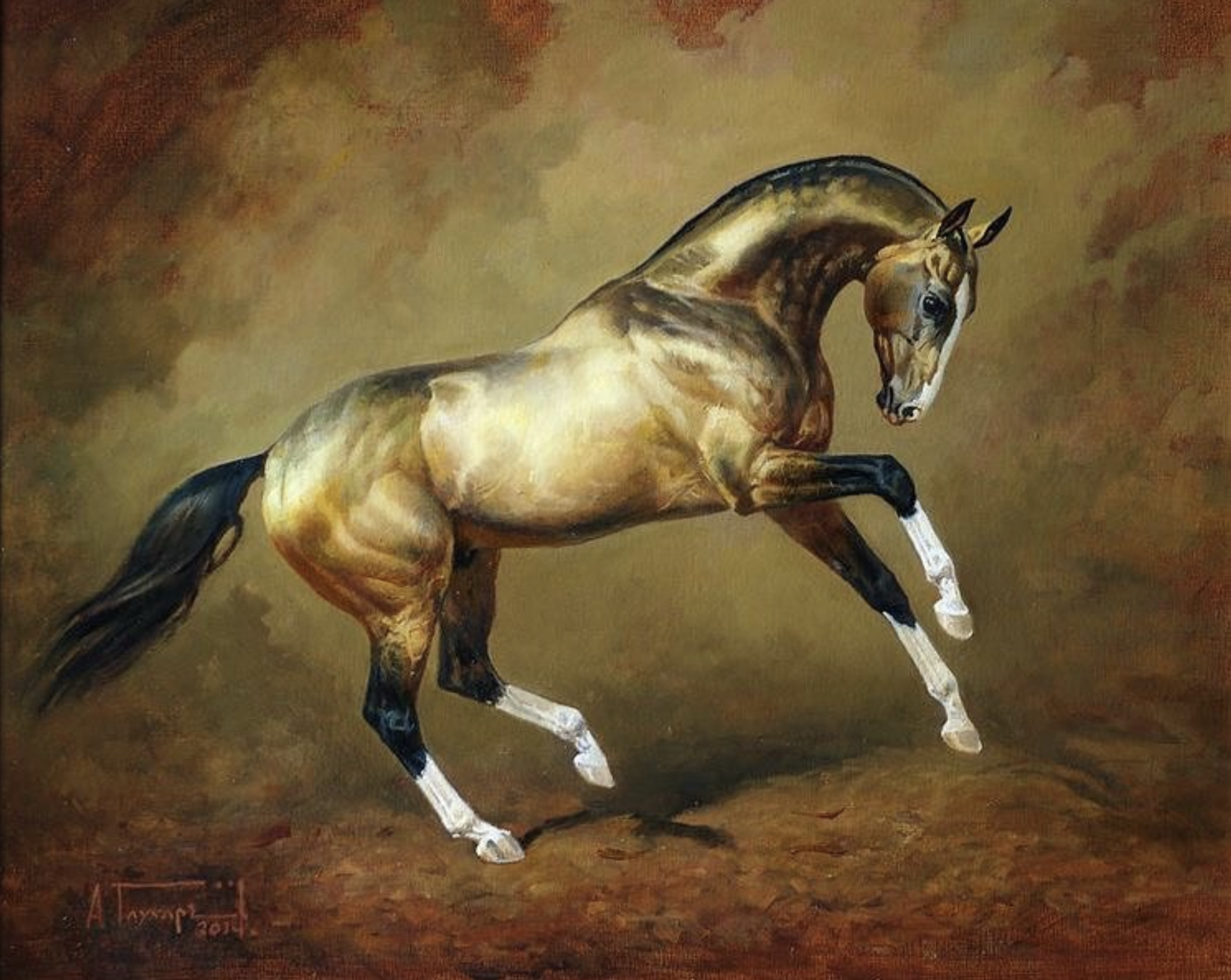
There's a Mistan tale, that Queen Emerra of old promised a reward to a knight of her keep for his undying loyalty: a bolt of Mistweave, or one gold-coat Courser. Yards upon yards of a fabric coveted throughout the realm, or single horse whose very origins is the stuff of Fables and mythos. It's said the weight of the choice drove him mad.
Within the arid highlands beyond the Pearl Coast, the mythical Gudaha horses reside, closely guarded by the nomads of the region. A rare sight, as camels are preferred for overland travel. These mounts are known by outsiders as ‘sand steeds,’ famed for their unrivaled grace and speed, and fiery tempers. These horses have slender compositions and sleek, almost reflective coats of pure black or white. Every few years, one is born with a unique trait, a surreal metallic sheen that – when paired with a lighter-colored coat – makes the horse appear like they are wrought of gold or silver. Storytellers and scholarly tomes dispute how they came to be, but it is hard to discern truth from legend.
Can survive on surprisingly little. At times, nomads mix butter and eggs into barley to prepare for long treks. Any barding (horse armour) or heavy rider will greatly hinder the steed’s highly prized galloping speed and aggravate it, thus making it more apt for racing, light cavalry, and skirmishing warfare. Roughly 14-15 hands tall and weighing around 950 lbs.
Outlands Chaceor
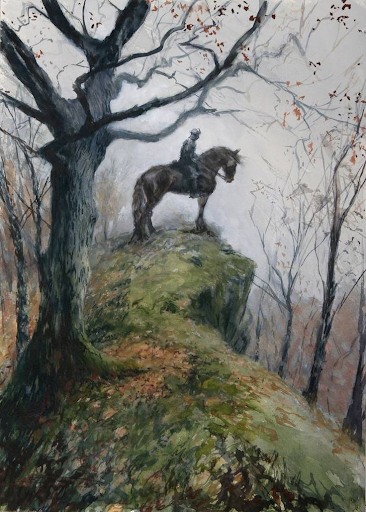
A good horse need not be the strongest, nor the swiftest. The best in any one task, and it'll fall short in all the others. The Northerners know well by now, though - an Outlands Chaceor, well, that one won't fall short at anything.
Throughout the fractured kingdoms of the North, knights and their counterparts seek a mount capable of a great many tasks. A horse must be agile enough to pursue game in the uneven terrain of the forests, with enough strength to carry a lancer’s equipment when riding against a rival state– or Valkian conquerors. This versatile breed, especially in the wake of recent conflicts, is held in great esteem for its swift gallop and endurance. These traits are crucial for battlefield maneuvers, or delivering letters too important to the war effort to be entrusted to a carrier bird. An ideal steed for medium cavalry, messengers, and travel in a yet untamed land.
Bred and trained for battle and the hunt, thus strong enough to withstand the burden of a knight in full harness or a forester with camping gear. Armouring the mount would strain it, tiring it out prematurely. Light barding (horse armour) is preferable, such as caparisons or chainmail over the vitals. All variants of bay, chestnut, and darker buckskins and duns. White facial markings, as are 'black points' (darker coat towards the mane, tail, lower legs.) About 15 hands tall, its mass rarely reaching above 1,000 lbs.
Palfrey D'Auclair
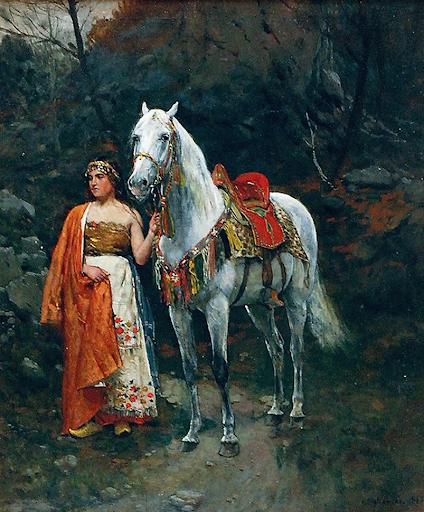
In Valkia, there are horses bred for war, horses bred for work, and horses bred simply to be admired. The Palfrey D'Auclair has mastered the latter.
A refined parade horse for those with more sophisticated tastes, originating from the idyllic countryside manors and palace courtyards of Auclair. With long, braided manes and fastidiously groomed fur, they are a display of splendour and aristocratic elegance, making for striking sights in ceremonial processions or equestrian shows. Their gait, through breeding and training, is so smooth that one can sip from a cup of tea or write poetry while riding atop it. Intelligent, it takes quickly to tricks that one teaches it, such as kneeling and bowing its head. A highly fashionable mount for noble ladies and princesses, with a price befitting this status, almost equal to that of a destrier. In times of war and hardship, however, their discipline and physical aptitudes are put to effective use as reconnaissance mounts.
Also known as zelter, haquenée, palefroi depending on the Midlands’ local variant of Common. Typically white, cream, champagne, light dapple-gray – or light chestnut with flaxen manes. They stand around 14 hands tall, weighing near 900 lbs.
Skye Prancer
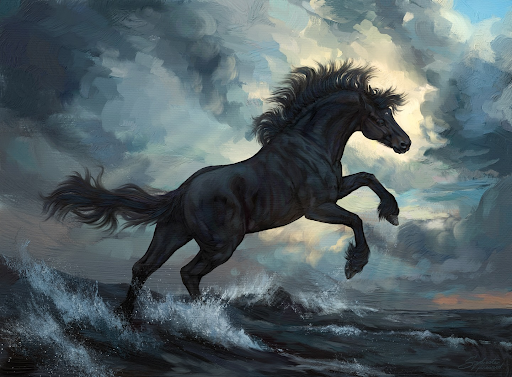
They say the sea taught the Skye Prancer to dance, and the wind taught it to run.
Hailing from a land brimming with verse and myth, this horse displays traits seldom seen elsewhere; outsiders are usually wary and incredulous of such rumours until they’ve witnessed it for themselves. Within the storied islands of the Mistan, the Skye Prancer frolics almost rhythmically across verdant hills, and even strays into the shallow waters by the ocean to gnaw the kelp and seaweed off of the rocks. Their semi-feral populations wander along the border between Mistan settlements and the wilderness, watched over by wary herdsmen and envied by wishful-thinking squires. These are the unruly companions of the wandering Knight Nauticals, wild long manes flowing in the seaside wind as they leap into the maws of peril.
Black, deep smoky greys, occasionally white or light dapple-grey. And, rarely, white markings such as stripes down the face. Roughly 14-15 hands tall and weighing anywhere from 900 to 1,000 lbs.
Bogstrider
A popular companion among Walljacks, bogstriders have not become the darling steed of choice without good reason. Able to carry much more than just themselves across the sucking, leech-infested mud of the swamplands, one could do much worse than having a friend in one of these gentle giants.
The result of an isolated population of horses, the bogstrider can look quite similar to one at first glance. Closer inspection, however, reveals a few features that set it apart - the most notable of these would be its long, tough, and flexible snout that is uniquely suited for scouring algae from the buttressed trunks of the surrounding trees, or the benthic plants that remain stubbornly rooted within the muck of the wetlands. To help them traverse their favored grazing grounds, bogstriders’ feet - each with two toes - are circular and wide with cushioned pads to help spread their weight across the mud, preventing them from sinking and becoming stuck.
It is for their unique biology and phlegmatic nature that bogstriders are often employed by Walljack merchants and caravans to schlep wares through the swamps of the Southern Reach. It’s rather common for Walljacks and bogstriders to form strong bonds with one another, remaining loyal and dependable through the oft treacherous swamplands. One could go so far as to say that these beasts are representative of the beliefs found among the Walljacks; of loyalty, tenacity, adventure, and commerce.
Written by Chish, contributions from Reedie, Book, and electric.
Oldblood Estray
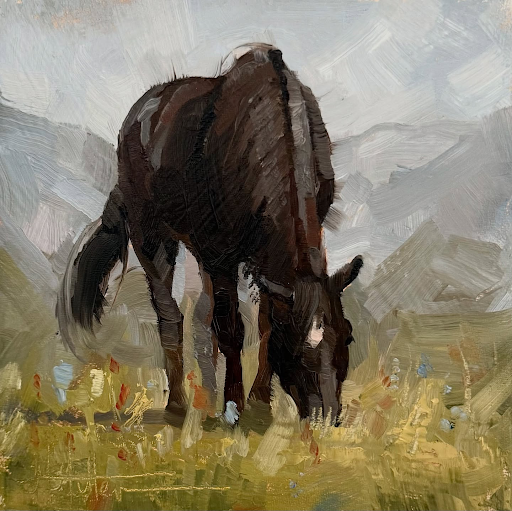
The Aedell left no kingdom behind. Only ruins, old blood, and more strangely, horses upon the hills.
At times, upon the rolling hills of the Southern Reach, one may bear witness to the furtive herds of horses, a pretty sight for most – a testament to the region’s troubled past, for the scholarly inclined. Although none can say for certain how the Oldblood Estrays came to be, it is generally believed that they are descended from the Aedall’s mounts, once used for incursions into the Nua Sidhe’s border provinces. Since this civilization’s mysterious disappearance, these steeds have been left to wander the wilds, unkempt yet maintaining their beauty, with lush manes and the occasional feathering (hair above or over the hooves). As they share key characteristics with Mistan’s light prancers and heavier Valk warhorses, it is theorized that they were selectively bred for their perpetual conflict. Or they are merely the offspring of herds stolen during raids, perhaps.
Greatly varied colouration and assorted features – black with long manes and feathering (hair above the hooves) are rare but increasingly coveted by the warrior class, emerging from the nascent city-state of the Spire. Can bear middling armour. Roughly 14-16 hands tall and ranging in weight from 1,000 to 1,200 lbs.
Ashlands Sumpter
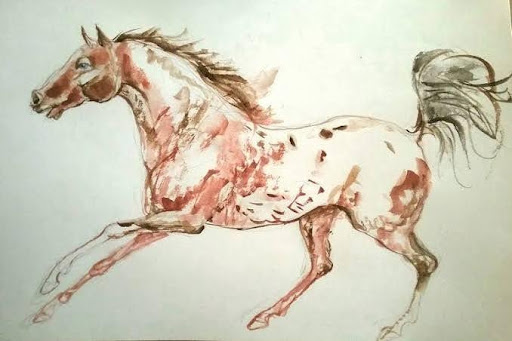
Born of ash, raised by fire, and stubborn enough to survive both. It's no surprise that these steeds are as tenacious as the Fireborne who managed to tame them.
A resilient, compact horse that dwells on what little hospitable land there is in the Ashlands, the cradle of life clinging around the waters near Bastion – one of the few large animals that can survive in such an unforgiving environment. They are the result of stubbornly dedicated herdsmen, whose higher calling compelled them to raise trusty companions no matter how difficult it may be. They are easily recognisable by the leathery white coats adorned with scattered spots of auburn, resembling embers floating away from a blaze, or lakes of magma upon an adventurer's map – a pattern rarely seen outside these lands. Reflective of the harsh environment around them, Ashland Sumpters are sandpaper-like to the touch and sport a sparse mane and tail, as hair would only be a flammable hazard in the volcanic wastes. Their hooves, too, are uniquely adapted to scale the treacherous and crumbling cliffs. With careful care from the Fireborne stablehands, these obstinate beasts can be raised to brave the wastelands and accompany warriors on their expeditions.
Other than grazing on the fertile volcanic soil, they are adapted to feed on moss and the scarce fungi and hardy flora sprouting from the craggy ground. They bear ‘Appaloosa’ or ‘Manchado’ type patterns, stand roughly 11-14 hands tall, and weigh 800-900 lbs.
Sharuulan Tarpan
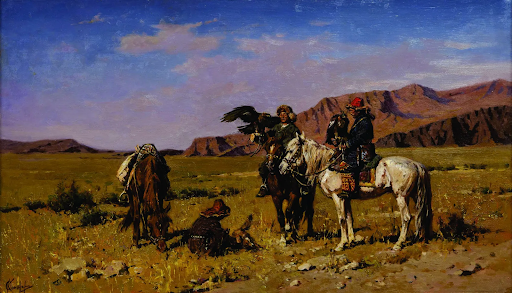
The south was warred not by the swiftest horses, but by those that refused to stop. They are plain of coat, plain of stature... and extraordinary in all that matters.
An unremarkable sight at first – small, common, devoid of any interesting marking or coloration – yet deceptively useful to military campaigns. Adaptable and resilient like no other, they can be put to march for days despite being given very little food or water. This, along with their stamina, grants Sharuulan armies incredible mobility when warring with their foes to the south. Astride these beasts, the Adarkhins and past dynasties have trampled many armies and kingdoms, securing their legacy in the chronicles of Ko’ram.
They can live off the land, and require very little food given their size. Vast assortment of shades are possible, but Sharuulan Tarpan tend towards some form of brown, such as sandy bay, dun, and buckskin. Roughly 12-14 hands tall and weighing around 700-800 lbs.
Bó
Battle was upon my clan as the moon rose above Gakaiyō. Where once we believed our defenses impenetrable by cliffside nature, we had not imagined our foe so fearless as to tame the beasts thought untamable. As they leapt from height over our walls, we knew it was over before the beasts' teeth drew close.
Cavalry are vicious in Ko'ram, in no small part due to bó. Resembling mostly a horse, these beasts have clawed feet and sharp, tiger-like teeth. Most breeds also have horns of varying number, some none at all. Adapted to their mountainous regions, the carnivorous bó are apex predators, capable of feasting on anything. Domestication is difficult, with even the most well trained of bó disloyal should a meal be skipped, thus earning the apt phrase "one is never late feeding their steed." Bó are infamous for their unique noises, which are akin to the rolling or beating of drums.
Written by Wake.
Written by Tidepod and Electric.

