Home
Hello traveller, welcome to the world of Avalore ...
The year is 1642 A.C., 50 years after the disappearance of the Aedall, a group that once claimed the Southern Reach.
Now, in their wake, the land is ripe for the settlement of the new: will it be a land of strife and conflict or one settled with peaceful co-existence? Will the disappearance of the Aedall be explained? What exactly is this 'Spire' all about? The land, people, and time have answers — it is up to you to discover them.
The Compendium contains the core lore about Avalore's setting. For extended lore about places, beasts, and history (including many community contributions!), visit the Expanded Lore subforum.
Quick Reference
Full list of pages is on the left!
Races
| HUMANSalso known as Nua Sidhe | ARSA SIDHEalso known as Elves | GREATLINGalso known as Giants | FEY-TOUCHEDalso known as Fey-Blessed/Cursed |
| VOID-TOUCHEDalso known as Voidborn | HALF-RACES |
Cultures
| VALKSMerchants who dominate through trade, exploration, and fashion. | WALLJACKSSavvy frontier-dwellers living in the swamps south of The Wall. | FALSTONERRural farmers of the east, shaped by a past - and present - with the Fey. | AEDALLIsolationist Arsa Sidhe that used to inhabit the Southern Reach. |
| KORAMIA warlike society of (mostly) Arsa Sidhe from distant rocky shores of the far-west. | MISTANIsland-dwellers renowned as sailors and with a mythical relation to sirens. | STONERUNNERGreatlings of the mountains with a pride in sport and a matriarchal society. | FIREBORNEA pact of Greatlings and Fey-touched guided by a dragon spirit in the ashlands. |
Important Places
| SOUTHERN REACHThe main setting of Avalore. | THE SPIREThe main settlement of the Southern Reach with a mysterious past. | THE WALLThe Wall of the Valkian Realm that separates the Reach from the Midlands. | MAP OF THE WORLDA helpful map of the known-world created by Kalibri_ |

Human
(click to enlarge)
"What a piece of work is a man, how noble in reason, how infinite in faculties, in form and moving, how express and admirable in action, how like an angel in apprehension, how like a god!"
- Hamlet, Act II
The modern people known as Humans have their origins in brimstone and fire. Once the brethren of the Arsa Sidhe, the ancestors of humanity diverged from their counterparts as they toiled in the fields and sweated in the mines. At first calling themselves the Nua Sidhe, meaning 'new elves' in Ancient Tongue, their destiny became their own when they brought the rule of the Arsa Sidhe to an end in The Collapse.
Now spanning most of the known world, humans are hearty, adaptable, and intelligent in form, though often susceptible to curses and other ails of the spirit.
Physical Characteristics
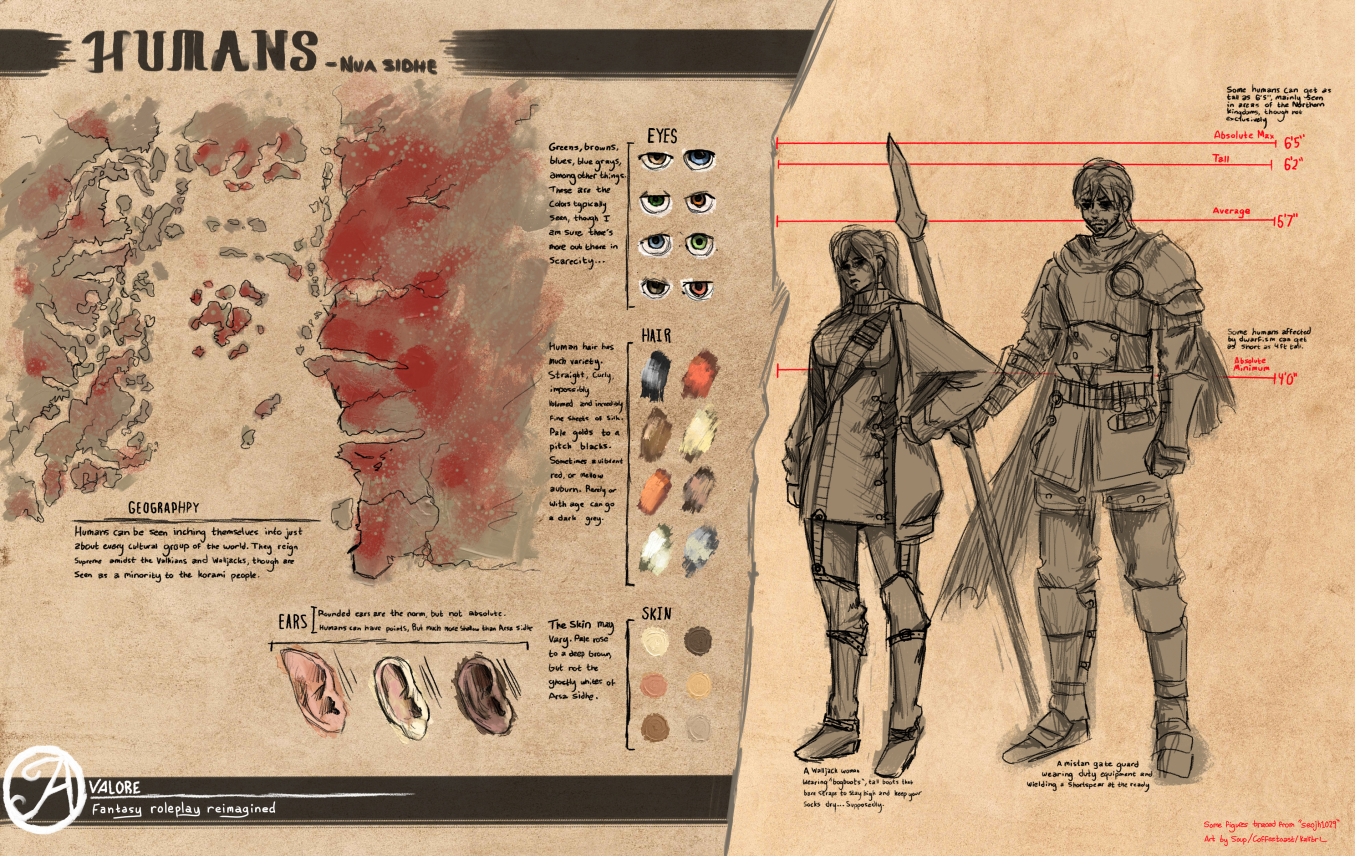
Humans are perhaps some of the most varied races in the world, coming in a wide variety of sizes, shapes, and builds. Those with dwarfism may be as low as 120cm (4'0"), though some, especially in northern regions, can grow as tall as 195cm (6'5"), especially among males. A human's skin can, much like the Fey-Touched, range from a pale rose to a deep brown, though never able to reach the almost ghostly whites that their Arsa Sidhe brethren can attain. Their eyes can vary between greens, browns, or blue-greys, depending on heritage.
Though unlike the Arsa Sidhe most Humans have rounded ears, this is not a universal truth: some still have pointed tips, albeit no-where near the extreme of some lineages of their ancestors.
Humans tend to have fairly rounded features, including the ability to gain a large amount of muscle mass, though even the strongest human would pale in comparison to a Greatling.
Finally, human hair can range from straight to curly, and from a pale golden blonde to a pitch-black.
-
The average lifespan of a human is 100 years, though given their history as labourers, many were historically lucky to make it to their 60th birthday. They age fairly steadily, with appearance generally relating to their age.
Popular Cultures
Though Humans tend to find themselves inching into just about every cultural group of the world (e.g. the Falstoners and Korami), there are few prominent ones where they reign supreme:

Arsa Sidhe
(click to enlarge)
"For never were there a race so elegantly beautiful, enlightened in thought and meditation, and yet unable to foresee their own fate."
- Anonymous Historian
The Arsa Sidhe (ar-suh shee) ('Elves' in Common tongue) have at various times in their history been the champions of all the realms, on the brink of extinction, and every stage between. Suggested to be the first intelligent life (according to them, of course), the Arsa Sidhe are gifted thinkers, with a strong sense of harmony, balance and the arts.
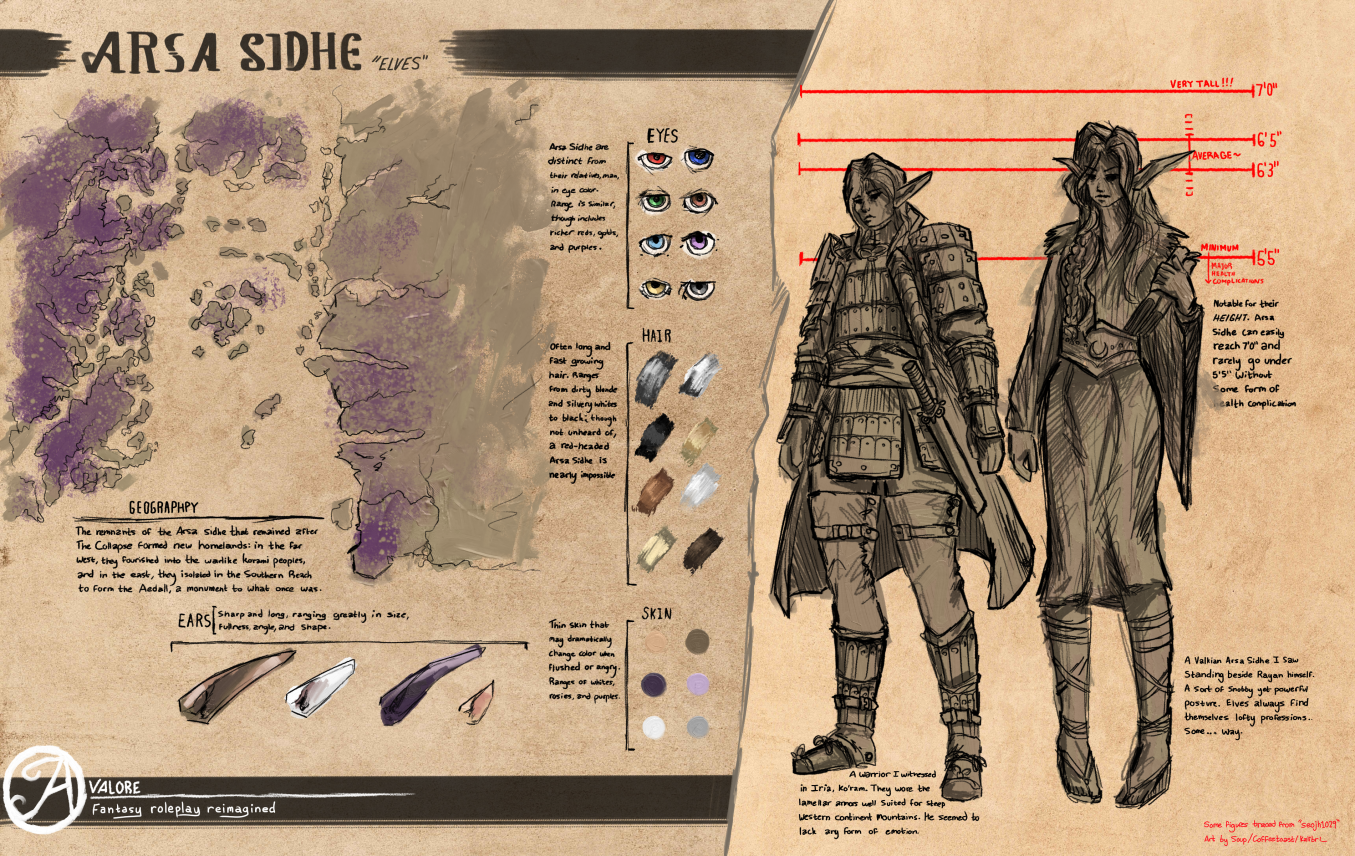
Once rulers of most of the world in a millennia-spanning regime, the flaws of the highest of the Arsa Sidhe brought about their downfall in The Collapse, leaving much of their people in shattered ruins. As the dark age that followed began to cool and grudges began to settle, the few remnants of the Arsa Sidhe formed new homelands: in the far-west, they flourished into the warlike Korami peoples, and in the east, they isolated in the Southern Reach and formed the Aedall, a monument to what once was.
Physical Characteristics
The Arsa Sidhe are notable for their height, which while not reaching the heights of the Greatlings, can easily span as high as 214cm (7'0") and rarely goes below 165cm (5'5") without some sort of health complication. Arsa Sidhe are also distinct from their relatives the Humans in eye-colour, which while having similar form, come in richer reds, golden-yellows, and purples.
The Arsa Sidhe have a relatively thin skin, so much so that their faces often will dramatically change colour when they become flushed or filled with rage. While more flexible than other races, they are less adept at taking slashing hits than their thicker relatives as a result. Their skin can resemble that of their Nua Sidhe (human) relatives, while also coming in varied shades of purple, grey, and even stark white (at greater risk of burning in the sun).
The Arsa Sidhe are noted for angular features, with thinner frames (both in shoulders and hips) and generally less muscle mass, though this is not a universal truth. Finally, the Arsa Sidhe, much like the Fey-Touched, tend to have long, fast-growing hair ranging from dirty blonde and silvery whites to black; though not unheard of, a redhead elf is nearly impossible.
-
The average lifespan of the Arsa Sidhe is around 140 years, with them maintaining a relatively similar appearance from their mid-30s to their 120s, at which point they rapidly age in their final years.
Popular Cultures
Though Arsa Sidhe are populous in the modern world, they tend not to be a travelling people, keeping mostly to their own. Still, it is not unheard of to find them in foreign lands, especially as artists or tailors. The prominent Arsa Sidhe cultures are:

Greatling
(click to enlarge)
"My skin will not yet crack, nor will my bones break. I am the mountain made mortal, and I will not crumble."
- Greatling Mantra
One of the truly ancient peoples of the world, there has never been a race more able to tame the harshest environments then that of the Greatlings who most commonly are found in mountainous regions. With a towering height and prowess to match, their enduring clans have adapted to their unique homelands, with thick skin and a resolve of iron.
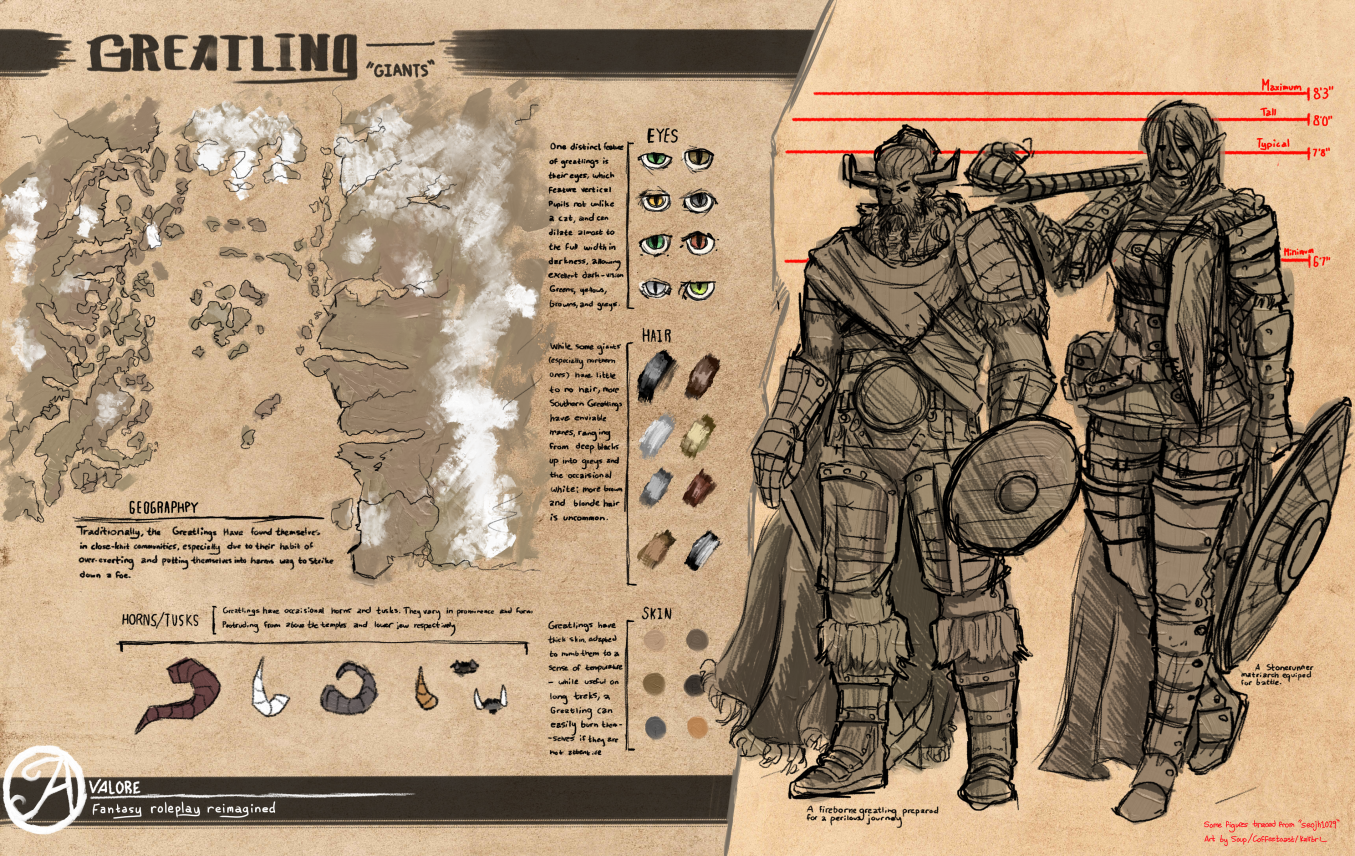
Traditionally, the Greatlings have found themselves in close-knit communities, especially due to their habit of over-exerting and putting themselves into harms way to strike down a foe; despite this, they have long been unwelcome of outsiders. While for centuries the Greatlings have been known to most other races and outsider cultures as raiders and sworn enemies, not all fall into this mold: most notably, the Stonerunners of the Southern Reach have used their prowess in the mountains to serve as tradespeople, and the Fireborne of the north have a strong and interwoven history with some Fey-Touched.
Physical Characteristics
The most distinguishing feature of the Greatlings is, unsurprisingly, their height: ranging from 200cm (6'7") at their lowest to 250cm (8'3") at their highest, the Greatlings are the tallest race on the continent, though generally have a body-to-mass ratio similar to that of humans, if on the slightly bulkier side.
Another distinct feature of Greatlings is their eyes, which feature vertical pupils not unlike a cat, and can dilate almost to the full width in darkness, allowing for excellent dark-vision. The colour of their irises can range from greens and yellows to browns, with the rare sighting of a more greyish hue.
The third most distinct feature of these giants is the occasional horns and tusks, which vary in prominence and form, protruding from above the temples and the lower jaw respectively. In some clans these are common and distinct, in others not present at all.
Greatlings have thick skin, adapted to numb them to a sense of temperature — while useful on long treks, a Greatling can easily burn themselves or get frostbite if they are not being attentive. They are also prone to have freckles or moles, sometimes not appearing until adulthood. Their skin tends to have a greyish undertone, ranging from a human-like orange-grey to deeper green-grey, stone-grey, and darker slate-grey hues.
While some Greatlings (especially northern ones) have little to no hair, more southern Greatlings have enviable manes, ranging from deep blacks up into greys and the occasional white; more brown and blonde hair is uncommon.
Adapted to high altitudes, Greatlings have blood that is incredibly rich in blood cells to allow them to survive in low oxygen environments: as a consequence, their blood tends to be darker, at times appearing almost black in their veins and when bleeding: some Greatlings take pride in this, nicknaming themselves 'black-bloods'.
Finally, a unique habit of the Greatlings is their unique method of sleep: much like hummingbirds, after intense exhaustion, their large hearts require rest and they enter a state of torpor which is a sort of hibernation-like state of sleep where their body temperature drops, allowing them to sleep for up to multiple days at a time if needed and recover.
-
The average lifespan of a Greatling is no more than 160 years, though the oldest on record neared 200. They tend to start rapidly losing muscle-mass and height around ~150yrs old.
Popular Cultures
Though there is no shortage of various Greatling clans across the world, two groups in particular are notable for their willingness to work with non-Greatlings:
Contribution by Kamaoe
Fey-Touched
(click to enlarge)
"When I woke, when I slept ... there's always a feeling that you're never quite alone. Maybe it was just my imagination."
- 'Journal of the Cursed'
Fairytales like to paint faeries and magical creatures as wonderous things, filled with awe and joy. While not wrong, they often forget that such creatures grow bored quickly, and can find troubling ways to amuse themselves. It is thus not surprising that the fate of the Fey-Touched is a mixed bag: some consider their heritage a blessing, others a curse.
The Fey-Touched are descendants of both Humans and Arsa Sidhe who were touched by the Fey in the womb: at times willingly, at times as a cruel trick. Whether they are simply cursed by the Fey or part Fey themselves is a matter for debate — depending on how you view the Fey, of course — but either way, they are never too far from their other-worldly counterparts.
Physical Characteristics
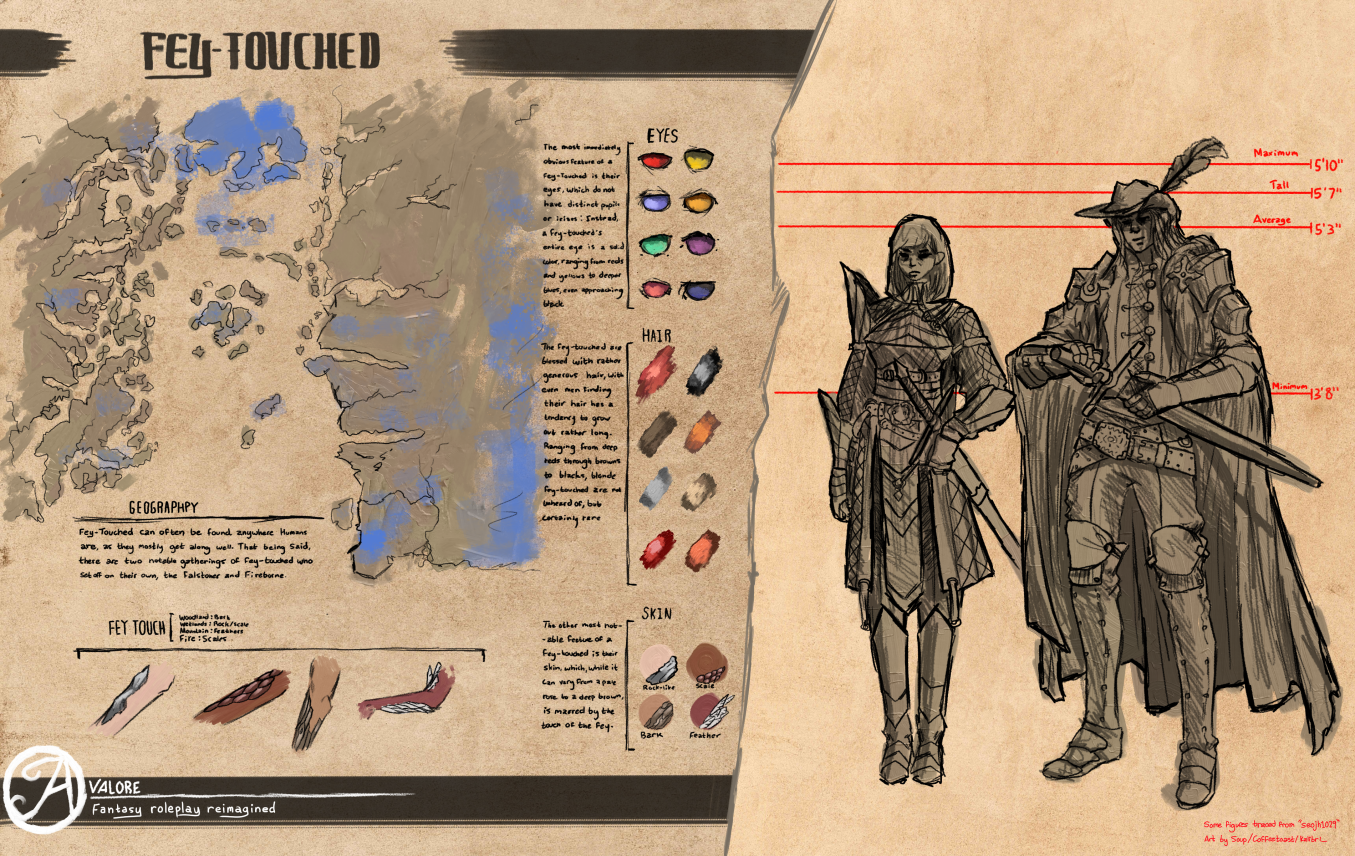
The exact appearance of a Fey-Touched varies on their heritage, though all retain a shorter stature, rising to a minimum of 111cm (3'8") and no taller than 178cm (5'10"). usually with rounded features, even in cases of malnutrition. The most immediately obvious feature of a Fey-Touched is their eyes, which do not have distinct pupils or irises: instead, a Fey-Touched's entire eye is a solid colour, ranging from reds and yellows to deeper blues, even approaching black.
The other most notable feature of a Fey-Touched is their skin, which, while it can vary from a pale rose to a deep brown, is marred by the touch of the Fey:
- Those with a heritage of woodland Fey can find their arms and legs with the texture of bark, or with leaves continuously covering their skin's surface.
- Those with a heritage of wetland and river Fey can find their arms and legs covered with scales or a rough rock-like texture. These Fey-Touched also often have blueish spots on their hands and feet.
- Those with a heritage of mountain Fey can find their arms and legs covered with feathers of various colours, sometimes extending onto the back.
- Those with a heritage of fire and volcanic Fey can find their arms and legs covered with dragon-like scales, and tend to have blackened tips to their fingers, as if they were scorched.
The strength of these effects varies with time of course, and are more or less pronounced in a given Fey-Touched: the most obvious sign remains their eyes.
The Fey-Touched are blessed with rather generous hair, with even men finding their hair has a tendency to grow out rather long unless frequently cut. Ranging from deep reds through browns and blacks, blonde Fey-Touched are not unheard of but certainly rare.
-
The Fey-Touched have some of the largest ranges in terms of lifespan, largely depending on their family lineage and history with the fey. A general rule of thumb is that a given Fey-Touched will live roughly the same lifespan as that of their mother and father averaged together: this can be anywhere from 70-80 years on the low end to upwards of 140-150 on the high end. The variance in lifespan is most notable in the north where the Fireborne may have two 'elders' a half-century apart.
Popular Cultures
Fey-Touched can often be found anywhere Humans are, as they mostly get along fairly well (except some Humans who consider them bad luck). That being said, there are two notable gatherings of Fey-Touched who set off on their own:
Void-Touched
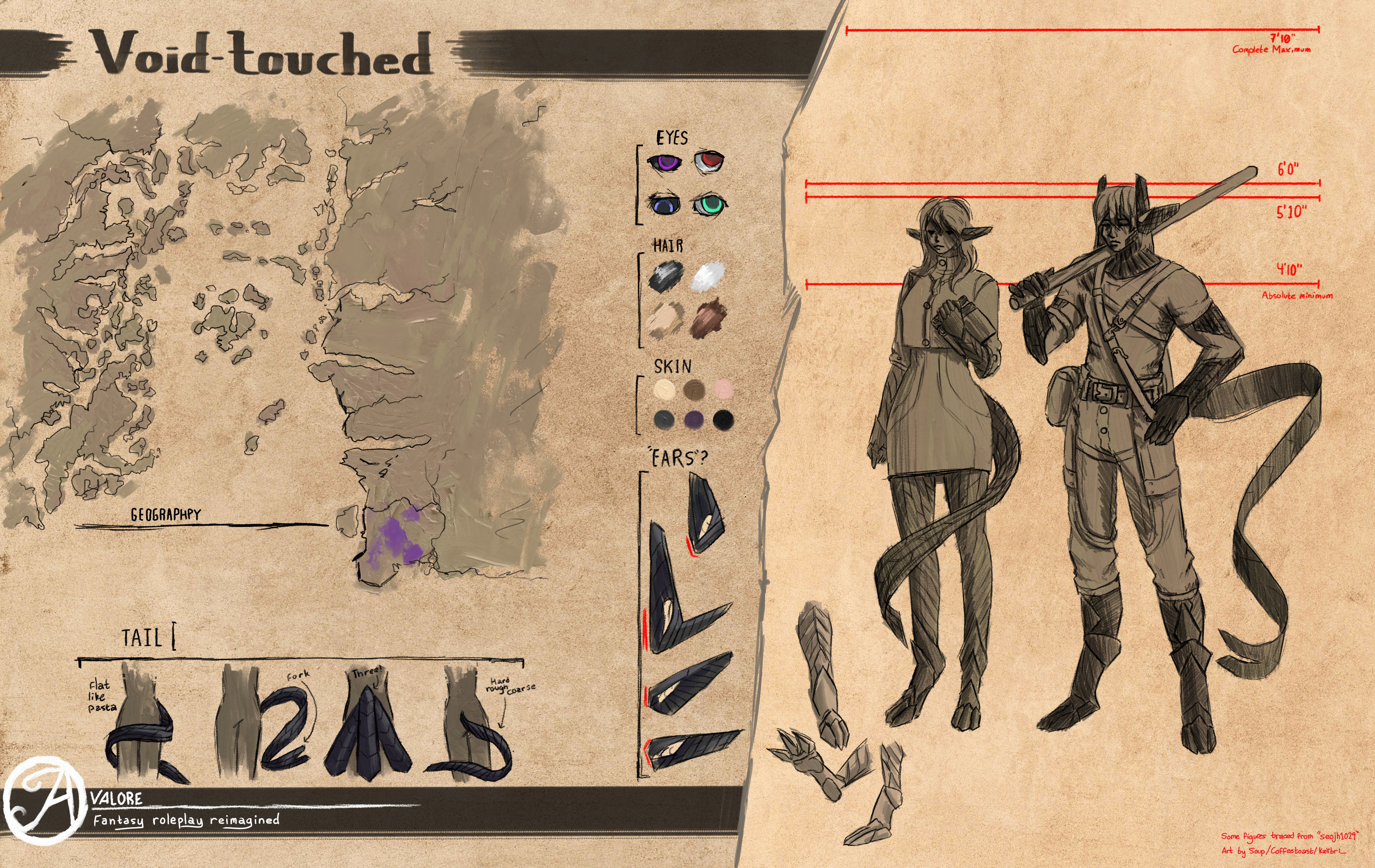
(click to enlarge)
"There's so much to learn in this world, I wonder if we will ever truly see it all."
- Vazio the Voidborn
Note: All Void-Touched, at this time, must be from The Southern Reach.
The Ether is a cold void without much but scraps of our world for beings to latch on to. After the failed attempts of great beings of that void to break free and conquer our realm, a steady truce was made with the Dreaming One. The barrier between the Ether and our realm would remain, but those who wished to shed their life in the void for one in our own could be born anew, coming to our world and transforming into the Void-Touched.
With no set origin, the Void-Touched are unique in the world as not having a genetic lineage to the other races of the continent. With their appearance based on the other realms of the continent however, the Void-Touched can resemble Humans, Arsa Sidhe, or Greatlings; at least in general shape. Though their souls may have once wandered the Ether freely, that life is now gone to them like the dreams of a newborn. They knew truly only our realm.
Physical Characteristics
As mentioned, the Void-Touched have little genetic origins to tie exact shape and size to, instead taking quite literal inspiration from the races of the continent. As such, they can have wide-ranging stature, from as short as 147cm (4'10") up to 238cm (7'10"). They have sharp, jagged features, with their body-size varying little with over or underconsumption. They have particularly striking eyes, sometimes featuring black scleras (though other-times white) and always with a bright, almost-glowing ring around their iris, which can be a variety of colours from reds and purples, to blues, greens, and browns.
The most immediate features that stand out about a Void-Touched is their skin, their tail (if they have one), and their ears. A Void-Touched is covered in a black, crystalline-like skin over most of their body — resembling the void from which they came. Some even had tails, which extended outwards made of this same material. The ears of a void-touched are far more like crystal pillars than proper ears, resembling some insects of the known world.
The Void-Touched have rather human-like ranges of hair, though can often find it to be rather brittle, needing extensive oil and attention to avoid split-ends.
-
The Void-Touched have a fairly regular lifespan of between 100 to 110 years, though few (to none) have actually ever lived that long naturally.
Popular Cultures
A race newly introduced to our world, the Void-touched do not have any particular cultures they can claim as their own; though many have adopted cultures from around the world.

Half-Races
Along the grand expanse of time, it was almost assured that the various races of the continent would have children together, forming half-races. Some, like the ancient humans ('Nua Sidhe') and Arsa Sidhe were hardly considered different races at all. Still, each race brought along with it various dominant genes: that is, if a child of two different races were to have a child, that child would be guaranteed to have certain dominant genes of each race; their other features would then be a mix of their parents.
Though some families can trace ancestry back to a number of different races, any given child is considered either a 50/50 mix or purely one race trait-wise. That isn't to say culture isn't influenced by those ancient pairings though — often history gives rise to unique fusions!
Dominant Traits
The following are a list of dominant traits of each race. If someone is a half-race and is partially one of these races, they must inherit these traits.
- Greatling: Height
- Human: Ears
- Arsa Sidhe: Thin frame
- Fey-Touched: Solid-colour eyes
Void-Touched
- Because many of their unique physical traits (such as their crystalline skin and tails) are byproducts of their arrival into the material world, children of Void-Touched do not inherit Void-Touched physical qualities unless both parents are Void-Touched.
Valkian Realm
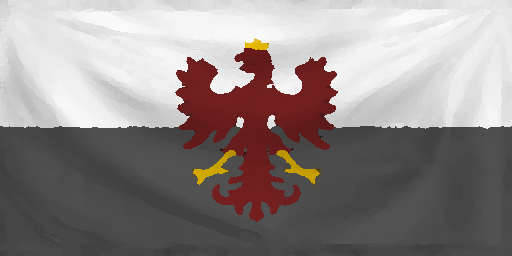
Banner of the Valkian Realm.
| Location: | Midlands |
| Type: | Pact of Kingdoms and Duchies |
| Ruler: | King-Emperor Rayan IV |
| Races: | Humans (majority), Fey-Touched, Arsa Sidhe (sparse) |
| Cultures: | Valks, Walljacks |
It is not without irony that the former heartland of an empire overthrown would become the beating heart of a new conquesting pact, this time led by the former oppressed. The Valkian Realm, spanning from the North through the Midlands and down to The Wall stands as the largest unified realm in the world — at least on paper.
When the curtain is pulled back, the Realm is revealed to be a squabbling collection of dukes, princesses and kings, all arguing over who should control what. If not for the heavy-handed control of the King-Emperor and the Red Fists, his personal army, the Realm would no doubt rip itself to shreds.
Industry & Trade
The Realm's goods vary across its size, though by far its most common resources are logging, stone, and ore. The wealth of the region, even after millennia of being settled, makes the Realm the largest steel-producers in the world, especially of the black Valkian Steel which is used for the notorious and eye-catching suits of armour their warriors wear.
The Realm is also home to several major stone-paved roadways that span nearly across a continent, including the Ocean Road that leads all the way from Frostpeak in the far north to The Wall in the south.
No tale of the Realm's wealth would be complete without mentioning their rich seafaring empire either, with the original dominance of many of the old families coming from their trading ports across the continent, frequented by large (if a bit slow) cargo ships that they have mastered building.
Combat
Each of the local lords throughout the Realm have their own soldiers who they may use to fight monsters, enforce laws, or simply keep the peace. All of these pale in comparison to the grand army that is the Red Fists, the personal retinue of the King-Emperor that is said to number as high as a hundred thousand men strong.
Though not bloodthirsty, the Realm is ever-expanding, and while many are joined through pressures outside of merely the blade, the red eagle is known to dig its claws into those who resist their attempts at conquest. This is most notable in the north, where many states were forced into the Realm, and many others remain in an almost constant state of war.
Diplomacy
The Valkians are famous for a sort of carrot and stick approach, where they will make sweet offerings and generous gifts to appease those they wish to hold dominion over, bringing others under their thumb without even realizing it. Still, for those who lash out or resist this allure, their approach becomes quickly standoffish, either blockading and waiting for their foe to be choked out, or waging ruthless conquest against them.
The Valkians are on good terms with Fallstone to the east, who provide them with much-needed food. To the south, they mostly were indifferent (and outright ignored) the Aedall until they disappeared, with some now looking to the Southern Reach with cautious interest. They remain entangled in bitter wars to the North, and remain fairly cordial relations with the Mistan and the far-west Korami.
Notable Holdings
- The Duchy of Rulan, located at the southern-most part of the Midlands and marking the southern border of the Valkian Realm, separated from the Reach by The Wall.
- The Duchy of Sudvalkia, located north of Rulan and bordered at the north by the Norporate mountain range; it consists of numerous city-states ruled by the Table of Lilies.
- The Duchy of Sanguifleur, located further north and separated from Sudvalkia by the Doigt Céruléen river; it is split into a county and viscountcy, Éclatier and Coteaux, respectively.
- The County of Cazmuth, located to the west of Sanguifleur and sharing a brief history with them, too.
Fallstone
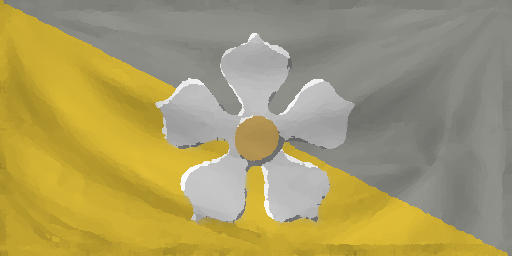
Banner of Fallstone.
| Location: | Faded Steppe |
| Type: | Republic |
| Ruler: | Speaker Mason Alvarez |
| Races: | Fey-Touched (majority), Human |
| Cultures: | Falstoner |
The windswept steppes of the south-east mark the home of Fallstone, a large collection of Falstoner communities home to some of the largest fields of grain in the world. These relatively peaceful, rural people organize themselves in a two-tiered Republic, in which day-to-day issues are handled by the lower tier, the Domicile, and large-scale issues are handled by the Canavassari.
The Canavassari is the more important tier of the Republic, represented by the leaders of the major caravans that traverse the Faded Steppe. The reason they are granted this more important role is because they keep the supply chain and economy of Fallstone running, as well as have the most experience of life in the Faded Steppe, whereas local mayors don’t venture out or as often as the Caravans. Things the Canavassari is trusted to vote on would include things such as war, political policy with other realms, and how the economy will function through trade, tariffs, imports, and exports.
The Domicile is less important than the Canavassari on the grand scale, however, it has more members to it. The Domicile is made up of one representative sent from each hamlet, village, and small town inside of the Faded Steppe. Because even a collection of five farms may qualify to be considered a hamlet, and thus will send a representative as their mayor, whenever votes are to be held in Stonebrook. The typical issues Domiciles vote on and discuss are smaller scale, such as crop sharing initiatives, farming and brewing for a season, and other more localized issues. The one major power the Domicile reserves is to vote for who the Speaker of Fallstone will be. This ensures that no one tier of the Republic can hold too much power, as the Speaker’s word is law.
Industry & Trade
Fallstone's primary export is grain, both wheat and rye. A sizable brewing industry blooms as a result, with many of the larger towns having breweries known for their pale ales. While fishing is also a common sight along the eastern shores, this is usually only for sustenance, and not traded with outsiders.
Goods are carried in long, horizon-spanning caravans that stretch across the plains, forming a distinctive part of the Falstoner culture.
Combat
Fallstone is hardly a warmongering group, and unsurprisingly does not have a large army as a result. Instead, when the need arises, towns send volunteers to form part of the Feyguard, a group of warriors used to repel invaders or deal with beast problems — historically mostly used to fight off Greatling raids from the mountains.
Diplomacy
Though originally somewhat isolationist, Fallstone is not cut off from the world: rather, they remain friendly relations with most outsiders, fueled by a positive relation of providing food to the growing cities of the west. They held a neutral view of the Aedall across the mountains, a relatively positive view of the Valkian Realm (where many families have ties to), and have in recent years mended relations with the Stonerunners of the mountains. For all others, they mostly do not concern themselves, content to stay in their peaceful corner of the world. Given their origins with Falstoners putting themselves into exile in an attempt to avoid the tricks of the Fey, they hold little interest in large expansion or conquest.
Important Figures
- Speaker Mason Alvarez is a swarthy and charming man, and attributes this as to why he won the election of the Domicile in the first place. He resides in Stonebrook, and rarely leaves. The people of the Faded Steppe may rarely have interacted with him, but careful politics and shrewd policies supported by Mason have granted the public a mostly positive opinion of him.
- Silgor holds the distinct position of “Brewmaster of Fallstone”. While it may sound like a joke, he is almost a tier of his own in the Republic due to his display of knowledge around agriculture and brewing, and advises the Republic on such matters.
- Brenna Pomeran runs The Star Seer caravan. Not much is known about her. She inherited the caravan’s leadership position from her grandmother - but some say Brenna runs the caravan better than any before her. It makes the profit to prove it.
- Chimeg is one of the members of the Canavassari. Chimeg had to claw their way up the rungs of the ladder being one of the few non-Fey Touched in Fallstone’s Republic. They oversee four different caravans that run in the southern portion, and they boast one of the largest fighting forces because of it. If anything could be considered a general in Fallstone - it would be Chimeg.
Credit: Reedie, Chiaro, Moony

Duchy of Rulan
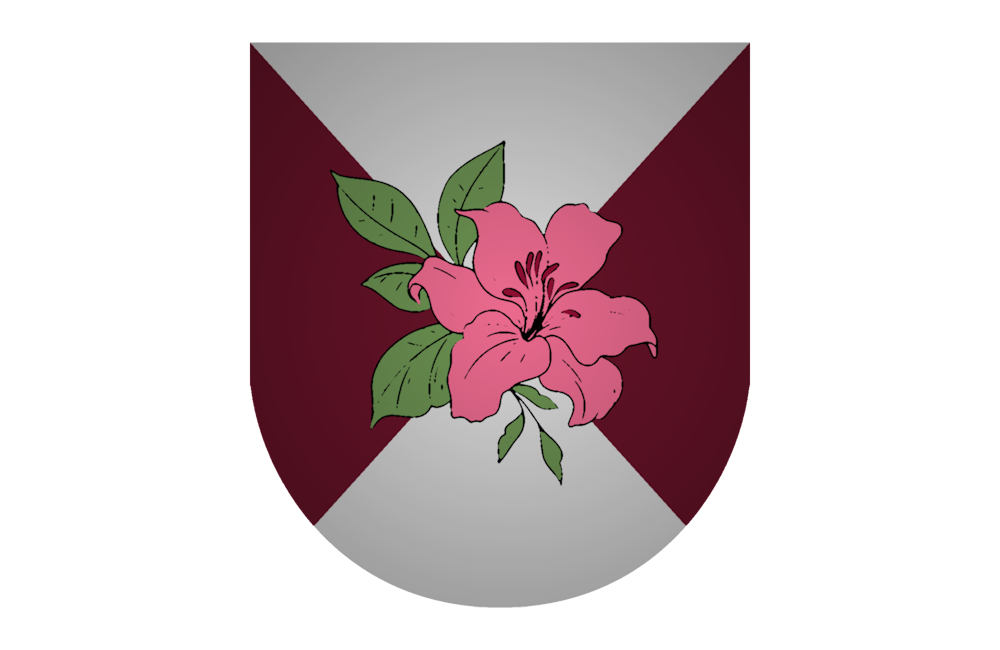
Shield of the Duchy of Rulan.
| Location: | Midlands, South |
| Type: | Duchy in the Valkian Realm |
| Ruler: | Duchess Dahlia Silverbloom |
| Races: | Humans (majority), Arsa Sidhe (minority) |
| Cultures: | Valks, Walljacks |
The land of the flower-fields and the ever-present azalea, the Duchy of Rulan is notable for its location along The Wall. Once home to a prosperous masons guild that rivalled most of the world and built the towering structure that separates the Midlands from the Southern Reach, the Duchy has fallen out of favour with the ruling class of the Valkian Realm.
Being relatively undeveloped and with a sizable portion of its population trained as guards to man and patrol the border, the people of the flower find themselves rarely thanked for their service, or rewarded with any real power.
Fortunes may be changing, as the latest generation of Silverblooms set to ascend to the Duchy seek to make a name for themselves, and bring attention to the forgotten edge of the empire: this flower will not wilt.
Industry
Rulan is known for few things: some amount of vinyards and cotton fields, both of which used to make luxuries in the more prosperous cities, and the realm's mason guild — once the envy of the world. As the land has continued to languish into unimportance, and the disappearance of the Aedall gave little reason to maintain The Wall as thoroughly as they once had, the trained warriors from this land are often 'loaned' to other warring leaders for some quick coin, or go mercenary themselves.
The Walljacks still have use for Rulan however, as they smuggle goods north and south of the Wall, taking them to adventurers in the Reach or heading east to trade with the Falstoners.
Culture
Rulan culture is marked by little changing: they tended to get into skirmishes with the Aedall every few years, but otherwise mostly kept to themselves. Those within the land have little opportunity to advance or change their lot in life, and many choose to leave for the more prosperous city centres. Farming families who seek wealth or prestige for their family lines often encourage their children to head off to be trained as a warrior on the wall, or hope that a travelling Order of Knights will take them in as squires.
Great Clans of Ko'ram
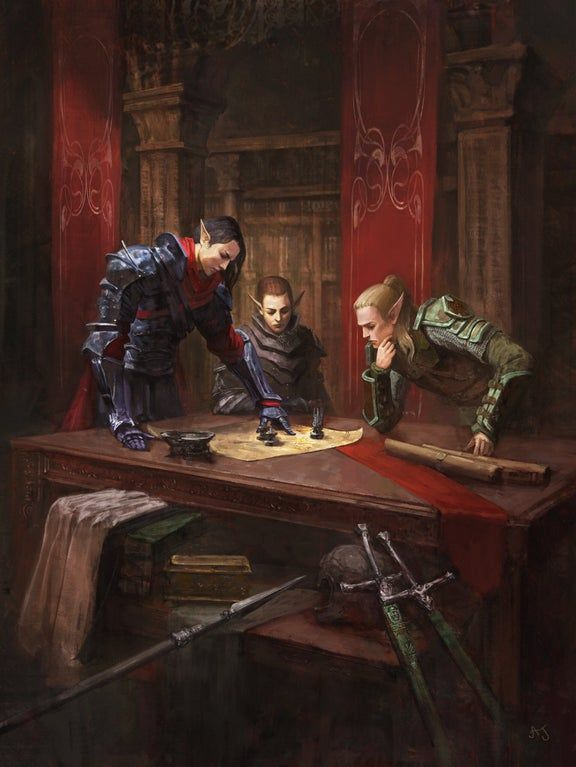
The Great Clans are always locked in tension with each other.
| Location: | Western Continent |
| Type: | Ruling Clans of Ko'ram |
| Ruler: | Varies |
| Races: | Arsa Sidhe (majority), Human (sizable minority) |
| Cultures: | Korami |
The Korami people are governed by a ruling system referred to as The Great Clans. These clans are each of the wealthiest and most powerful clans from each of the provinces of Ko'ram.
Each of the Great Clans in turn hold the fealty of countless minor clans serving under them, with the degree of loyalty and importance varying. In the fringes, some of these subordinate clans rule over single villages and aren't even known of outside of historical texts in the large cities. It is from these that most common Korami draw their lineage; the major clans rarely let one of their valued kin stray too far from the roost of their hometown stronghold.
Once a year, after the first snow, the Great Clans meet to discuss issues that stretch across all of Ko'ram. Even if the clans are typically fighting each other, and even within themselves, this time is considered a sacred period of peace. This period is known as Hangawi.
At present, there are four Great Clans, each of which has held power for several centuries: the Kensho, the Odokhi, the Adarkhin, and the Moon.
Great Clan Kensho
The Kensho are one of the oldest clans in Ko'ram. Through all the power struggles that have seen other clans rise and fall, Kensho has maintained their borders since the clan first took power in the arrival of the Arsa Sidhe to the Korami mainland.
Through cunning and wit, the Kensho have been able to maintain their alliances with the internal minor clans that support them in a sort of feudalistic society. These alliances are what bolster their armies to defend their borders as best they can against the warlike Odokhi to the north of them, but this is not to say that the Kensho themselves are weak. Among their nobility, and the inner circle of Clan Kensho itself, are some of the most renowned warriors in all of Ko'ram.
While the Kensho do not boast strong armies or a vast navy, their dominion over the terrace farms of Iria ensures the other clans do not push the Kensho too harshly — unless of course they want to face possible starvation from Kensho sanctions.
Great Clan Odokhi
The Warriors of the Red Mountains, the Great Clan Odokhi calls the hostile lands of Uul'san home, nestled deep in its unforgiving depths. These harsh mountains are plentiful in metals that fuel their war machine whilst the infertility of the soil forces them to rely on their neighboring minor clans. For this the Odokhi have enacted a tributary form of governance which dictates the minor clans under their jurisdiction must contribute to the Odokhi's conquests and efforts.
A number of tributary clans enjoy the prosperity and order this brings, while others fight against the oppressive control it creates. This ever-present tension results in the ever-fighting Odokhi seen today, painting Uul'san red — indomitable soldiers fighting in armies for order against lone swordsmen which lurk in shadows.
Great Clan Adarkhin
Known as the noble herders of the North, the Great Clan Adarkhin resides in one of the least densely populated regions of Ko'ram — Sharuul — but can lay claim to some the finest warriors, second only to the Odokhi. The Adarkhin primarily occupy a valley region of Sharuul with large hills and small fields of tall grass, which is used for their prized Adarkhin cows.
The Adarkhin govern the minor clans in Sharuul through a suzerain system: in this style of government, the minor clans pay tribute to the Adarkhin for protection and to remain autonomous over their internal clan affairs. The Adarkhin despot is chosen through a series of physical and mental trials every thirty years. The leader is always referred to as the Great Adar.
Great Clan Moon
The Southern Sailors of Ko'ram, the Great Clan Moon hails from the large archipelago in the south-west of the Korami homeland. While the other clans resort to a more administrative or feudalistic style of governing, the Moon Clan maintains one major port city with fortified villages on the outskirt islands to control their holdings and protect them from the other Great Clans. They maintain control of minor clans through an almost-representative republic.
While typically leaning into noble, mercantile means of economic gain, the Moon Clan has at times been willing to pirate the coasts of Ko'ram. The Clan is led by a senior elected official from within the Great Clan’s main line, known as the Sansang.

Serene Monarchy
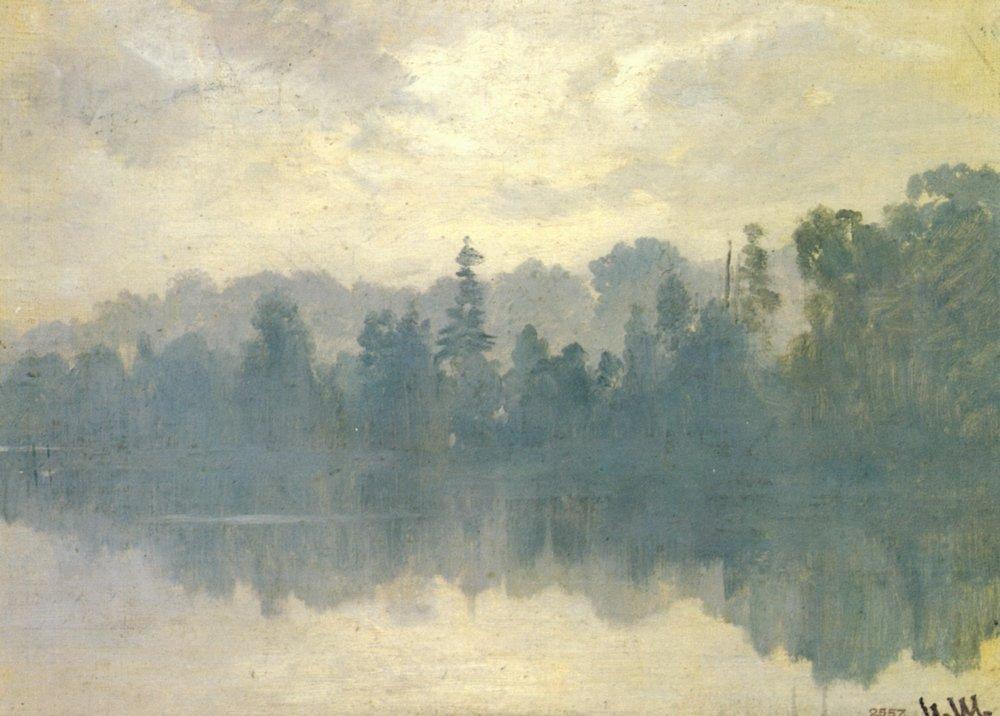
Foggy haze over the northern Mistan coast.
| Location: | Mist Isles |
| Type: | Monarchy |
| Ruler: | Serene Monarch Gwennora Castella |
| Races: | Human (majority), Arsa Sidhe, Fey-Touched, Greatlings |
| Cultures: | Mistan |
The year 1428 saw the birth of one Lady Emerra of Sirensong. By the age of thirty nine, in the year 1467, Emerra had gathered all the peoples of the Mists under one banner, as their Serene Monarch Emerra Castella (“of the Castle”). She did this through grand diplomacy, conquest, and a fruitful marriage with one King Myrrik, who ruled many islands in the north. Few times have the Mists been unified, and never has this unity stood. Great conquests have faded within the following years of their conqueror’s death, and alliances weather and break. Yet Queen Emerra’s unity has remained lasting longer than any other.
Hierarchy
The Serene Monarch
This unity is said to be the product of an agreement between the Queen, sung gently out at sea, and the Siren Serene herself. This agreement has been recorded and passed down by house servants of House Castella for future monarchs. This agreement, known as the Song of Emerra, details the Serene Monarch’s dedication to the Siren Serene and her domain, as well as her duties to her would-be peoples. In the song, she sings of the many lands of the Mists and their myriad people, and her promise to uphold the rights of the people to their homelands and their ways. She ends with the promise that should her line ever break the agreement, should the nobility ever harm the land or its people, that their banners be torn by wicked sea winds and their castles crumble under waves as high as mountains.
Upholding this agreement is part of the core teachings of any aspiring monarch within the Isles, and it is believed that only through strict adherence to the verses of the song can the nation survive. Else, each of the myriad pieces of the Isles be partitioned up and set free on their own destinies again. To ensure this does not come to pass, past monarchs have written up laws to enshrine the rights of the various groups that make up the Isles, the chief among these is a constitutional paper known as the Rights of Settlement that enshrines the decentralized rights of the Isles, and the rights of council that guarantees every people can have their voices heard and heeded by the Serene Monarch.
While some monarchs have ignored all these things, and ruled with tyranny, each time great tribulations have come to the lands. These irresponsible monarchs saw their ports blockaded by Admiralty Lords, been struck by great tempests and monsoons, seen their crops fail and starvation come even to the castle itself, and plague set upon them in great humiliation. Few would dare to challenge the Song of Emerra.
Now the seat of power within the Mist Isles lies just a short distance outside Sirensong, in Castle Portsmartyr. An elaborate court life occurs within, filled with daily petitioners and myriad councillors vying for the Serene Monarch’s ear. The current Serene Monarch, Queen Gwennora Castella, born in the year 1606, sits central in court. Like many of the Serene Monarchs before her, she struggles with an aloofness, said to hear distant songs that draw her attention out nearby windows and over balconies. She is skilled in the politics of her homeland, and has the full support of her loving court behind her. Though honest to her people, she can be a snake among her enemies, and her gentle appearance should not be mistaken for weakness.
The Mistcaller
Second to the councillors in the Monarch’s circle is a spiritual position known as the Mistcaller. The Mistcaller is the Serene Monarch’s chief advisor, providing guidance on spiritual matters such as dealing with the fables like the Siren Serene, the fae, and other supernatural forces. They also advise on matters of the laypeople, often coming from them to begin with, and are usually considered to be in touch with the common person as their spiritual leader. The position of the Mistcaller is determined by the Seaheart Disciples, an order stationed within the sea fortress of Kraken’s Keep, considering as well as the wishes of the previous Mistcaller. Supernatural signs can also influence candidacy, as the Seaheart Disciples are trained to recognize various signs and portents. The Seaheart Disciples seek out a worthy successor throughout the life of the current Mistcaller. They monitor, guide, and report back on potential candidates. And once the Mistcaller has passed, they convene to pick out one candidate.
The Mistcaller is oftentimes a powerful mage, but not always, as their knowledge and wisdom is more sought after than their power. They generally come from any walk of life, being determined by their character rather than any position of power or influence. The Seaheart Disciples are not infallible however, nor their supernatural signs, and some Mistcallers have been notoriously corrupt and disfavored by forces such as the Siren Serene. The sea fortress, Kraken’s Keep, is situated deep into the mists. It is notoriously difficult to locate for those outside the order, but is understood to be near the heart of the Mist Isles. It is not situated on any notable island, but instead lies within a rocky atoll of stone pillars constructed by the tellurgic mages. Shipwrecks are given over to the Siren Serene for trespassing on sacred grounds. The waters are known to be teeming with life, welcome under the order’s care.
The current Mistcaller is one Elder Kypthane of Ardice. Previously a traveling scholar turned hermit. He was a candidate for the position for much of his life, but it is believed to have been his decision to seclude himself rather than be influenced by society that won him the position. He advises the Queen, Gwenora, on the histories of the Isles and their duties toward its people and the lands itself.
Local and Regional Governance
Outside Sirensong the communities throughout the Mist Isles are varied and diverse. From idyllic coastal villages to chains of prominent cities under one banner, you can find all sorts of people and types of local government. All of these communities are guaranteed rights in defense against both the crown and eachother through the Rights of Settlement. These rights also extend to those who do not call any one place home- specifically those known as the Lords of the Grand Admirality.
The Lords of the Grand Admirality are prominent captains who serve on Mistan flagships, vast and imposing ships of the line with heavy gunpowder armaments. Whether they’re merchant lords, explorers, mercenaries, or privateers. The Admirality Lords operate with a loose code of laws that ensure they come into as little conflict with eachother as possible, and protect eachothers interests, while still permitting plots to undermine eachother in controlled rivalries. The Grand Admirality is guaranteed rights under the crown and positions in court in the interest of the Monarchy’s thallasocracy. The titles of captain over these ships is passed either by appointment, election, or mutiny depending on individual circumstances onboard the ships. Some Lords of the Grand Admirality possess fleets, but rarely more than one flagship.
Meanwhile, rural life within the Mist Isles is relatively unmarred by plots and intrigue. On the smallest of villages, they are often led by elders. In larger villages, they often have mayors. Either way, these small slices of life situated on off-the-path islands and such maintain their independence through the Rights of Settlement. They have little incentive to expand, and often safeguard the local wilderness in peaceful collaboration with forces like the sirens and the fae. When members of these rural communities decide to go on a life of adventure, they often go on to succeed in whatever path they take. Whether becoming a beloved member of a crew, or even a merchant captain with enough effort.
There are some feudal regimes within the Mists, primarily those in the northwest under House Aeronwyn. The house, headed by Lord Caelath, operates their small section of the isles under feudal contract. Their lands are known for their ‘Knights Nautical’, who act as Knights Errant upon the sea, serving on and safeguarding vessels along their voyages. They often go questing on various islands, solving local problems if it can be done most often by blade. One notable settlement under Caelath’s banner is Eryndor, a rocky coastal town on the Eagle Isles.
In the south there lies the Pearl Coast, which is itself a small chain of islands led by a Council of Clans, made up of the various clans that preside over the local islands. Though greater in number than most other rural communities of the Isles, the Pearl Coast retains a strong sense of communalism. And with a strong sense of spirituality, multiple spiritual leaders within the southern islands have become Mistcallers, or moreoften members of the Seaheart Disciples. However, more than any of that the lands are known for their arts, music, and poetry. Often the subject of these famed artist’s muses are the idyllic islands themselves or the mists around them. Here are also produced stunning brocades famed across the Isles and beyond, though radically expensive due to the niche cottage industry that supplies them. Many of the clans sponsor master weavers who produce tiraz, an especially precious piece of fabric often given as gift to the Serene Monarch and other important officials.
Credit: Tomtomgags

Valks
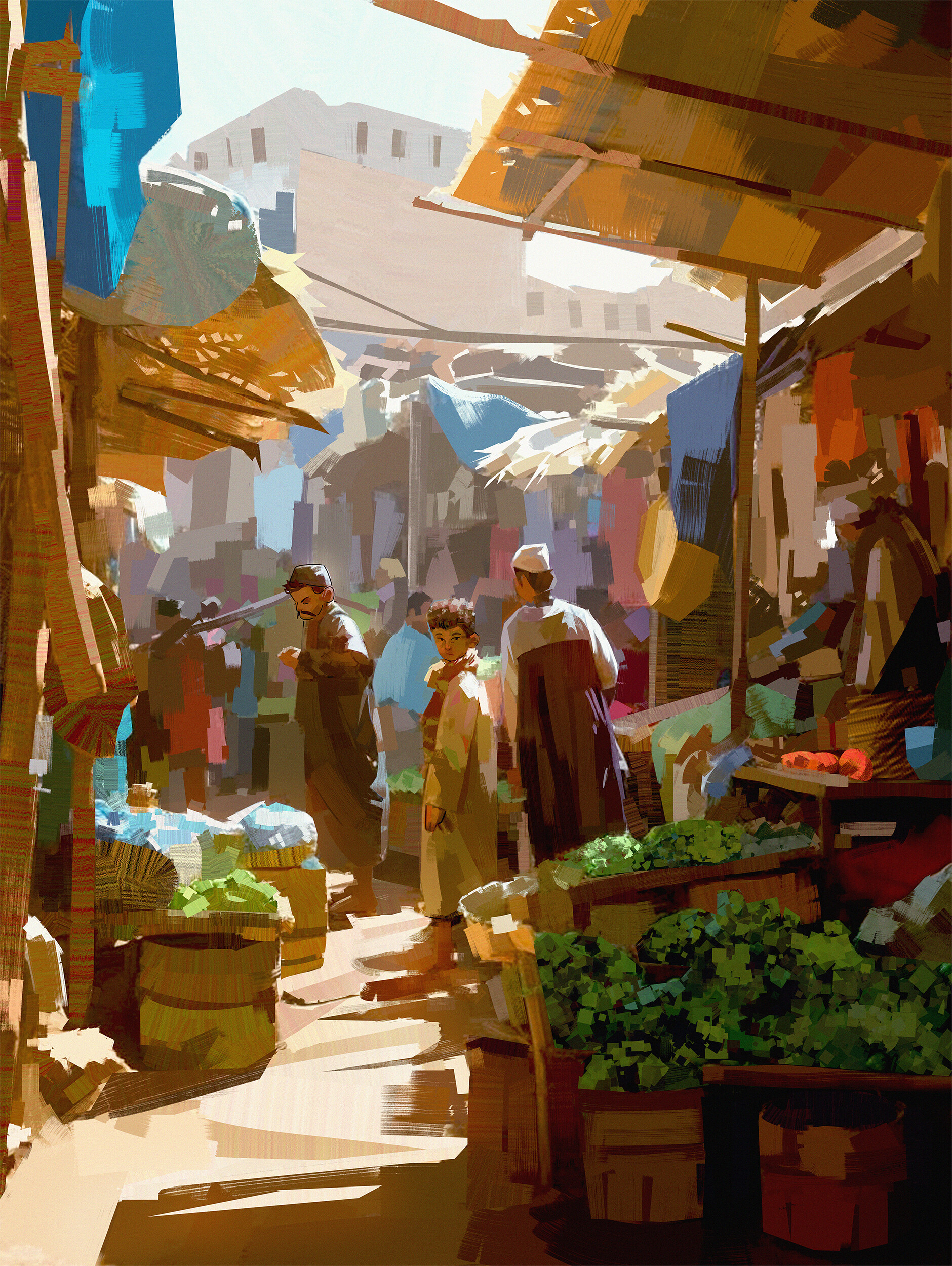
| Art by Andrés Merino |
Markets peddling fashions and wares from around the world are a common sight in Valk culture.
"I would never be biased — perish the thought! — but the Valks are no doubt the most enlightened folk of the world, likely to bring us into the next golden era from their ships, their forges, and their soul."
- Alan Swift's Travels of the World
Bustling streets and the sound of haggling are telltale signs of the Valks, confirmed when hearing the bells of ships arriving in the harbour. These people, who also call themselves the Valkians and Valkyians form the dominant peoples of the eastern continent, dominating the way from their home in the Midlands up into the north and down to The Wall, a monument of their creation to keep the 'troublesome' Aedall at bay.
Blessed by the lush and fertile land of their home, these people quickly turned their skills to trade and the seas, amassing unforeseen wealth and using it to extend their 'civilized' rule to the wilds.
Language
The Valks almost universally speak Common, and are responsible for spreading the tongue across most of the continent. Their habit for trading and exploration means that they frequently share tales of distant lands: a great way to make friends with most of them is to share a good tale, especially if some of the details are played-up a bit: books of fantastical tales from far-off lands always earn top coin in the markets.
A common farewell amongst the Valks is "May the Sun shine on you" (or some variation thereof).
Customs & Rituals
It is custom amongst the Valks to burn, rather than bury, their dead. While not an overly superstitious people, it is considered the only way to let someone's soul truly lay at rest. Some argue that burning the dead also prevents them from being tampered with by mages or other sorcerers.
The Valks traditionally hold two large festivals each year: one in mid-spring where the first travelers arriving after the winter bring their wares to market — with some of the rarest items being put on display before being bid on by townsfolk; and one in the autumn, celebrating the harvest. This harvest festival usually involves several games and events in a town square, along with a large meal held either in a town's largest hall, or, if the weather is good, in the fields.
Beliefs & Spirituality
Though on the whole the Valks are not a particularly spiritual people, they do tend to pay at least lip service to notions of chivalry and honour — markings of a good soul. While among merchants, 'honour' may be a more subjective term, there are several knightly orders throughout the Valkian realm and elsewhere who hold much stronger to this belief, often operating in the name of the Lady of the Lake and swearing honourable oaths under her watch.
Amongst Valkian merchants, many carry mystical 'lucky coins', obtained through gambling with mysterious, almost supernatural seeming visitors. While not all recognize the supernatural power of these tokens, these coin-carriers are nevertheless thankful for the powers at be for the luck that always seems to come their way.
Walljacks
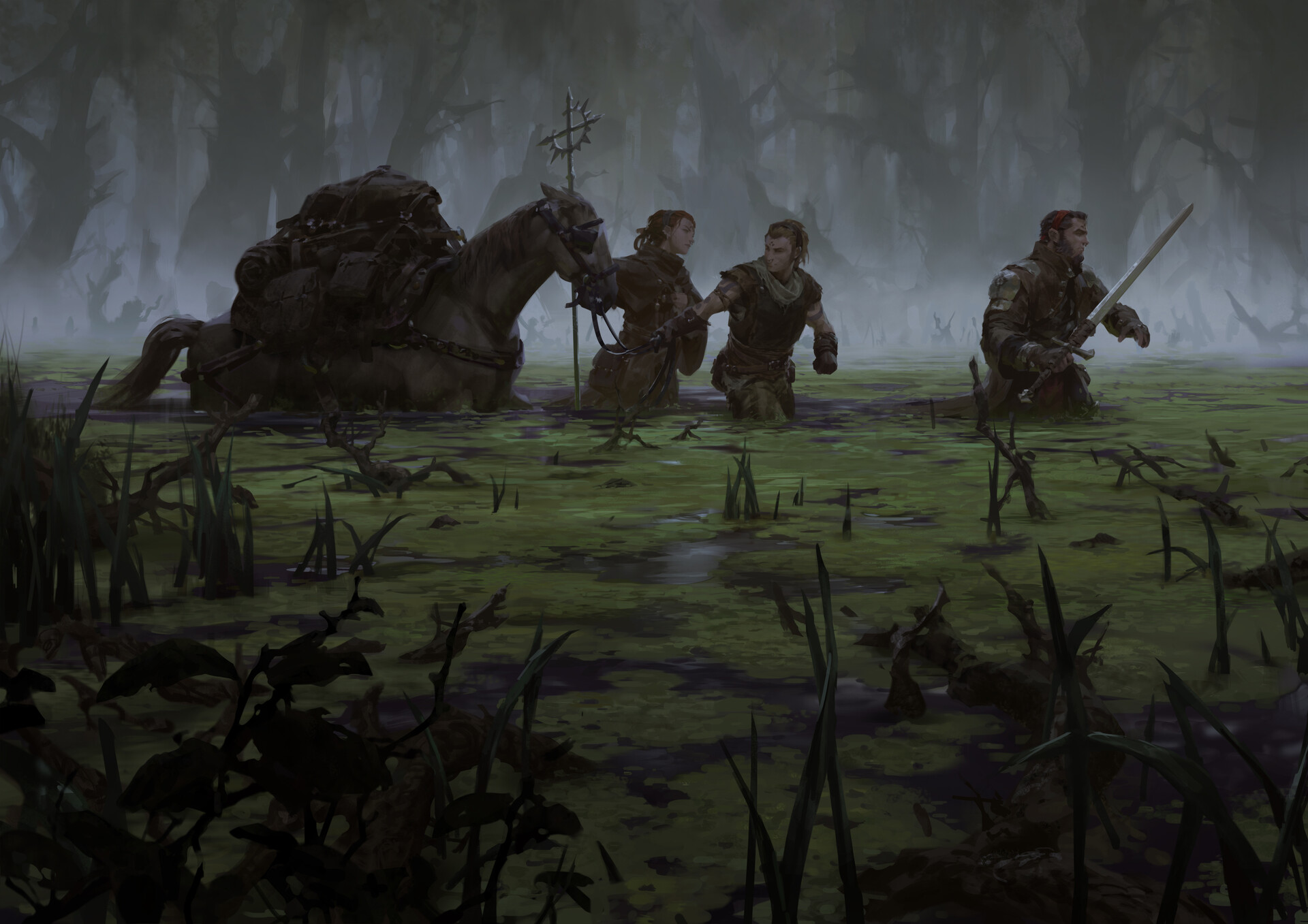
"Never had I seen such an alluring grin as from the first Walljack I met, who taught me how to wring fresh water from swampvine before 'borrowing' half of my coinpurse."
- Alan Swift's Travels of the World
Muck, heat and water in each step — a swamp is not a place that many would first choose to call home, and yet the Walljacks, or just Jacks for short, make the swamps south of The Wall their home turf. Stepping out past the borders of the Valkian Realm, these rough-riders are notorious for their cunning, wit, and tracking skills. Before the Aedall vanished, these were the few who were willing to brave (or trick) their way around those Arsa Sidhe who did not want them in the Reach — becoming vital in trade through the south and to the east.
Language
You'd struggle to find a Walljack that doesn't speak Common: it is the language of trade, after all. The conditions of where they live, though, has led their groups to form a new language as well: Southern Creole. A mash-up of Common with bits of Elvish (or Ancient Tongue) and a few dashes of Greatspeak phrases thrown in here and there, the Walljack's Creole made it possible for them to at least communicate with the Aedall (who stubbornly refused to learn Common) when they weren't being hunted by them.
More importantly, it helped them get along with the Greatlings in the Reach's mountains: with no better guide through the high passes than the mountain-dwellers to turn to, they frequently picked up and adopted their (at times unique) metaphors.
An example of Southern Creole is "Fo' Stone'za then" (or similar spellings) which is a goodbye to friends.
Customs & Rituals
A harsh home leads to harsh beliefs, but the Walljacks keep a grin on their face all the same. The swamps and rivers around them are not forgiving — there's no room for the untrustworthy in their ranks. As a result, the Jacks form strong, tight-knit bonds with those in their pact. While any Jack would lay down their life for the pact-mates, don't be a fool and think them a noble knight: for those outside of their bonds, there is no shame in throwing you to the wolves to save their own hide. Still, the Walljacks tend to lend aid to those in need, if they have the time.
As for traditional ceremonies, the Walljacks don't have any regular festivals or celebrations (though they will happily throw notorious parties for any reason), but every pact has a unique sort of initiation rite that marks a newcomer's entry into the fold. Every member has to do this at some point (even children born into the pact once they come of age), but there is no strict rule on what the rite has to be — so long as it proves the person's cunning.
Beliefs & Spirituality
The Walljacks are known to be a bit of a rebellious sort, perhaps unsurprising given their rejection of a king's rule and self-reliant attitude. Their 'flexibility' in keeping their word with outsiders however has been known to grow the ire of the Lady of the Lake, being directly against the pursuit of honour and chivalry she champions. It is perhaps for this reason that after the earliest Valkian knightly orders came to try to bring 'order' to their land that the Jacks mostly rejected the notion of following under a spirit or fairytale figure; while not shunning Fables entirely, they tend to see these tales and the mythical powers around them to be a means to an end.
The one Fable that draws some divisiveness among the Jacks is that of the Portents; those who seek out some benefit for themselves are known to make a pact with this spectral coven of witches, though others deride this practice, finding that the cost of deals made with them put deal-seekers at odds with the rest of their pacts.
Falstoner
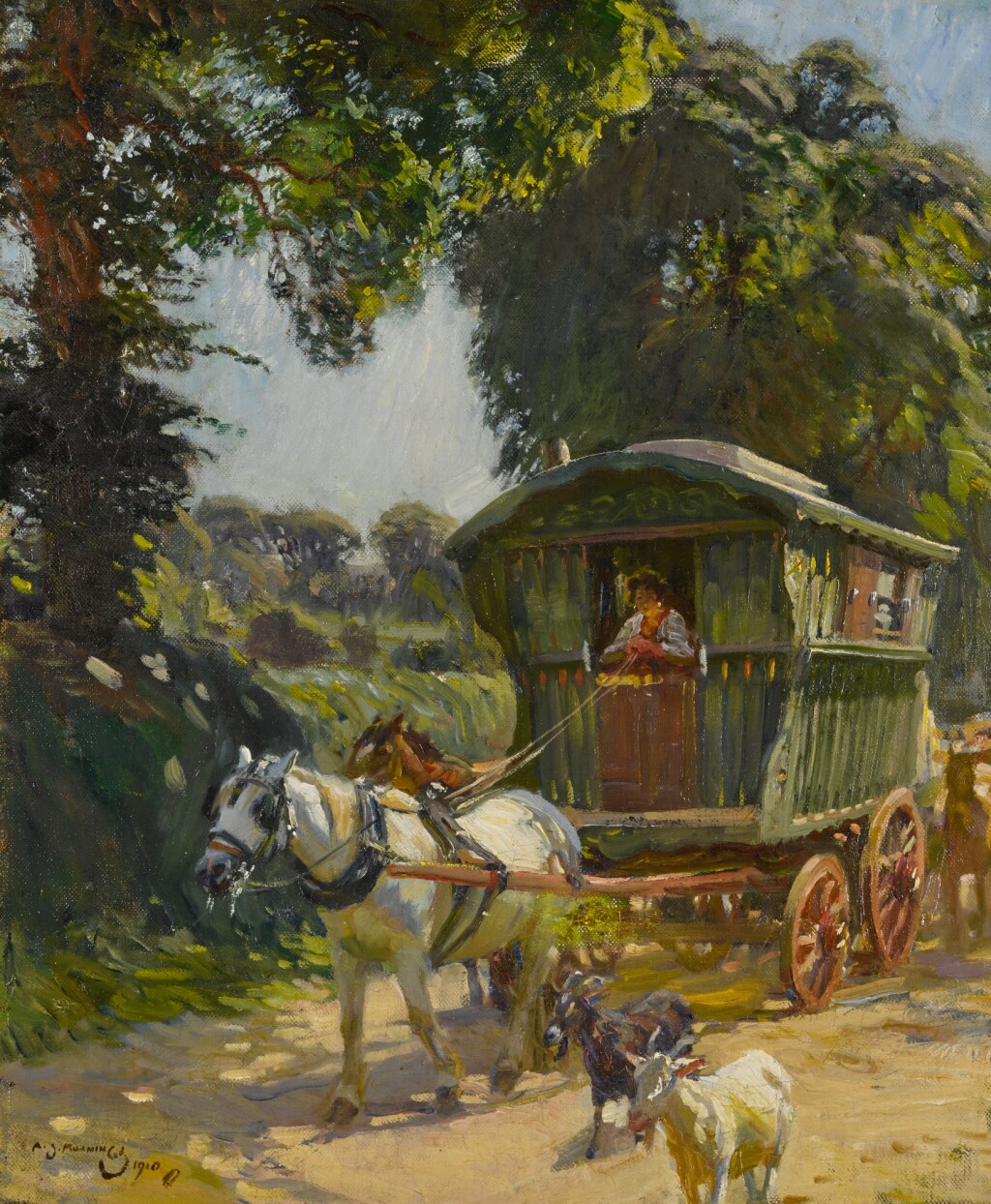
| Art by Sir Alfred James Munnings |
Falstoner caravans can spend as much as three quarters of the year travelling.
"How to describe them? Kind, but a bit quirky. Especially when it comes to the superstition. Still, never had better pie in all my journeys."
- Alan Swift's Travels of the World
Cold sweats in the night. A faint giggling when wandering down a city alley. Things always being moved around, just a bit — not all who are touched by the Fey are left better off.
Some had enough. Venturing out from the bustling cities to live a simpler life, they put themselves into a self-exile. These original Fey-Touched formed the Falstoners, a humble people who now spread across the steppes and plains of the south-east forming Fallstone. While no longer running from the Fey that once toyed with them, even the Humans among them find so many parts of their lives and customs shaped by the tricksters.
Over time, the Falstoners naturally found a sense of community through their shared history and experience. Small traveling parties formed; sometimes those small parties would meet another in travel and join together - more hands on deck to work the land and provide for each other, and more fresh faces that could become lifelong friends. More and more this practice spread, and over time, caravans became a staple of life in the Steppe. Now, you'll find small caravans, big caravans, caravans of all shapes, colors, and sizes across the Faded Steppe. A few have even grown to region-wide renown and influence.
Major Caravans:
All caravans, not just the largest one, will maintain their own guard force from those that live with them. Fallstone lacks a central army, but relies on those interested and those able-bodied to defend their own hamlets and homesteads. You will see a variety of guards mounted on horseback as they traverse the Steppe.
- The Star Seers are one of the largest caravans in the Faded Steppe, and also one of the oldest. This caravan has dozens of wagons that range in the size from a small cart, to a home capable of housing an entire family. It specializes in general wares covering almost all of the basic bases, and moves most of the agricultural goods through Fallstone. Star Seers get their name because they frequently travel at night, so their stores can be set up during peak hours of daylight to provide their wares to the farmers and brewers as soon as they wake up. While The Star Seers cover most of your basic necessities;
- Rolling Haven is a caravan that grew its wealth and power through trading services. Permanent residences make it difficult, especially with the self-restricted sizes, for non-caravaneers in Fallstone to get services and supplies for their homesteads and hamlets. Rolling Haven supplies their clients with blacksmiths, brewers, tinkerers, tailors, masons, and all other sorts of crafts.
- Velveteen Voyager is one of the more recent caravans to form, but don’t let the infancy of this operation fool you. The Velveteen Voyager derives its name from the riches it trades in. Most would think the Faded Steppe to be an entirely pragmatic people, but that doesn’t mean there are those willing to pay extra for jewelry, silks, velvets, and cosmetic fineries. This caravan does most of its trade with foreign powers though, providing riches from the Steppe to Valkia and beyond.
Language
Despite their roots, the Falstoners retain a rich tradition of being some of the few worldly folk who speak the language of the Fey. Though daunting at first to outsiders, there is a certain elegance to it, and some adventurers from their land have made a living traveling around as monster-hunters, able to communicate with and ward away the Fey creatures that may be having fun with an innocent soul. For others, the touch of the Fey is not as cursed as it once was, and they take pride in their roots, considering the language a part of their history and culture.
As for Humans and others who grow up in Falstoner communities? Well, they aren't given much choice. Not easy to fit in if you can't understand what everyone else is saying. Often learning from birth, the tricky language is picked up in a way that many others just can't quite master.
There is one exception to this dominance of the Fey's tongue: Greatling. The Falstoners do not survive entirely alone, and have often gotten along with the Greatlings of the mountains, who are not bothered by the Fey. Whether just as friends or in the course of trade, many who live near them pick up a few phrases here and there: some even become fluent.
Customs & Rituals
Dark alleys and bustling cities are filled with nooks and crannies that faeries and spirits love to dwell in. It is unsurprising that these humble folk tend not to form large cities: the largest of the Falstoner communities is really just a grand town. Still, there is a strong sense of community, even across long distances — if you find yourself in Falstoner lands, you can think yourself among friends - among "chosen family." The idea of ‘chosen family’ in Fallstone and Falstoner culture revolves around the idea that everyone in the Faded Steppe is part of one large community. They take the saying ‘It takes a village’ literally, and sometimes one’s biological family may not be as closely bonded as the family one develops along their journey. Being so spread out has its downsides, though: to move goods to and fro, the Falstoners form grand caravans that cross the steppes, some stretching almost to the horizon, always bustling with song, even if just a humble flute.
Given the large amount of land that the Faded Steppe covers from north to south, clothing varies greatly based on their pragmatic nature. Those in caravans will usually have two sets of clothing types: ones better for the blustery open plains or colder northern forests, and outfits that are better suited for the drylands that mark large swaths of the southern half of the Steppe. Because of their industrious nature, the towns and villages focus on clothes that suit their work rather than seeking the latest fashion trends from more cosmopolitan places like Mariza.
Notable Games, Rituals, and Holidays:
- Faerie’s Eve is the largest and most widely-observed Falstoner holiday, celebrated in late fall. During the festival, folk gather and whisper a secret into a paper lantern before sending them into the sky: it is said that this carries them away from the reach of anyone, including the spirits. Is it true? Perhaps, perhaps not... but with an excuse for food, wine, and cheer, it's not a night you'd quickly forget. The days surrounding Faerie's Eve are speckled with many other celebrations unique to certain caravans, but the sending of lanterns is near-universal.
- The Grand Bazaar is a holiday that occurs in summer, during Bloomburrow. It is when all of the major caravans, and a good portion of minor ones, gather in The Crossroads and form a flea market on the scale of a bustling city. All the caravaneers mix and mingle with each other to trade goods and services that aren’t normally available on their usual routes.
- The Budding Festivals occur in early spring during the Snowmelt. These string of events celebrate the first sowing of the fields after winter in various villages and hamlets dotting the Fadded Steppe. As Fallstone is famous for its traditional baked goods and the many types of beers and ales, the planting of grains such of wheat and barley certainly call for celebration.
- Flabber-Fae is a popular game played by sitting in a circle, and telling lies about themselves or others in the group. The more outlandish of a lie you successfully tell, the more respect a player earns. The first person to successfully be called out on their lie is out, until there is only one player left.
Beliefs & Spirituality
With the Fey-Touched among the Falstoners growing used to various tricks and games at their expense, the Falstoners tend to be initially apprehensive about the presence of Fables in the world, never quite sure whether they are genuine or part of some new, elaborate game. Despite this, the culture's encouragement of honest hard work and general kindness has led many to stumble across mythological gifts, and many Falstoners are empowered as holy gardeners, demonstrating their care for the land and nature, and in turn maintaining supernatural gardens of their own.
With a belief in a productive life leading to a productive soul, Falstoners are not an overtly spiritual people, but do put an emphasis on what they do to ensure their soul finds a happy ending, in whatever afterlife may await them. A common practice among the more superstitious Falstoners is knocking only twice. Verbal invitations to enter a home are also not often given; it is more so expected that close Falstoners will drop into each other’s dwellings without any warning. These practices are a holdover from old times where it was believed that Fae had to knock three times, only entering a home if given an invitation.
Due to an emphasis on hard work, Falstoners heavily look down upon thieves and those who try to pilfer and profit from others. Punishments for thieves are especially harsh. Banditry is not unheard of, but is not as common as in some other realms. Magic, for similar reasons to thievery, is seen as a cheap tactic and not truly a sign of hard work - however, once a mage has reached a certain level of renown and skill, they may be seen in more positive lights. This is not to say magic is outlawed or that mages are treated poorly, but they’re more likely to be teased and will struggle more in trying to reach leading roles in Fallstone. Democracy is another major value for Falstoners: hard work will prove if one is fit to lead, not divine right or lineage. This emphasis on merit, combined with an inherent sense of community, is what led to the Steppes organizing into a republic rather than a monarchy.
Credit: Reedie, Chiaro, Moony
Aedall
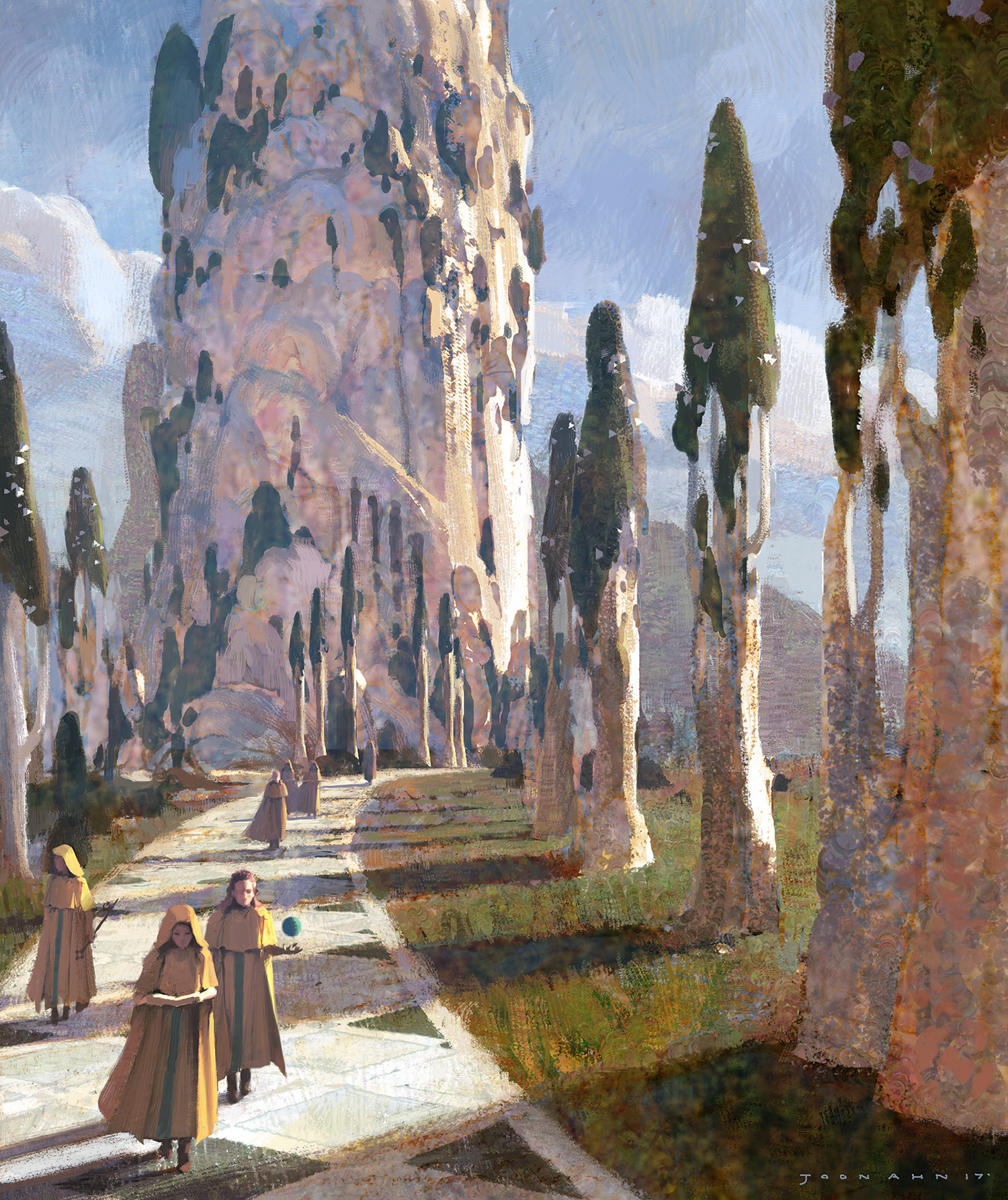
Please note: the Aedall culture is effectively extinct. A character can attempt to emulate the culture or have a distant connection to it, but cannot actively be a member.
"The tale of the Aedall made me weep, even if the sad tale is of their own making."
- Alan Swift's Travels of the World
The whispers and fading twilight shadows of a past glory, the tale of the Aedall is one of longing for what once was. Considering themselves the last true successors to their ancestors who once ruled the continent, these Arsa Sidhe built a small monument of that legacy in the Southern Reach.
Despite their great accomplishments and brilliant minds, these proud people were tainted by a bitter grudge for others that never faded with time — keeping outsiders from the Reach with words or swords. Their tale was seemingly cut short when they all but vanished in the year 1590 A.C., leaving much of their tradition and culture lost to mystery.
Language
Unsurprisingly for a people clinging to what once was, the Aedall almost universally — and exclusively — spoke Elvish, also known as Ancient Tongue, at least in public. While some words changed over time, and new ones snuck their way in (some even borrowed from Common), the language, much like the people, remained stagnant.
There were at least some who were willing to challenge this trend however, if only in private. Those who lived in the hills and forests further inland, especially closer to their human neighbours to the north, often knew at least some level of Common. Willing to begrudgingly trade and bargain with the Walljacks that frequented through their territory, these daring few served as a peek into the isolation of their peers.
Customs & Rituals
Most of the traditions of the Aedall are a mystery, perhaps even to some of their own. Outsiders never seem to witness festivals, parties, or prayers going on, though perhaps they are simply held in private. The one quirk that many have noticed however is their protectiveness over the dead: no matter where a member of the Aedall die, others always appear to collect their body, taking it to parts unknown. Whether there is a grand crypt or some cryptic plot at play is a matter of conspiracy and speculation ... but many believe it has something to do with The Spire.
Beliefs & Spirituality
As with so much else, the spiritual beliefs of the Aedall has been difficult to parse through and seemingly lost along with their disappearance. Despite not outwardly engaging in prayer, many believe that the Aedall continue the ancient traditions of the Arsa Sidhe before the Collapse, revering the mythical Phoenix and Equinox (day and night, respectively) as god-like figures that supposedly have power over the seasons, weather, and time itself. While the tales surrounding these beings have softened and changed with the ages, surviving artwork of the Aedall found in ruins of the Southern Reach suggest this spiritual focus on the divide between day and night — activity and rest — remains a focal part of their beliefs.
Korami
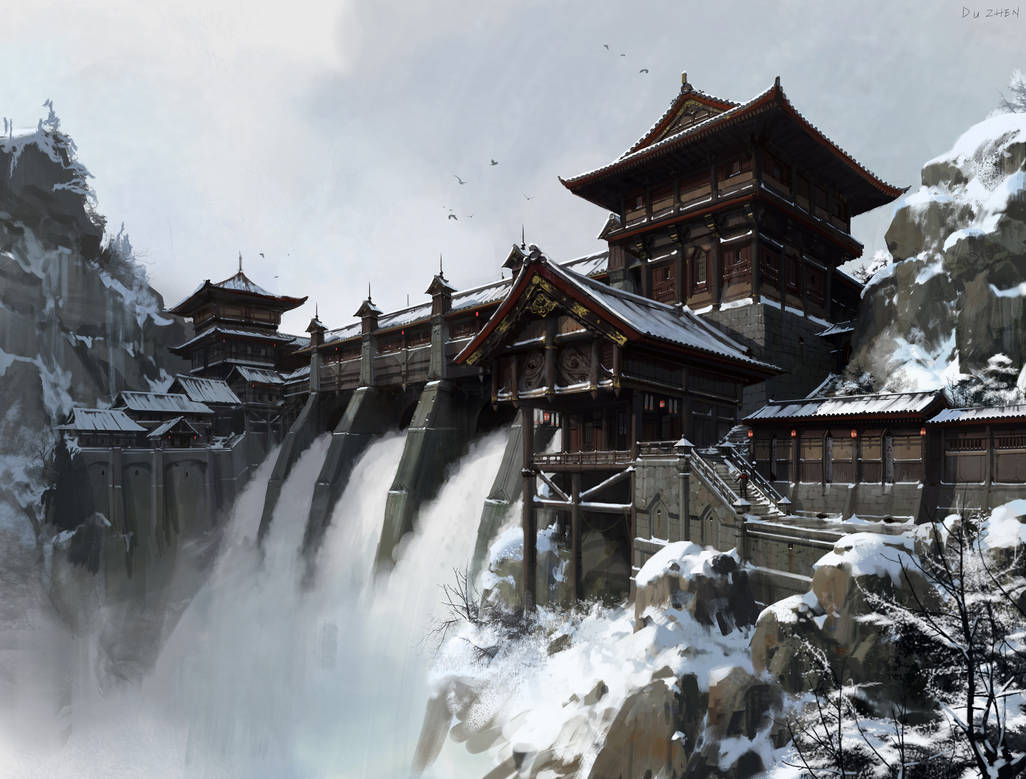
"When I left their lands, the Korami left me with sore legs from climbing, a heart full of wonder, and a mind still floating on the clouds."
- Alan Swift's Travels of the World
What makes a people stand the test of time? Those who say peace have never met the Korami, who, despite their ancient lineage on the rocky shores of Ko'ram in the far west, remain fractured and warlike over their mountainous forests. Hailing from such far lands across an ocean, the traditions of the Korami can be hard to separate between fantasy and fact, as outsiders like the Valks crudely re-create their cuisine and fashion as a mark of the exotic — ironic, given their dominating population.
Despite having one of the largest groups of Arsa Sidhe in the world aside from the Aedall, there was no love lost between the two when the Aedall vanished: one strayed far from their roots, the other was unwilling to let it go. With the latter now missing, it appears this dispute may never find its mend.
Language
Though (unsurprisingly) most of the Korami traditionally speak Elvish (aka Ancient Tongue) — including Korami Humans — the usage of Common is increasingly popular, to the point where many natives have a habit of switching between the two in the middle of conversation. Even the Elvish they speak is a far cry from what it once was, filled with slang and metaphors that more strict traditionalists would no-doubt consider blasphemy.
Interestingly, the unique tradition of warriors taking a vow of silence in some clans led to the adoption of local signed languages. Whilst intended to be used as a means of keeping their other senses sharp, the standardised Ko'rami sign language - usually called Handsign - has been adopted by the deaf and mute across the oceans as an unexpected cultural export.
Customs & Rituals
While specific ceremonies and festivals vary between different clans and factions of the Korami, they often celebrate notable battles — whether won or lost — as a sign of eternal remembrance of notable warriors.
What unifies almost all of the Korami, however, is a tradition of passing down an heirloom called the family blade. The head of a family, large or small, traditionally keeps a blade of some sort hanging in their home, usually over the mantle. This blade, to be passed down from generation to generation, need not be a blade that has ever been used in battle, or even sharp at all (many families have a dull, entirely ceremonial piece). With the steel signifying a bloodline's continuing fight onwards through time, to lose it is to bring a family's tale in history to an end. When some newlyweds travel to a distant land, they take a new sword with them, signifying the beginning of a new family line.
Another common (though less universal) tradition among the Korami is a pilgrimage into the mountains when coming of age. It is said that by the time someone reaches the summit of a mountain, they will have overcome whatever holds them back, leaving them ready to begin their adult lives.
Beliefs & Spirituality
The Korami are a diversely spiritual people. While tending not to worship particular spirits or follow certain Fables, Korami spirituality is heavily focused around the soul and ideas of rebirth; while this takes different forms across their lands, a common belief is that one's deeds dictate where their soul will go after their death. While some may return, others may reincarnate as different animals, such as owls for the scholars, or lions for the warriors. While not necessarily focused as much on being a good or bad person, the Korami value making something out of someone's life. A life with no meaning or impact results in a weak soul — one that will fade away after death, to be forgotten.
Mistan
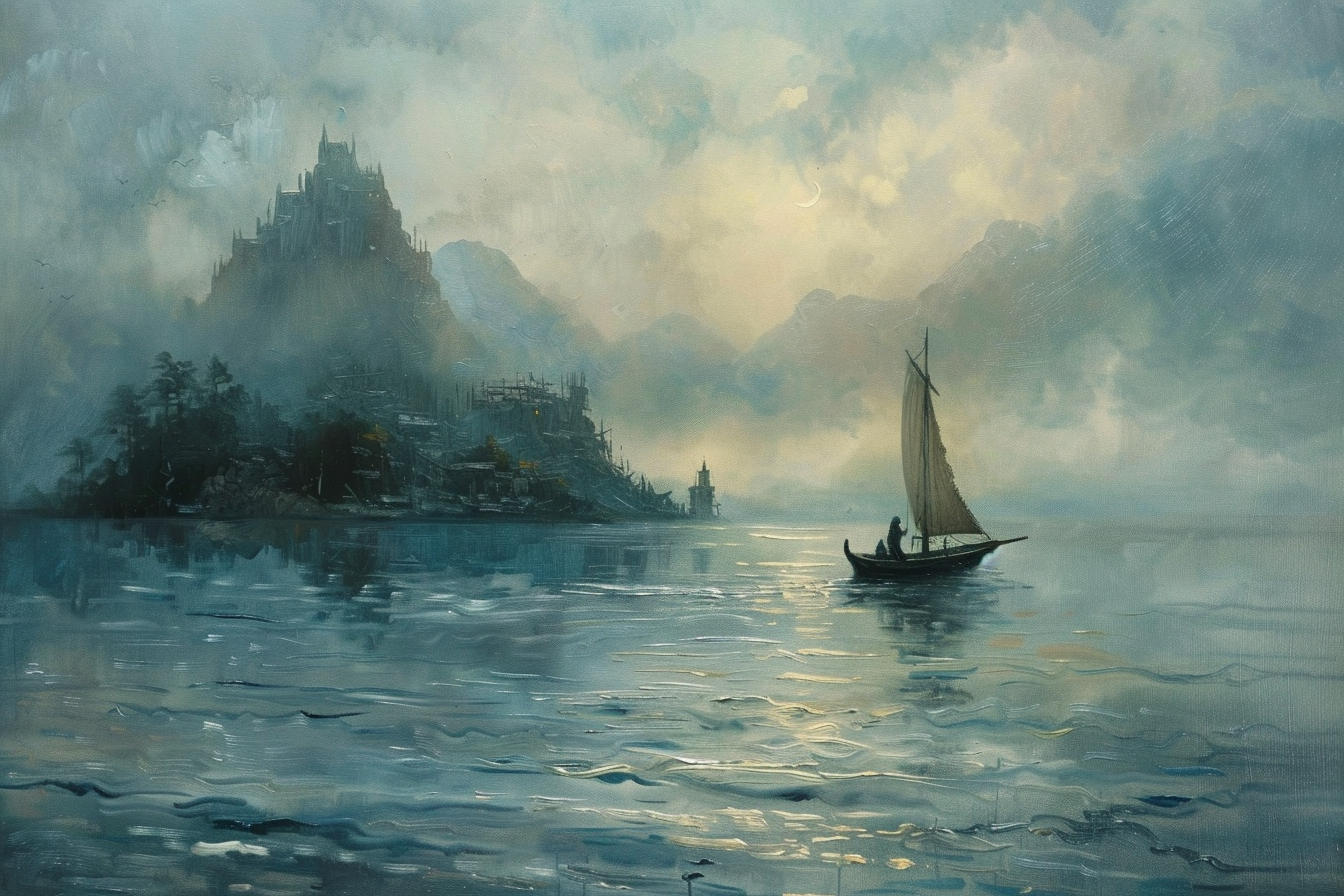
Despite treacherous waters, the Mistan are some of the best sailors in the world.
"I never meant to meet the Mistan, though I think I was fated to meet them ... the mists guide the curious their way."
- Alan Swift's Travels of the World
Faced with rocks that lurk beneath the water's surface and storms that can roll in with hardly a moment's notice, those who call the Mist Isles home — the Mistan — would not seem well-favoured to be travelling the seas. Despite these challenges, or perhaps because of them, the islanders have a reputation of being both the best sailors and shipwrights in the world.
Those who believe in tales and legends will tell you that the Mistan are gifted not because of their skills, but because of their blood: supposedly these islanders are descended from ancient sirens who paired with Humans, proven by their rich culture of singing and soft-featured faces.
But with such varied cultures throughout the Mist Isles, it is hard to pinpoint a specific Mistan culture. However, dominant themes exist throughout most of the independent cultures throughout the Isles. For instance, Mistans are often communal in their priorities and beliefs; most have served on a ship at some point in their life, and understand well the importance of working with a crew. They will often look after one another, and seek not only their own prosperity but the prosperity of their kith and kin. Mistans tend to identify with groups before identifying as an individual, though proud of their own accomplishments, they often recontextualize them for a service to something greater.
Language
Much like the mainlanders to their east, the Mistan almost universally speak in Common. While there are a handful of non-Humans who frequent and even live on the isles, they have remained a very isolated culture for much of their existence, with little influence from foreign tongues.
This is not to say the Common of the Mistan is identical (or even close to) those spoken on the mainland, such as by the Valks. Instead, they speak in heavy slang and euphemism, with new words altogether that form a unique dialect. No matter what they speak, though, Mistan always seem to maintain an upbeat sing-song accent that makes it difficult to believe when one is mad at you — perhaps more proof of their mythological ancestry.
Customs & Rituals
The Mistan are a communal people, with small towns along the shorelines being close-knit and often hosting parties and celebrations for exciting events in the community, whether that be weddings, births, or other landmarks in one's life.
The most universal ritual among the Mistan is a rite of passage of sorts when coming of age (though not all partake). This usually comes in one of two forms: either a person declares the isles their home and makes a trek across them, usually travelling to the nearest peak that overlooks their hometown; or, a person decides their life is for adventure, setting about building a small boat for themselves with the aid of their community and setting off towards the horizon, not daring to return home until they have something interesting to share, whether a trinket or story. It is unsurprising given the danger and effort involved that most opt to stay home.
In the Isles, Music is seen as a form of magic, calling upon the Siren Serene’s melody to work beautiful songs into the world, either as an expression of her or inspiration through her. Music is often used to accompany the Mist’s thriving oral tradition. Storytellers, another sacred role in Mistan society, will play music along with their stories which tell of their ancient peoples. This oral tradition stays strong, even long after the arrival of writing on the islands. Itinerant bards, though somewhat rarer now, used to be a common sight among the Mists. These people would often be sworn to adventure, and would spend their days traveling between settlements to sing epics in ports. They would either ride on ships going between ports, or travel on their own small, often one-manned ships. There is a known practice that these bards would perform music while arriving in a port, calling the people down to the shore so they could spin their tales upon arrival.
Written record is not seen as a final iteration of a tale, but rather one retelling of it from one perspective. Stories of the mist’s history are retold and reinterpreted even today, using key figures and events but often with unique differences to each storyteller. Each retelling is considered true and meaningful in some way, even if long departed from actual historical fact. Mistans do not see historical accuracy as more important than historical meaning. Legends tell a story, they do not recount events.
It is also common among some of the older generation that when old age trods ever-onwards and death is around the corner, a Mistan elder will sail off into the sunset rather than wait for death to come for them at home. What awaits them in their final days is theirs to explore.
Beliefs & Spirituality
It is impossible to discuss the Mistan without making some kind of reference to the Siren Serene, a presence that is said to embody the waters around the isles. Carrying sweet melodies on the waters and punishing those who selfishly take from the oceans without respect, this presence has been a part of Mistan culture and life as far back as tales go. While not all the Mistan pay much mind to the tales of this being, it is said that the Siren holds a soft spot for those who live on the Isles — some superstitious sailors insist on having a Mistan among their crew so as to not incur her wrath.
Superstition also plays a heavy role in Mistan life, leading into a deeply spiritual people. Though the mistans worship no gods, they see their islands as a home to various spirits. Be that the greatest spirit, the Siren Serene, or of the many fae who inhabit the isles. Other things, such as beasts of nature and the seas, are also the subject of spiritual respect. One example of superstitious belief is that overfishing leads to spiritual malady, bringing great misfortune not only to oneself but one’s community. Another is the heavy use of charms and wards to ward off bad spirits, namely trickster fae.
Among the spiritual leaders of the Mistans are witches, sea-seers, and stormcallers who can be found throughout the more rural regions of the mists. Practitioners of lay or empowered magic, who pass their secrets onto their children. Magic is synonymous with spiritual power to a Mistan, and thus those who possess magic are both seen as and act as spiritual leaders. Though Mistans believe in more than magic powered by anima, including lay ritual magic, and thus so-called ‘real’ magic is not necessary for one to practice magic.
One notable attempt to organize the otherwise disorganized folk beliefs of the Mists is the Muirghormi, who believe in the power of their so called Siren Supreme. They are especially notable for having one of the oldest written spiritual texts among the Isles known as the Muir. They hold that the Siren Supreme is a terrible and dreadful force that demands worship, or else in her displeasure all may be washed away. A common theme among other practitioners of Mistan folk belief, though taken to an extreme.
Credit: Reedie, Tomtomgags
Stonerunner
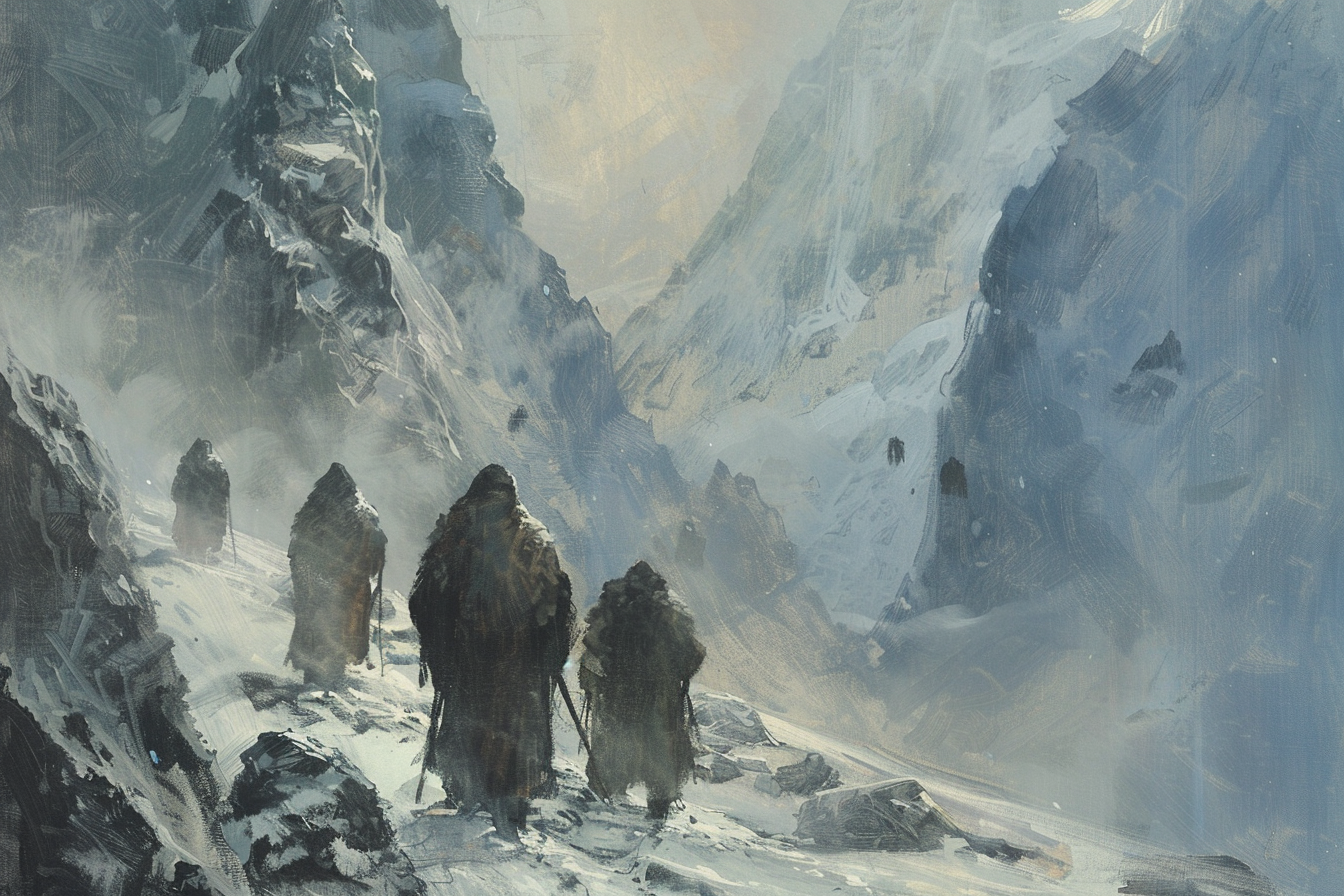
The mountain passes are childs-play for these resilient Greatlings.
"I didn't spend much time with the Stonerunners, on account of the cold and wind ... but they'll drink you under the table and then throw you forty paces into the air if you make too many jokes."
- Alan Swift's Travels of the World
Valley-dwellers are often quick to underestimate the Stonerunners, assuming them lumbering beasts of the mountains, closer to the goats they hunt then the 'civilized' society of bustling city centres. Peer past this facade however and a rich tapestry is revealed of a people that thrived long before The Collapse: adept in hunting and tracking, resilient and unbreaking in their harsh home. While once raiders like many of their Greatling counterparts, the Stonerunners have mended with time, tending to work and trade with their neighbours rather than simply ransack their villages.
Tribe Organization & Matriarchy
Stonerunner tribes consist of large families, with larger clans being sometimes spread across multiple tribes. These tribes are ruled by a Matriarch, a lifelong elected position by the heads of each family, picked from among the heads of each family. This Matriarch (rarely, Patriarch) is tasked with overseeing the affairs of the tribe with a focus on mediating conflict and enforcing order. The primary role of the Matriarch is to ensure tribal stability, and to provide for her people. She is rarely a war leader, and usually may appoint a Commander to lead her people through conflict, while she maintains her primary role as tribal caretaker.
Stonerunner lineage is determined by the mother, placing the women at the head of familial hierarchy. Barring rare exceptions, the family heads who elect and are elected from are all women. It is possible that, when no other female heir is available, the head of a family falls to the eldest son.
While Stonerunners mostly exist in independent tribal communities, it is possible for a particularly ambitious warlord to conquer other tribes. The norm, however, is a confederacy of tribes. In this case, a number of tribes band together for a common purpose, often entering into very close collaborative relations with each other, and uniting their militaries in times of war. In a similar way to the Stonerunner elective system, a High Matriarch is elected from tribal leaders within the confederacy. Their authority is limited within the confederacy, acting not like a queen, but a high arbiter who settles disputes and appoints Commanders in times of war. The High Matriarch receives tribute gifts voluntarily from other Matriarchs within the confederacy, but receives no taxes of obligation.
Language
The Greatling language has many dialects spoken throughout the world. The specific dialect used by the Stonerunners is known as Soft Tongue. The main difference is the use of volume as a means of inflection by the speaker, which may appear meek to outsiders. With a tendency to accent words with volume rather than pitch or tone, those who first encounter Greatlings may find themselves intimidated - especially with their habit of commanding outsiders, rather than asking. The Stonerunners are more tactful, though: after many tense standoffs with non-Greatling locals, these mountain-dwellers began to change their language, introducing more 'polite' words into their language and shifting tone to make it easier to get along with outsiders, much to the dismay of some more traditional clans.
Among the quiet mountains, this soft language is useful for being heard only by those you mean to. Some people mock this dialect among the Greatlings, but the Stonerunners laugh when these people speak loud enough to spark an avalanche. Not all of these changes are welcomed by all however, and you will still find plenty of traditionalists who stick much closer to their roots, falling inline with Greatlings elsewhere in the world.
Customs & Rituals
Something most people miss at first glance is the very different way that the Stonerunners organize themselves. In these cold mountains, it is traditionally the women that lead families and communities, not men. Taking on a sort of shepherding role, some of the most ruthless women in history come from these clans, often taking more patriarchal societies by surprise. As with all things though, these traditions change and mend over time, and it is not unheard of (even if still uncommon) to have male Greatlings leading their communities.
A mark of great pride among the Stonerunners is their love of sport. Every summer, when the mountains warm, competitions are often held in a variety of forms: running, climbing, hunting, and perhaps most famously, rock and log throwing. While a non-Greatling would have to be incredibly brave (or foolish) to participate head-to-head with these champions, witnessing such competitions is a rare treat for outsiders.
Culture
Besides the Under-Star Games, which are sometimes attended by curious visitors from afar, it may be easy to write off Stonerunner culture as simple or unrefined. But that is simply not true, as apparent to anyone who spends long with the tribes. What may become quickly apparent is the dedication to the stars and the zodiac. In fact, Stonerunners do not attribute their birth to a birthday, although a Diviner could easily identify the exact day and possibly time of birth. Instead, each Stonerunner celebrates the zodiac they were born under, hosting small events for friends and families while the stars are high.
Although Stonerunners are not ones for music, there is a rich culture of storytelling. Often, stories are told around a fire by the old, wise, and silver tongued to weave and recite epics which date back hundreds, perhaps a thousand years. With little to no written record, most Stonerunner history is recorded in oral tradition, painstakingly passed down from generation to generation, with an ever growing repertoire of tales. And though the Stonerunners do not paint paintings, they adorn their halls with intricate carvings and colourful tapestries, while erecting statues along wild paths.
In fact, the martial prowess of Stonerunners has left a lasting impression on the outside world. Particularly in the Valkian and Northern realms, Stonerunner warriors are hired as unbiased mercenaries, known as Fehirds, for kings and dukes. In this arrangement, the Stonerunner soldiers have no motivation besides wealth and honour, making loyal and powerful soldiers, especially as personal guards. It is not uncommon to see a Valkian or Northern noble with a Stonerunner bodyguard. In return, these Stonerunners are able to complete their duties and tours to return to their tribes with riches.
Though open warfare is rare between Stonerunner tribes, a strong warrior culture remains. Each tribe has their own code of honour, though they are shaped by the culture of the tribes surrounding it most often, sharing many similarities. A Stonerunner warrior is sworn to such a code of honour, so they never stray and shame the tribe. Often this code is carved into stone, and recited ceremonially. Sometimes these codes are even recorded in the form of poetry, as one of the only forms of written literature seen throughout the tribes.
Funerary Rites
The Stonerunners hold the stars in the highest regard, and thus their dead will see the stars in their last moments. For many nights, the dead are laid bare in a clearing exposed to wolves and birds to be picked clean from flesh, known as a sky burial. Once the flesh has been picked clean, the bones are retrieved and thoroughly cleaned. These bones are typically then interned within a barrow, usually with the tools of their trade as grave goods, such as axes for lumberers, bows for hunters, and blades for warriors. Some barrows are shared by families, while others are for individuals and usually much smaller.
Celebrations
Life in the Amafells is harsh, and the Stonerunners do their best to thrive despite this. There are few festivities held by the stoic people of the mountains, but there are still celebrations.
- Frostfade : A happy occasion when the snow melts in late spring and the lowlands become accessible again. Relatives are often invited from local villages to attend this great celebration. Games are played including log and stone tossing, archery, skiing, and mud wrestling. A feast is also held with the first hunt of the season. This festival is usually held at the start of summer. Some Stonerunner tribes with ties to Fallstoner caravans are even known to practice Frostfade and the Fallstoner celebration of the Budding Festival side-by-side.
- The Saga Recitals: A celebration marked by many stories. Skulls preserved from past Matriarchs are gathered and displayed while the tribe gathers to hear their tales. As the accomplishments of past matriarchs are retold, tributes are offered to the sitting Matriarch.
- Under-Star Games : The Under-Star Games are a grand contest held deep in Fyrir territory. Held in a field at the base of Notthof, this annual celebration has champions compete in great feats of competition. Log lifting, stone throwing, wrestling, and duels are common. Huge crowds come to attend, as the games last several days. Hosted by the Temple Diviners of Notthof, the winner receives a star reading of immense significance; a reading as great as one receives for performing Fara.
- Zodiac Festivals : The stars which a Stonerunner is born under are a very important aspect of Stonerunner culture, therefore it is no surprise that the day of a Stonerunner’s birth is of great importance to them. The biggest issue of this stems from the lack of available supplies that can be used in the Amafells for something recreational as a festival for each Stonerunner’s birth celebration. In order to consolidate supplies and still pay homage to the zodiacs which guide their fate, the Stonerunners will celebrate the births of all who were born under a certain zodiac at a single festival. This has led to Stonerunners not caring much for their actual birthday, but rather putting more importance on the dawning of their zodiac
Methods of Challenge
Matters of arbitration are always open to Stonerunners, should they allow for their Matriarch to decide the outcome of a disagreement. This may come about when one family takes issue with another, perhaps due to an undeserved blow being struck, or the trespassing onto hunting grounds. On occasion, borders need to be drawn, and issues settled. The Matriarch’s job is to settle the dispute. But when either side wishes it, the matter may be settled by strength of arms. It then falls to the duty of the Matriarch to oversee this duel and ensure the duel is fair. As duels usually come around when a dispute is relatively high stakes, it is not unheard of for these to end in bloodshed. Despite this unfortunate outcome, this is the best course of action to maintain stability within the tribe.
If the issue lies with the Matriarch, however, then they may also be challenged. This matter may be settled in various methods. If the accusation is severe enough to warrant the deposing of the Matriarch, then there are two courses: the unanimous dismissal by the tribe families, or by duel. A Matriarch may either take up arms in event of a duel, or appoint a champion to do so for her. A Matriarch can never be forced into a duel, but often honour and stability demand that course of action. A duel is rarely requested without dominant support, as the odds of being challenged yourself and deposed is higher without. In the outcome that the ruling Matriarch is deposed and stripped of her position. The new ruling Matriarch can determine if the deposed is executed, exiled, or sent off to Notthof to live out the rest of her days as a Diviner.
Honour is held in especially high regard among Stonerunners, and when a duel is challenged, it is often accepted. The matter is nuanced, however, in that it is inappropriate to challenge someone who is not a warrior to a duel. It would, for example, be dishonourable for a warrior to challenge a healer to a duel, as that would instead paint the warrior as a bully.
Beliefs & Spirituality
The Stonerunners are perhaps one of the least openly spiritual people of the continent — while still respecting and on occasion interacting with Fables, the Stonerunners tend to be very down to earth, respecting one's actions and deeds devoid of aid from supernatural figures. This is reflected in their sporting competitions, where those using powers gained by Fables or the Arcane tend to be frowned upon.
The one notable belief among the Stonerunners however is that of destiny, which they heavily tie into the stars. High in the mountains above the clouds, they can stare up to the night sky, watching the stars twinkle and constellations dance about. While not believing that the stars dictate the future per se, they tend to put a lot of stock into shooting stars and comets as good omens of what is to come.
Notthof & The Diviners
Within the Amafell mountains lies the Star Temple known as Notthof. The vast stone structure was constructed by long lost Stonerunner ancestors. It was designed to track the movement of the heavens above and divine any meaning which could be found there. In the present day, it serves as the training place for the Diviners, deposed Matriarchs who practice various forms of divination, though primarily star readings. Diviners serve as the spiritual leaders of the Stonerunner tribes, often shunning certain supernatural forces like the Fables in favor of heavenly things like the constellations and the zodiac.
It is common that pilgrims will arrive at the Star Temple with gifts of preserved food, drink, and other supplies needed for surviving in the Amafells. These gifts are usually brought with one of two intentions: To learn the divination methods of the Diviners, or to have their own future read by the Diviners.
Violence is forbidden upon the Star Temple’s grounds, up in the Amafells. Its sacred grounds are not for the shedding of blood, and it is often used as the site of meetings for arbitration. The bones of many Matriarchs and Diviners have been donated to the temple to display ceremonially. The Temple also serves as the final stop of Fara, an honoured pilgrimage taken by many Stonerunners seeking guidance from those that read fortune and omens in the stars. To facilitate these pilgrimages, the Stonerunners take great effort to maintain cairn marked paths to the site. This is the origin of the common Stonerunner phrase: “All paths lead to Notthof.”
Credit: NOS402, Moony, Tomtomgags, & magic_intern
Fireborne
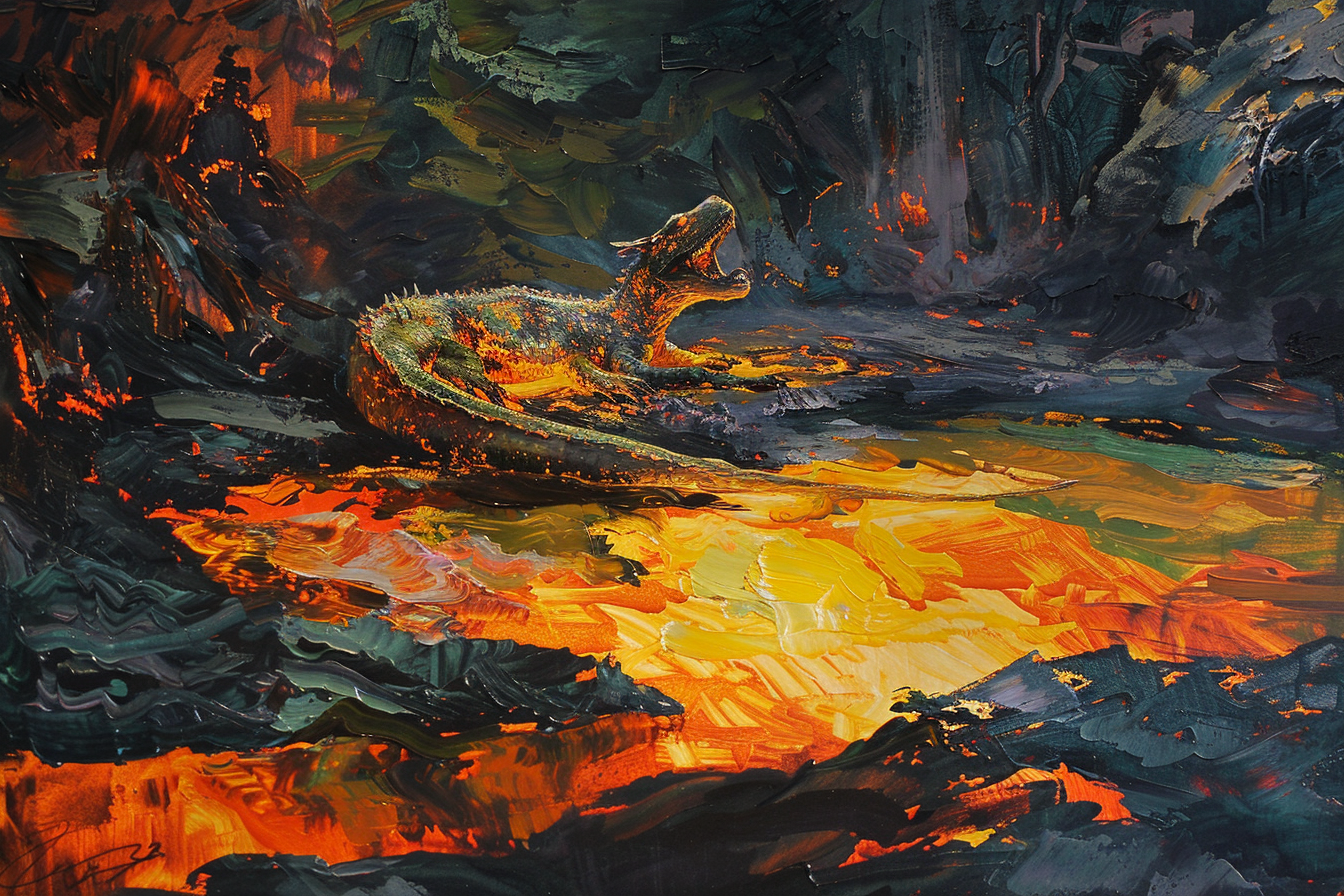
The spirit of the Fire Dragon is core to the mythos of the Fireborne.
"Despite being never fully welcomed by them, I was more worried of falling into pits of magma or dying of heat than by their blade."
- Alan Swift's Travels of the World
Far from the pleasant fields and bustling cities of the world, past the crashing waves of the seas, you begin your way into a barren, ashen land. Striking into the core of its beating heart, where the heat of the volcanoes can wring sweat from bone, keep a keen eye — you may find yourself face to face with the Fireborne.
An unlikely alliance of Greatlings and fire-fey heritage Fey-Touched, the volcanic landscape of their home in the Ashlands is not for the faint of heart — or those with an uneasy step. Often heading into battle with a blade-wielding Greatling and a Fey-Touched on their shoulder with a bow, the symbiotic relationship of these two peoples form a stalwart force, able to crash through all those who stand in their way.
Hunting beasts that wander from the northern wastes under the guidance of the spirit of the Fire Dragon, some claim that the Fireborne are true saviours of the world from a foe many do not even know exists.
Important Figures & Organizations
As a clan-based people, the Fireborne don’t have a particular monarch or ruling body. Similarly, spiritual leaders are scattered throughout the barren lands, with no one figure that commands authority. Even when banding together, the alliances various tribes and clans form are typically short-lived and on an as-needed basis, returning to their individual interests and lives as soon as possible. Nevertheless, there are two main “organizations” that have persisted for centuries, simply out of necessity.
Blades of Bastion - The Blades of Bastion are a group of warriors based within Bastion. Formed primarily of those who remain the last of their clan, the final few left standing on bloody battlefields, they now use their lot in life to answer the call of tribes in need. Using whatever force needed, their goal remains simple: to bring about their own extinction by saving others from becoming orphans of their tribes.
Ashborne - The Ashborne is a name spoken with vitriol by the Fireborne who’ve come across them. Brigands, bandits, outlaws, and worse; the Ashborne arose as a group of the exiled and outcast - yearning for a tribe, the tribe-less made their own. They stalk in the obscuring fumes of smoke, and when scavenging to survive and ambushing to seek vengeance intersect, they don’t pass up the opportunity.
Language
Writings suggest that the ancient Fireborne once knew how to speak the tongue of the dragon; sadly, this knowledge has since passed. With the Fey tongue being the main language spoken by both the Greatlings and Fey-touched alike of the Fireborne, much of their conversations tend to be difficult to parse by outsiders. The legacy of the dragon's speech remains however with names of people and places tending to retain features of the lost tongue, most notably in suffixes such as -char, -mir, -bis and -ith.
Customs & Rituals
Without doubt, the traditions of the Fireborne are heavily connected to their relationship with both the Fire Dragon and their duty as warriors in the north. Using a type of flammable stone found in the ashlands, the Fireborne commonly hold great bonfires to mark occasions: marriages, childbirth, victory over a foe, and funerals. With the solemn belief that light and fire will vanquish all darkness, they find dark corners or dimly-lit dwellings to be suspicious. Instead, their homes tend to be spacious, filled with windows and carved tunnels to let in light, and adorned in rich tapestries that shine brightly when lit by candles and torches. Similarly, some also see rising early as a bad omen - chiefly because of the darkness that still covers the land before true sunrise. To ward off any associated bad luck, the more superstitious leave lanterns lit at night or keep a fire going in the hearth to prevent themselves from waking in total darkness.
With such an emphasis on honor and a warrior spirit, it’s natural that the Fireborne also have certain traditions relating to death and dishonor. The cultural significance of Dragon’s Tongue Pass is one such example; this forking pass, leading West and East, has become a final resting place for many Fireborne over the years - assuming they don’t meet an untimely end from the typical harshities of living in the Ashlands. Those of strong, honorable spirit that seek a death not of old age or sickness are sent down the Eastern path, while those of a dishonorable, shameful spirit are sent down the Western path. Stories and tales have spurred for ages of what lies at the ends of each path, of what exactly meets these men and women to grant finality - but no one can know for sure.
The Fireborne are also a heavily communal and, at times, nomadic people: while not moving constantly, a group of Fireborne will willingly leave their settlement behind and make a new home in a beast-infested area: while dangerous and daunting, the crusade to clear a new home and rid it of foes is a noble cause that earns high praise in their ranks. They share a strong sense of kinship and family bonds, too. This differs from Falstoner cultures: Falstoners may view everyone in their caravan as family, however in Fireborne families there is a stronger emphasis placed on the bond of an immediate family. While Fireborne folk have the strongest ties to their blood-relatives, they’re always willing to help out their neighbors. They give to their tribe, and the tribe gives back. Elder and veteran respect is important.
Games & Holidays
A primary holiday among the Fireborne is “Four Flames Day.” Throughout the day, four massive flames will be lit in the center of a tribes’ village to represent four major aspects of the Fireborne’s core identity: family, fighting, freedom, and fortitude. After the final flame is lit, a large feast is held within each tribe that is accompanied by games, music, and drink. Depending on the tribe, this day of celebration may be held anytime between Skybright and Darkmoon.
One of the games observed in the Fireborne lands involves racing Igneous Crawlers. As many in the Ashlands learn, they are not good for eating and the shells are rather useless. Instead, they become a source of entertainment and are either kept as pets that children and youth will race.
Beliefs & Spirituality
The most ancient of the Fireborne are said to have been keepers and friends of the Fire Dragon when it was still living and soaring in the skies. Since it went into its rest, and its bones turned to stone throughout the Ashlands, the Fireborne remain keepers of its legacy: holding the line that the dragon fought for, and seeking the spirit of the fallen dragon's guidance in their quests.
In the heart of the Ashlands lay the great dragon's skull, with eyes kept alight with a supernatural fire: in tribute to this spirit and in hopes it will grant them aid, the Fireborne commonly create shrines to the dragon wherever they go. In more fanciful locations, this may be carved skulls or pyres: in others, it is as simple as a carved out stone holding a candle. Even far from the Ashlands' shores, some say these shrines still attract the attention of the spirit.
The major values that seem unique to the Fireborne reflect their warrior spirit. They’re a proud people, of which some even claim themselves as saviors of the world. Cowardly acts are among some of the most disdained by the Fireborne, and though the specifics might vary from tribe to tribe, these are among the most severely derided: desertion during battle, dereliction of duty, abandonment of children, and dishonorable combat, or cheating during duels.
Credit: Kamaoe, mageaegis, Moony, Electric
Northerner
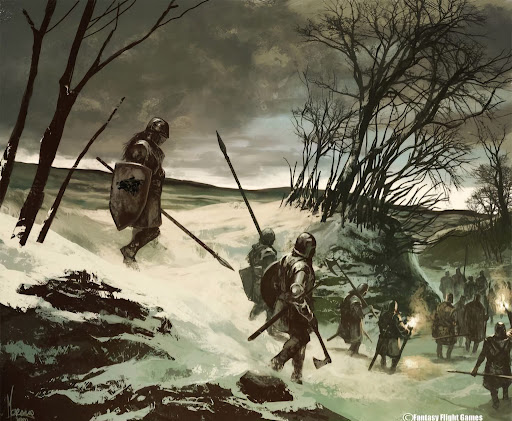
| Art by Fantasy Flight Games |
“With courage and wisdom, enclaves of peace have been carved out of the snow-clad wilderness.”
“The cold almost spelled the end of our journey. The Northerners then proved their valour by risking their lives to save mine – only to place me in a different sort of peril: a night of heedless, unending revelry.”
- Alan Swift's Travels of the World
A proud people whose love for festivity is rivaled only by their penchant for conflict – though not always of the violent sort. Fond of exchanging blows and words alike, Northerners (or Northrons) hold both philosophers and warriors in high esteem. They strive for mastery in both warfare and rhetoric, a crucial set of skills for survival in their homeland. Since the threat of winter is ever near, internal strife is best avoided, lest they be left to the mercy of beasts and storms – thus they use persuasion and conquest to maintain unity in the face of peril. With their other talents for forestry and architecture, the Northerners have turned this frigid realm into their vibrant home. Amid great expanses of tundra, taiga, and ice-laden hills, they find solace in their abodes – be they pelt tents, grass-roof hamlets, or great palaces of stone and timber.
History
Although they began as modest villages on the outskirts of the Ancient Empire, living in the shadow of the Arsa Sidhe’s grandeur – Northerners have since lifted themselves out of obscurity and ushered in a new age of resplendence. In defiance of the harsh climates of the region, Northrons toiled the land and raised hardy flocks, bringing about a flourishing civilisation amid the ruins of their predecessors. Through generations of conquest and marriage pacts, the nascent baronies and duchies were consolidated to form the formidable kingdoms that stand today. These dominions even predate the nations of the Midlands, having been established as regional powers long before Mariza and the other constituents of the Valkian Realm arose. Northern cities, especially the capitals, are not only strongholds – but also bastions of splendour, brimming with art and finery.
Language
As far as the frozen end of the world, the potent influence of the Midlands can be felt – even if only in trickles. Most Northrons speak some variant of Common, though outsiders may take an extra moment to understand them, as the realm's accents and dialects are marked by various lilts, clippings, and elongations.
With sizable Greatling communities dotting the region, their tongue also has some relevance, but it possesses a distinct sound to the language of their Amafell and Fireborne cousins.
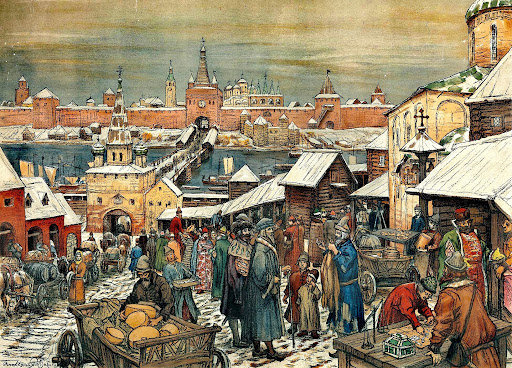
Customs & Rituals
Chariot and Sled Racing
The tradition of chariot races never truly faded away as it has in most other parts of the world. An echo of the Ancient Empire's glory, this high-intensity custom has been carried on by Northerners, who race across arenas named vithguir at full gallop, loosing arrows and hurling javelins at adversaries. The term is derived from archaic words for ‘path of gryphons’, which scholars believe to be an allusion to the magnificent, decorative wings the competitors wore. Others theorize that in the days of yore, the Ancient Empire's chariots were truly pulled by gryphons.
Although most of these vithguir structures have fallen into disrepair, some still stand in all their splendour under the care of nobles and sovereigns. Those who do not have the luxury of these arenas instead course through winding city streets and country roads, kicking up dust and mud onto the spectators – who rejoice regardless. Even in winter, this sport thrives; crowds cheer for the charioteers as they race upon sleds, hauled by horses, reindeer, and wolf-hounds.
Solstice Festival
A deep resentment of “daemons” pervades Northern culture, rooted in events that are said to have occurred eons ago. It is no longer known which language this term originates from, nor exactly what sort of entity it described, but it has since become a common insult for any Fey, aberration, or even person that embodies too much wrath or deceit.
During the longest night of winter, the veil separating the earthly plane from other unknown realms is said to be at its thinnest. Thus, a great festival takes place to ward off any such malign, otherworldly entities that might interlope. If the chronicles are to be believed, a formidable army of these enigmatic daemons emerged from the frozen, uncharted wastes beyond the edge of the world. Awash in blood, they descended upon the Northern realms, and engulfed the land in hellfire.
In hopes of striking fear in the daemons’ hearts – if they had any – mortals fashioned masks with grotesque, ferocious visages. Warriors also donned these false faces to charge against the daemons, with the superstitious belief that it would sow confusion in their ranks, granting them sparse yet crucial moments of opportunity – just enough to tip the scales of battle. Other, less brave folk were desperate enough to attempt to wear these masks as disguises, sparing themselves from the daemons’ wrath.
Although countless centuries have passed since this legendary war ravaged the world, its legacy endures. With the passage of time, these traditions have since been abandoned – if they were ever truly practiced. A different, more flippant rite has emerged as a sort of homage to this troubled mythical past.
These customs manifest in the Solstice festival, a night full of raucous camaraderie where apotropaic charms adorn every street corner, and people don the furs and faces of mythical beasts. Even throughout the year, as a ripple effect of supposed history, armourers forge visors to resemble faces, and fasten false horns onto helmets. The Northerners dance, howl, and holler, accompanied by melodies of haunting beauty, while various instruments join the harmony – aurochs’ horns, towering drums, and long brazen instruments, wrought into the shape of a snarling monster's maws. This clamour can be heard from many leagues away, and is said to scare away the daemons, driving them back into the unknown reaches of the north. Some Northerners carry the hope that it may even stir the very sun from its slumber, so that it may rise early and cast away the darkness once more.
Alvraade
Beneath pavilions of silk, great olden trees, or rough-hewn monuments of ancient stone, Northerners come to assemble. Here, local lords and high kings seek counsel from their neighbours and subjects, to discuss matters of great import such as prophecies, commerce, and truces. Orators display their stately eloquence, using exhaustive arguments to plead legal cases or rally their kindred to a cause with ponderous deliberation.
These events draw in people from all walks of life: fur-clad herders, astride elegant reindeer, come all the way from the taiga to converse with men-at-arms wearing flowery surcoats. Coastal sailors adorn their faces and limbs in paint for the occasion, so that they may break bread with knights dressed in iron scales and plumed helmets.
Although Northrons are keen on celebrating their differences with drink, they are flawed like any other mortals, and sometimes yield to the fickle whims of their emotions. This corner of the world is rife with bristling prides, leading to centuries-old blood feuds and power struggles between various chivalric orders, noble houses, and clans. Trials by combat can be invoked at the Alvraade with the hope of avoiding these internecine wars, but history rarely unfolds so simply.
Beliefs & Spirituality
Northerners built many temples and holy sanctuaries, but they are less inclined to be devoted to the Fables, at least not directly. Instead, a different sort of philosophy has prevailed – that of ancestor worship. Saints, god-kings, and heroes populate the mythos of the North, whose stories shift and morph with every retelling. For their great endeavours and exemplary virtue, these mortals have earned the reverence of their kin for generations, and been granted a sort of immortality – forever remembered in sagas, epics, and runestones. After a lifetime of devoting themselves to a righteous cause or a Fable's principles, they are deemed paragons, and are often beseeched for guidance. For when a Fable’s will is too difficult to discern, given their enigmatic and distant nature, or when the bleak future is obscured with fear and uncertainty, Northerners favour teachings that are somewhat more grounded.
Credit: Tidepod, Moony
Southern Reach
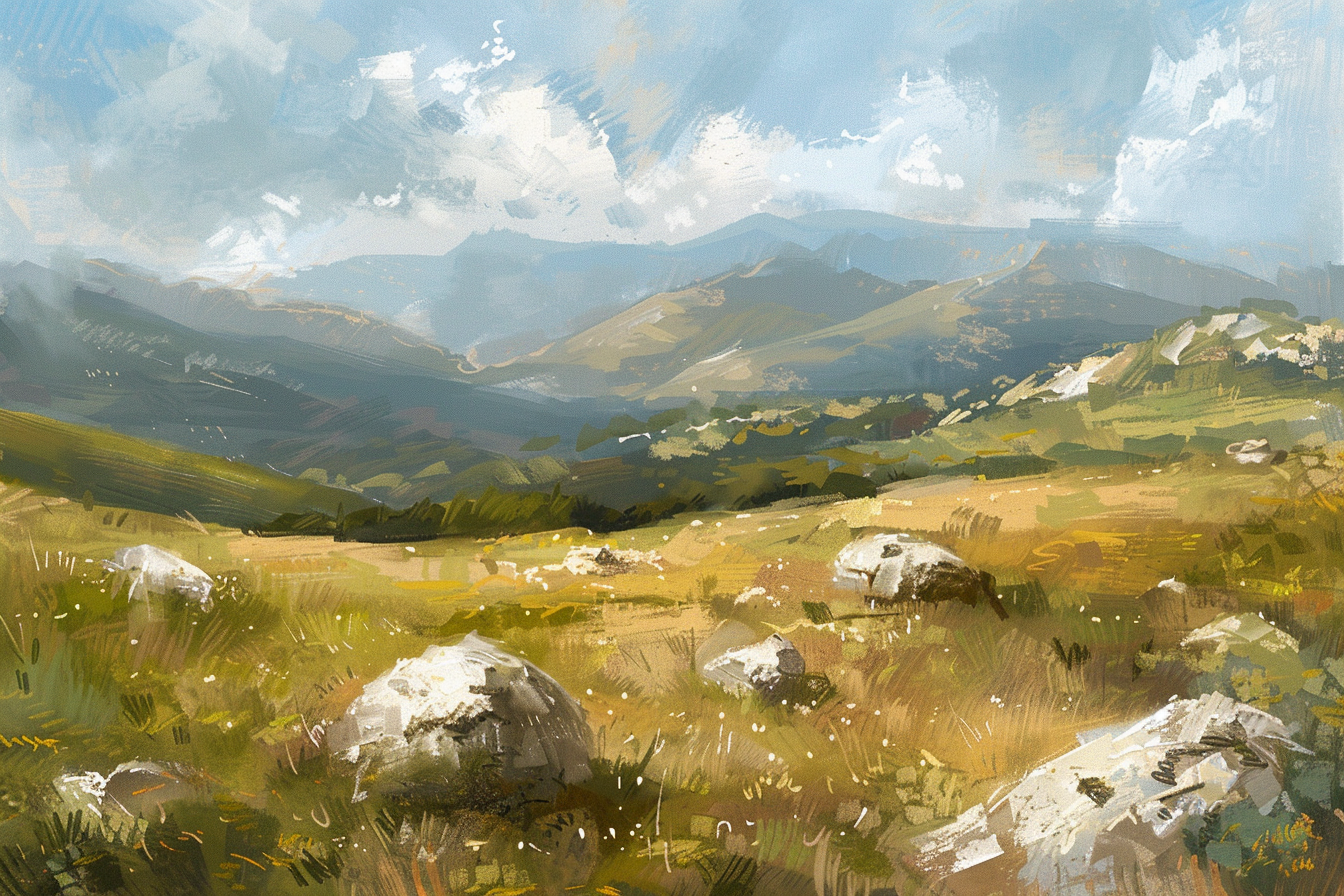
| Location: | Eastern Continent, South-west |
| Biome: | Temperate, rolling hills; Swampland (partial) |
"This is our home, Nua Sidhe. After you destroyed our last."
- Elder Eriden of the Aedall
The Southern Reach is the main setting of Avalore.
Filled with rolling hills and a variety of landscapes, the Southern Reach gives a painter ample inspiration. With a thick swamp marking a line between it and the Midlands, this rich land has been left mostly untouched, shielded by the bog and the mountains that cradle it to the east. Once home to the Aedall, after their disappearance it lay open for new settlement and growth.
Notable Locations
- The Spire, the most notable remnant of the Aedall that has been repurposed into a town.
- The Wall, a grand structure on the north bank of the Violet River that separates the Southern Reach from the Duchy of Rulan (Valkian Realm) in the Midlands.
- Albern Crossing, a centuries-old crossing that's become a waystation for travelers, adventurers, and bounty hunters alike.
Bordering Locations
- To the north is the Midlands, with The Wall separating the two;
- To the east are mountains home to the Stonerunners, and past that the Faded Steppe;
- To the south is the Ocean, mostly unexplored; and
- To the west is the Ocean, with the Mist Isles a week's journey away.
The Spire
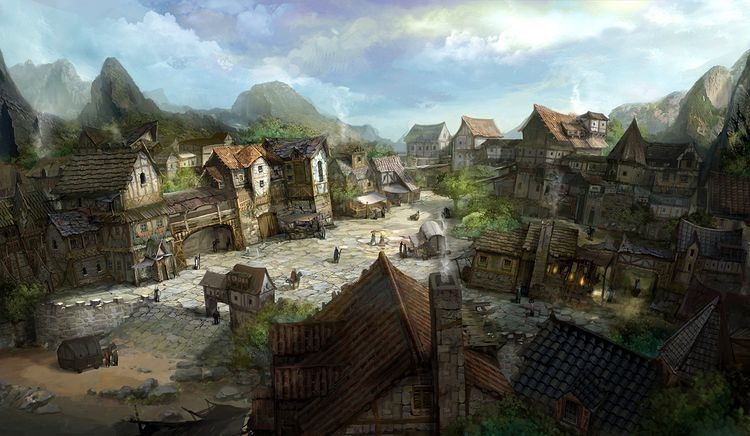
| Location: | Southern Reach, South-west |
| Affiliation: | Neutral |
"Towering into the sky, entirely alien ... what could it be for, I wonder?"
- A Scholar
The Spire is a large structure that towers into the sky near the southern tip of the Southern Reach. Its origins and purpose are seemingly a mystery, as its existence was not known until after the disappearance of the Aedall. This mystery drew in people of all trades and backgrounds, and around the year 1600, an eponymous town sprung up around the Spire itself. In time, with smithies, seamstresses, apothecaries, and even occult shops, the Spire-town has become a bustling melting pot of cultures and ideas.
The town is governed by the Seneschalty of the Southern Reach, including elected officials who implements new laws, maintains diplomatic relations with outside interests, and oversees an constant outward expansion to accommodate the burgeoning population. Within the city, laws are enforced by a guardforce that works alongside the Council. Meanwhile, protection from external threats and complex military operations, such as the Battle of the Garden Pass, falls within the purview of the Spire Militia, a citizen-operated and Council-sanctioned military force.
Scholars of mundane and arcane origin alike have only just begun to poke at the wonder of the enigmatic structure reaching up into the clouds. The body of the Spire is made of a strange stone-like material that is resistant to any attempts to chisel or break it, enchanted by some sort of arcane or other supernatural force. Veins of glowing crystals spiral up to its heights, as several larger crystals listlessly float alongside its height. While stone supports were built (presumably by the Aedall) to support the structure, these have begun to crumble and decay over time.
Credit: Reedie, Electric
Midlands
| Location: | Eastern Continent, Mid-west |
| Biome: | Temperate, deciduous forest |
"A luck of the draw, you could hardly ask for a better cradle for civilization to bloom."
- Rosie Willoughby, Scholar
The Midlands are the large swath of land that span the middle of the eastern continent, generally from the western shore until the mountains in the east. Marked by a wet, temperate climate, this land is filled with lush forests, fertile soil, and ample wildlife. The Midlands are considered by many historians to be the site of first civilization, and was the heartland of the ancient Arsa Sidhe realm that ruled the continent until its collapse.
In the present day, the Midlands are heavily settled, filled with cities, castles, and bustling civilization. It is almost exclusively ruled over by the Valkian Realm after their unification of many of the warring states of the region.
Notable Locations
- Mariza, the largest city on the Eastern Continent and a major trading hub
- Duchy of Rulan, the lands on the north side of The Wall
- Duchy of Sanguifleur, also known as the Bloodflower holdings and comprised of the County of Éclatier and Viscountcy of Coteaux.
- The Wall, a grand structure that separates the Midlands from the Southern Reach
Bordering Locations
- To the north is the Northern Realms, with the city of Frostpeak marking the border;
- To the east are mountains, and past that part of the Faded Steppe;
- To the south is the Southern Reach, with The Wall marking the border; and
- To the west is the Ocean, with the Mist Isles a few days' journey.
Faded Steppe
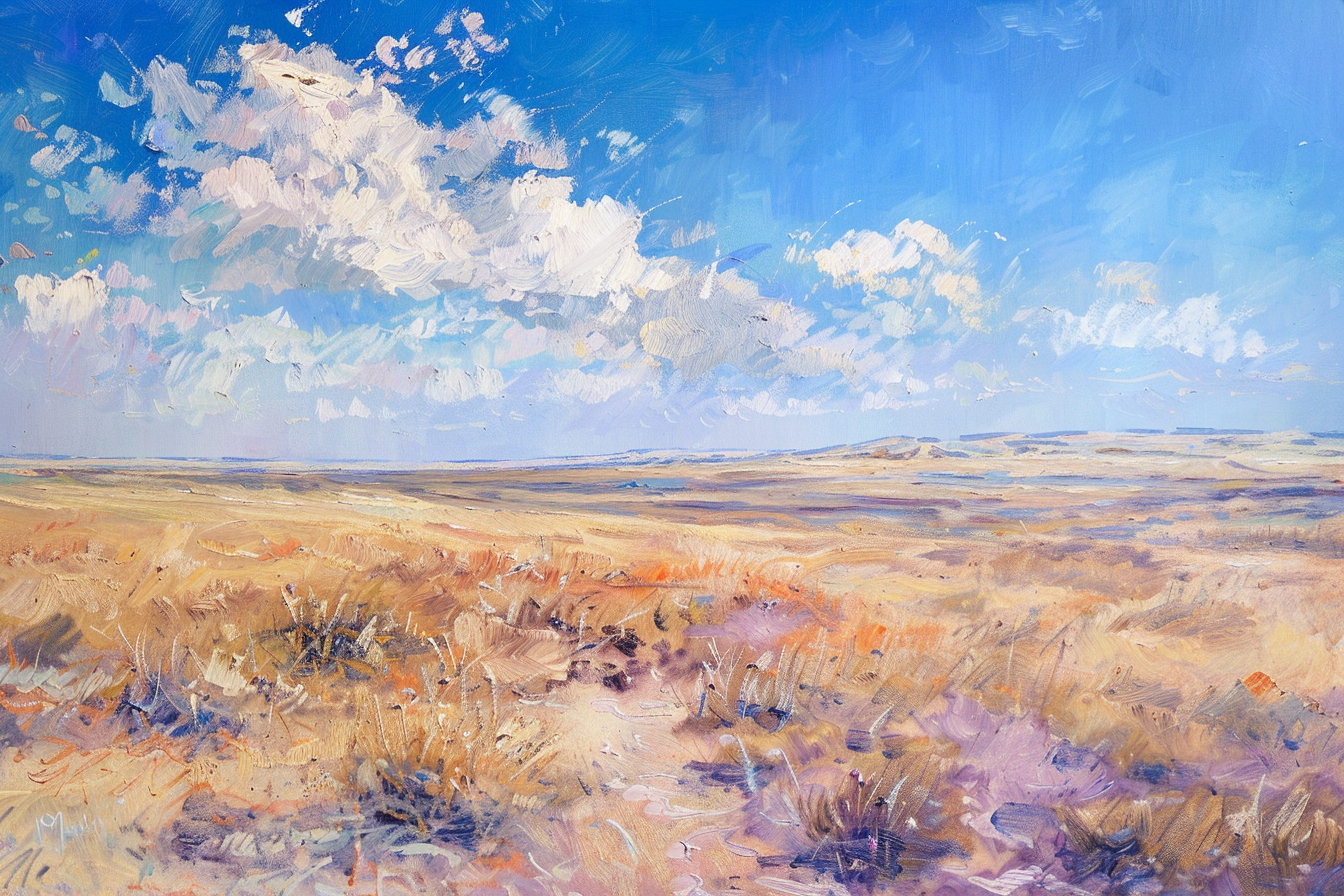
| Location: | Eastern Continent, South-east/Mid-east |
| Biome: | Savannah & Steppe |
"When the fields of green turn to gold, and wide open spaces forever unfold ..."
- Old Folk Poem
It can be easy to overlook what at first may seem a barren landscape. With forests a rarity and hills a matter for the imagination, the Faded Steppe holds an understated tranquility: though those who live there don't mind living outside the spotlight. With endless fields as far as the horizon and further still, these plains are home to little but the grasses and grains that grow on its surface, and the few farmers who tend to it.
Its vast size allowing for immense farms, these lands — which have been settled heavily in the past millennia by the Falstoners — feed the industrious engine of the western coast, and give those who live in the Fallstone republic a peaceful life in their small towns that occasionally dot the landscape.
Notable Locations
- Stonebrook, one of the oldest and largest settlements in the Faded Steppe, but Stonebrook could hardly be even considered the size of a typical town. Populated with rustic buildings and only the necessary craftsmen to keep it functioning. The only two notable locations in Stonebrook would be the brewery and the Moss-Meet. The brewery is famed for some of the best beers and ales in all of the eastern realms; the Moss-Meet is a large amphitheatre that is used by the Speaker to host meetings and votes with the officials of the Republic.
- Hope's Watch, a small village in the north-west of the Faded Steppe that lies at the edge of Fallstone’s holdings, near the border with two Greatling clans. In the past it served as a collection of watchtowers to signal incoming raids from the mountains. However, now it is used as a major trading post between Fallstone, the Northern Kingdoms, Northern Valkian Realm, and the Greatling Clans nearby.
- The Crossroads, aptly named, is a major crossroad in the path of almost every caravan in Fallstone. As with many crossroads in the realms, a village has grown out of necessity. One of the former major caravans even permanently retired here, creating a hub of expert artisans and crafters that help keep many of the caravans that pass through stocked and maintained. One could find some of the best blacksmiths, carpenters, tailors, and others within The Crossroads.
- Vale of the Fallen, often referred to as just The Vale, is similar to Hope’s Watch in that it no longer serves as a defense for Fallstone. Caravans from all over the Steppe will gather here and create a large clearing where they trade with the southern Greatling tribes, like the Stonerunners. Besides ruins of towers and the fading echoes of caravans that have left, there is a myth that surrounds the Vale. Some Falstoners tell tales of a portal to the Ether lying among some of the rock formations.
Bordering Locations
- To the north are the Northern Realms, separated by a small mountainous region;
- To the east is the Ocean, of which little has been explored;
- To the south is the Ocean, where grain is often shipped from; and
- To the west is the Midlands in the north and the Southern Reach in the south.
Credit: Reedie, Chiaro, Moony
The Wall
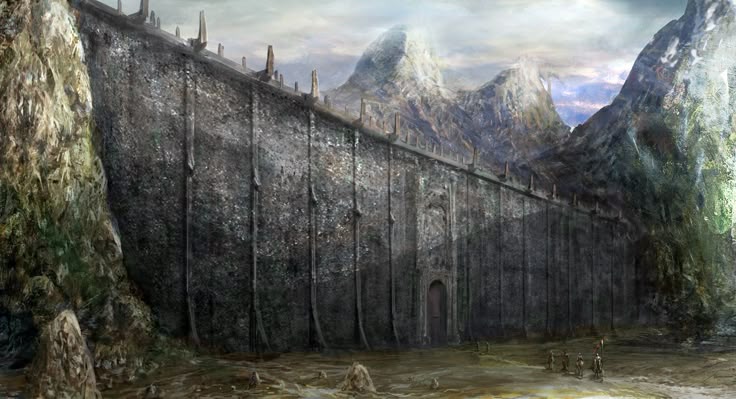
| Location: | Southern Reach, Midlands |
| Affiliation: | Valkian Realm |
"It makes you think: why build a wall to keep out a people who wanted to be left alone? ... Not that I'm one for conspiracies."
- Anonymous Walljack
The Wall is a large, mostly-stone structure that spans from the mouth of the Violet River inland until reaching the eastern mountains. It marks the border between the Midlands and the Southern Reach, with swampland to the south, inhabited by the Walljacks, and the Duchy of Rulan to the north, part of the Valkian Realm.
Since being constructed in the 12th century, the wall has at times been repaired and rebuilt, though it has never been the site of any war. Prior to its construction, Midland farmers and merchants travelling to and from the Southern Reach were plagued by raids from Aedall skirmishing parties. The Aedall were notoriously quick on their feet and became a rather persistent annoyance, disrupting trade and even regional food supply - in response, the king of what would become modern-day Rulan authorized an ambitious project, completed over the course of thirty years: a barrier between the Midlands and the Southern Reach.
Finally, with the project’s completion, raids from the Aedall became but a distant memory. Though still plagued with internal conflict, the wall was seen as a deterrent for outside threats to the Midlands; when said threats failed to materialize, it saw less and less use. That was until the 15th century: the Midland localities were freshly unified under the banner of the Valkian Empire, and there was dire need to boost the war-torn economy. With swift proclamations from the King-Emperor, the wall was manned with new blood and became the de facto southern border, allowing trade to be funneled through a few key checkpoints. This not only bolstered security, but also allowed for an influx of Crowns to the Empire’s coffers. When the Aedell suddenly vanished in 1590, the wall saw a decline in maintenance and security.
In present-day, the Duchy of Rulan oversees much of the wall’s functions - under direct command of King-Emperor Rayan IV, of course. Over time, the need for staffing and maintaining the wall has become an empire-wide affair: Rulan now houses the world’s largest stonemason guild, and serving at the wall is seen as respectable, patriotic duty by most Valkians. For many, service at the wall was a peaceful affair, leading many veterans from the numerous Valkian wars to live out their retirement in a way that paid back to their homeland. However in the past decade, growing activity in the Southern Reach, especially around the mysterious Spire, has brought murmurs of uncertainty to the Empire. A recent decree from Rayan IV has even authorized service at the wall as a path to commutation for certain criminal sentences. As such, more people man the wall than ever - perhaps in anticipation what the Spire below could hold.
Credit: Reedie, Electric
Ashlands
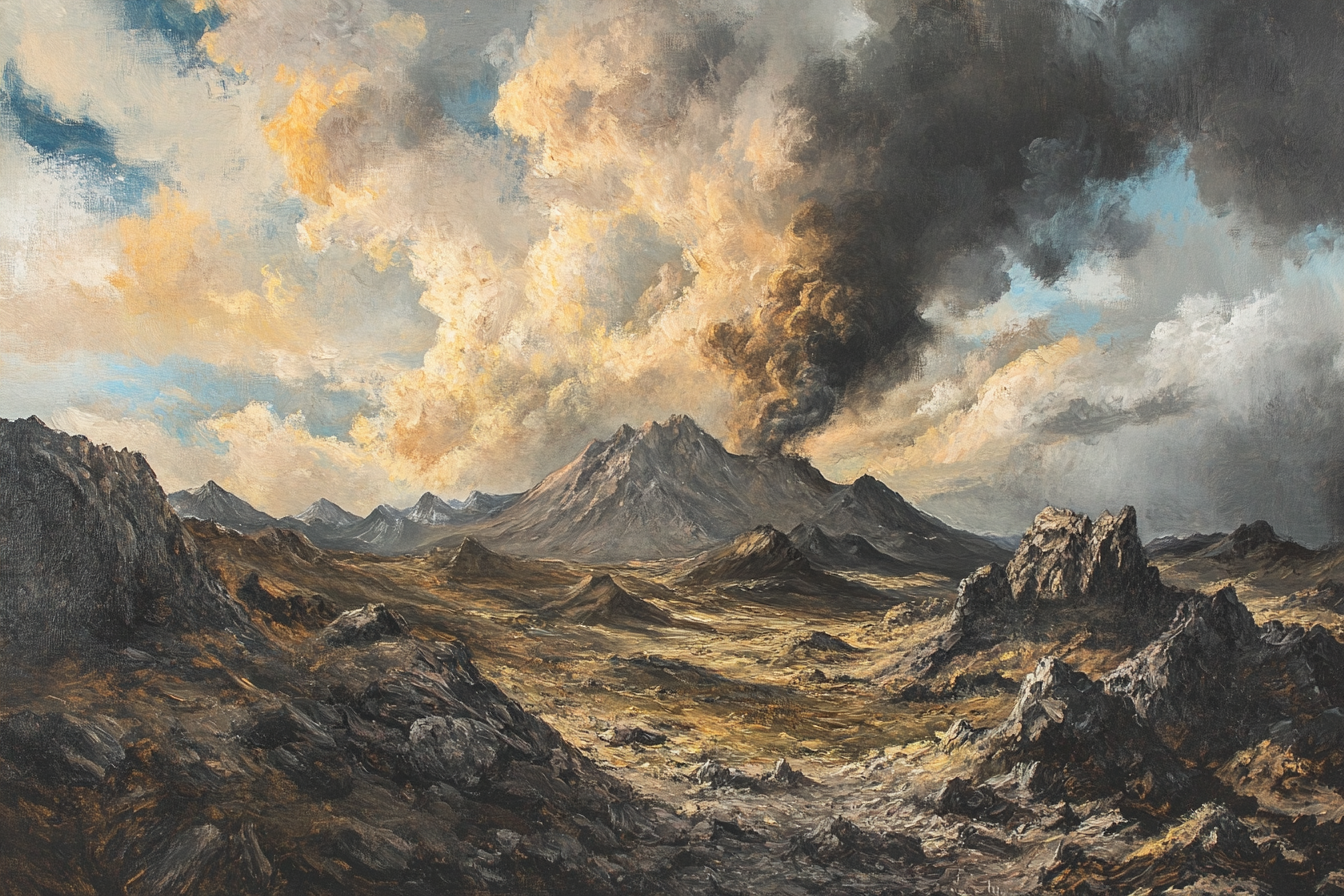
| Location: | Northern Ocean |
| Biome: | Volcanic, Mountainous; Tundra (parts) |
"If you see movement, you better hope you see two legs. Else, run."
- Wise Guidance
Far north of the traditional trading routes across the grand ocean, eventually the skies darken, ash occasionally falling upon the traveller as they approach. Appearing out of nowhere, the rocky shores of the Ashlands will soon greet them.
An unforgiving place, the fact that people choose to live here is nothing short of a feat: though to the trained adventurer, it's not all so bad. Filled with hot springs, numerous clear rivers filtered through rock and home to rich mosses and fungi along with hardy ground vegetables that inform the diet of those who live here, its inhabitants make a decent living. A stretch of mountains skewer the rocky land, becoming more active the farther east you travel. Earthquakes are common, eruptions or mini-eruptions more common still.
The Fireborne who inhabit these lands are a communal people that can be best described as existing within egalitarian tribal bands. What this means is that there is an extreme amount of importance placed on one’s tribe: Tribes and Clans share a bond that can barely be described in words. There is no observable hierarchy based on gender or race, and whether you’re born or accepted into a tribe, you instantly become equal with even the most senior clanfolk. To further this idea, Fireborne tribes are not often known to have a singular chief that leads them. However, during times of war and conflict a chieftain can be chosen through a variety of means. The most common ways involve a clan electing a leader or a chieftain being chosen through might alone.
These close bonds between clanfolk are not extended to the other Fireborne clans as a whole - at least not typically. Usually, tribes engage in territorial spats and clans often fight and war with one another over the sparse resources available. However, inter-tribal conflicts are altogether put aside if a foreign force comes to threaten the fiercely independent Fireborne. In the past, when Ko’ram and the Northern Kingdoms staged raids and invasions into the Ashlands, the tribes engaged in a pact known as the “Unity of the Flames,” where all tribes would band together and elect a small group of chiefs to lead them into battle. As a people largely uninterested in conquering outwardly, this practice has only been used defensively, and to great effect. The Fireborne have never lost a meter of land.
Tribes will typically function as a whole, all decisions made by clanfolk casting equally-weighted votes. Equality is one of the biggest aspects of Fireborne culture. This stems from the ‘unlikely’ alliance of mostly Fey-Touched and Greatlings inhabiting the inhospitable terrain. Inheritance, leadership, warriors, and other roles within Fireborne society are not restricted or determined by one's gender, sex, or orientation.
Along some of the older peaks rest bone-like forms of rock, said to be the remains of the once great Fire Dragon whose spirit still inhabits it to this day.
Notable Locations
- Bastion, a small, flatter area turned into a reinforced keep near the south of the Ashlands and the unofficial capital of the continent. Home to some of its few remaining trees and a small forest, it is a place of respite, peace, and recovery for all warriors and adventurers who come, especially as it is home to naturally occurring hot springs known to relax aching and wounded visitors. All clans are welcome to Bastion, and violence within the perimeter is strictly prohibited.
- Port Sulferm, an island that serves as the sole major trade port for the Ashlands. Though too small to be considered a proper city, it’s a rather large town that has a range of cultures and races that inhabit it - the main, and maybe only, melting pot in the Ashlands. Sulferm uses small coastal ships to move cargo from the town to the various docks that clans will use and share around the Ashlands.
- Dragon's Maw, the resting place of the grand skull of the fire-dragon, resting in the caldera of a dormant volcano. The skull's eyes continue to glow with supernatural fire, and many Fireborne make pilgrimages to the site despite its dangers. The more spiritual amongst the Fireborne also see it as a holy site of final return, becoming one with the flames to become one with the Dragon’s spirit.
- Dragon's Tongue Pass, a forked pass, is the only major land route up into the Unexplored Wastes. The western split is used for the condemned, while the eastern split is used for those seeking an honorable death before age renders them feeble or infirm.
Bordering Locations
- To the north are the unexplored wastes, a never-ending tundra;
- To the east is the Ocean, then further still the North;
- To the south is the Ocean, eventually the Mist Isles; and
- To the west is the Ocean, eventually the lands of the Korami.
Credit: Reedie, Moony, Electric
The North
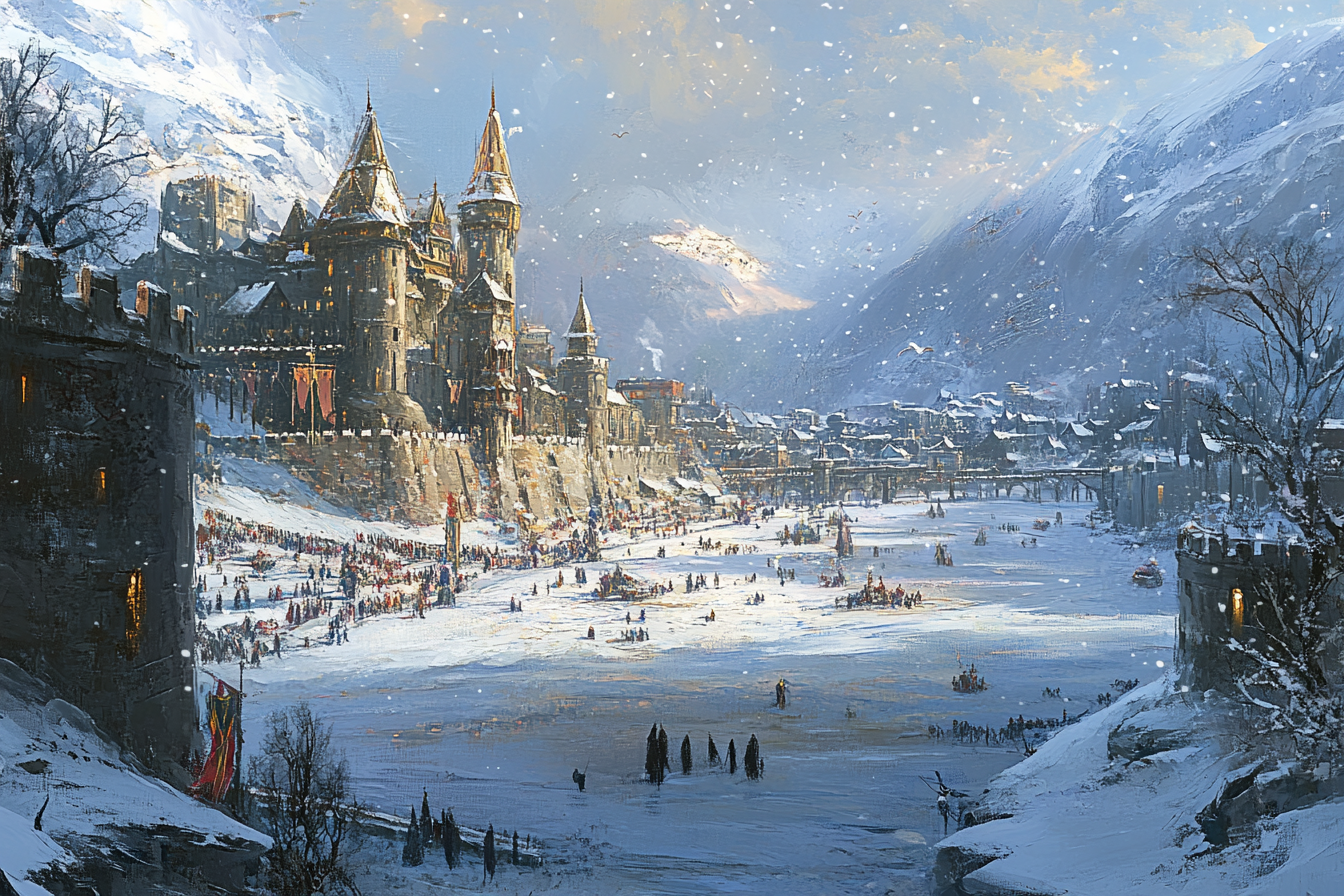
| Location: | Eastern Continent, North |
| Biome: | Boreal and temperate forests, tundra (far north) |
"A warm fire, nutmeg on your nog, and a spirit of cheer like no other. I wonder why anyone chooses to leave."
- Journal Entry
Standing for nearly a millennia as a stronghold of the burgeoning human kingdoms after The Collapse, the dominance of The North is not what it once was. With mild summers allowing a decent growing season and prosperous mines filled with gold, iron, and silver, many of the greatest smithing guilds of the world can still trace lineage back to these wintry lands.
Having the most time to develop after the Collapse, the North is filled with several large stone keeps and cities dotting the landscape. While many have since left for greater prosperity in the Midlands, the lively spirit of those who live in the North remains, even if they remain fiercely divided by royal bloodlines to this day. While at first paying little mind to the humble farmers to their south — mostly Valks — the realms of the north are now eclipsed by the unified Valkian Realm, with whom they are often at war.
Geography
Kingdom of Ardara
When crossing the Midlands to The North, it is fine and fair to pass through Frostpeak's shadow. However, a traveler could easily enjoy passage over the calm water's of Kallgren's Bay. The bay is fed through the Mistantler River, whose foggy shores boast the stronghold of an ancient chivalric order, the Fortalice of the Riverwights. The knights trained there have served House Kallgren longer than any can remember. Northbound lies Yaila Citadel. This formidable edifice, whose lofty towers and archways still bear the influence of the Ancient Empire's architecture, serves as a powerful noble family's keep to watch over the lush valley of Ardara's eastern swath.
Separating the eastern part of Ardara from the rest of the kingdom is the Beithurre Mountains. This mountain range has long served as a natural border against the states to the north and east, halting most armies in their advance. At their base lies Ehlmorn, whose abundance of ores have given them ample supply for their thriving blacksmithing trade. Outside of minor mountain ranges, forests, and fields those heading west may find themselves at King Hafar’s Cairn. This modest stone monument is a marker for the resting place of House Kallgren's founder, one of The North's mightiest heroes. On Ardara's western shores stand the new capital, Port Sunfang. One of the main ports of the Northern Realm, built upon cobble beaches, the city mirrors more of the Midlands than any of the harsher ports of The North. With Frostpeak out of their grasps, House Kallgren's young and newly-crowned King Pelinor continues to reside from here.
Kingdom of Baruide
Snow-capped mountains and rocky cliffs that are characteristic of Baruide's northern region stretch into a natural barrier that separate The North from the Unexplored Wastes. Residing in Skykeep, nestled into these mountains, is King Ganix , a younger king that many in the North see as a capable ruler. They act as a natural wall as well from the other Northern kingdoms that lay beyond Pineshroud Pass. While not used as often as it once had been, Shatterstar Watch still stands as a breathtaking fortress, carved into the mountainside overlooking the pass.
The kingdom stretches southward to envelope The Pearl Lake, often seen as the heart of The North it boasts the efflorescent city of Nacremont, often a summer destination for much of The North's nobility. Jaraid's Eyrie, in Baruide's southwestern expanse, exists as a true testament of The North's unyielding perseverance as Northerners in the region grapple with the packs of Jaraid that gave the city its namesake.
Kingdom of Faravid
The easternmost of the five major kingdoms in the North is also known to be the one with the most mild climates compared to the others. Dappled forests blend into the expansive Jela Lowlands, known for their unique fruits, to create an arcadian scene. In the northern portion of the lowlands lies Armelan, an idyllic and sleepy town that puts an extremely impressive celebration for the Solstice Festival.
Head south, and one will find themselves in Voelgrym. The city lies at the bottom of large forested mountain ranges, sheltered by the natural walls that form before the city from cliff faces and trees. Voelgrym is also where the once-feared swordsman King Gesalec rules from. The Mistlanter River starts its course in the midst of the town, coming to life between city walls and mountain rock. Even further south still, near the edges of Faravid's reaches, is the vibrant city of Harcate. Standing within a great meadow, the city is known for music, bustling markets, and a diverse population reflective of its locale at the crossroads of various nations.
Kingdom of Temecy
The Capital of Temecy, Wyrmcrest, lies over the great expanse of snowy boreal forests that make up the Southern belt of the Kingdom. Lying on top of icy plains, Wyrmcrest’s high city walls are a stark contrast against the white snowbeds. From atop Castle Steringval, all in Wyrmcrest can feel the gaze of Queen Nerea, otherwise known as the Jaraid of The North. North of the mountains that rise above Wyrmcrest is the Tulvarrk Vale, a forest cradled between mighty mountains and named for the great Tulvarrk River that divides the land. Many trading outposts and market towns line its shores, blooming despite the unforgiving and beast-infested woods surrounding them.
The valuable harbor of Petrin lays on the Tulvarrk estuary. Built eons ago, the harbor serves as a gateway and is often used by traders sailing along the coasts, or up the Tulvarrk. On the northern side of the great river lie the mountains hosting Orscon’s Gaol. Ancient and imposing, cold and daunting, Orscon's Gaol was originally built as a dungeon during the time of the Ancient Empire to imprison the leader of a Nua Sidhe rebellion. As Orscon spent his final years seeing the blackstone walls, now so too do many of the most notorious criminals in The North.
In the furthest reaches of The North, more so than any other town or city, lies Galbere. The town is a beacon for those escaping the marauding warlords, monsters, and other beasts that roam this rather inhospitable portion of The North. While no access to Galbere is truly safe, Golostix Bay is especially dangerous. Looming cliffs conceal fjords and coves that reavers to call home. Intrepid adventurers and whalers sail in these uncharted waters to hunt rare creatures and sell their bones, horns, and scales, while others seek to collect the bounties of the condemned.
Kingdoms of Tannit
The collection of islands that make up Tannit are numerous and stretch along the oceans of The North's western reaches. The northernmost isles are cold, rocky, and deal with icy waters. The southernmost isles are more temperate with fair weather but harsher tides. The once-wild islands, made up of various infighting lords and barons, were united under a single banner by Great-King Hermeric, known as a great diplomat and—by some accounts— a fearsome mage.
Now ruly, the lands prosper with trade, shipbuilding, fishing, and hunting. The largest island hosts the capital, Synurdin. An unimpressive and dowdy place focused on function, even the baronial fortress, Nihlfel, was built to be impregnable rather than comfortable. The only other notable place is the large town of Mistveil Wharf—one of the former seats of power.
Notable Locations
- Frostpeak, once the capital of a large ruling family in the north before its conquest by the Valkian Realm, now marking the border between the northern realms and the Valks to the south.
- Skykeep, a grand castle atop a mountain with a city spiralling down its height. While a formidable fortress, the keep is often faced with food shortages in winter, especially with constant war threatening wheat imports. It is the capital of the Kingdom of Baruide.
- Tamohn, a moderately-sized city in the north-east that serves as a 'gateway' to the southern Falstoner lands without running into the Valks. Once home to a mighty university that in ancient times taught obscure magic, now is a shell of itself, teaching more modern subjects.
- Wyrmcrest, the capital of the Kingdom of Temecy. Often covered in a perpetual snow, the massive city is one of the most defendable in all of The North.
- Synurdin, the capital of the Kingdoms of Tannit. The City of rolling Tides is often spoken of in tandem with their impressive dockyards.
- Voelgrym, the capital of the Kingdom of Faravid. Cold and foggy compared to the rest of Faravid, the city is a beacon of power and thrives even in the harshest winters.
- Port Sunfang, the capital of the Kingdom of Ardara. Sailors that fear the turbulent waters around the isles of Tannit find refuge at the harbors of Sunfang.
Bordering Locations
- To the north are the unexplored wastes, a never-ending tundra;
- To the east are the minor Northern Kingdoms. Further still is the Ocean, which remains mostly unexplored;
- To the south is the Midlands to the south-west and the Faded Steppe to the south-east; and
- To the west is the Ocean, eventually the Ashlands.
Mist Isles
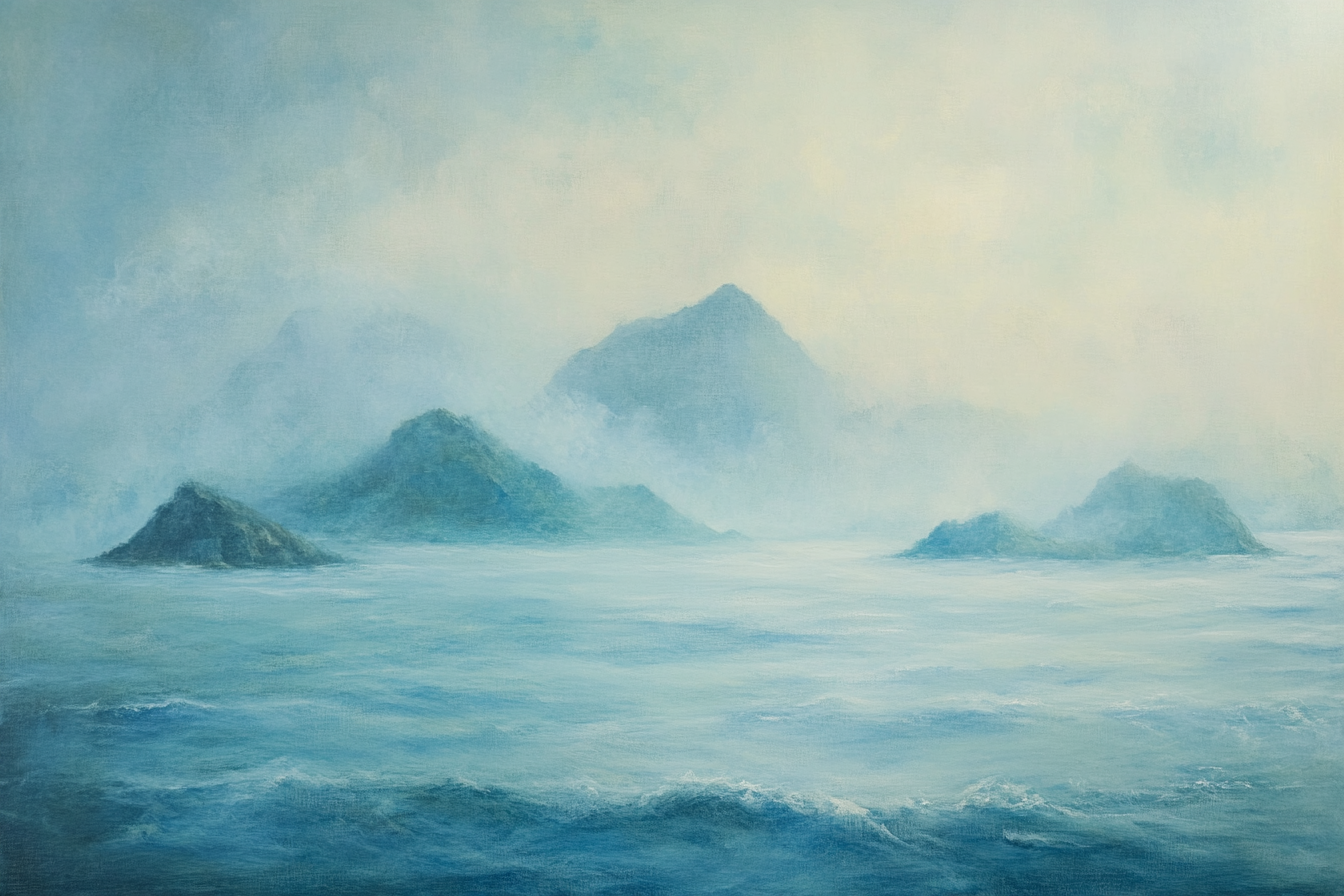
| Location: | Mid-Ocean |
| Biome: | Temperate |
"First time here? And you're a sailor? . . . Ha. Won't be your last."
- Anonymous Mistan
Home to the Mistan, the Mist Isles are truly a mysterious place. While not themselves being remarkable: fairly straightforward, rocky islands about midway between the eastern and western continents, anyone who visits immediately knows that strange feeling that never seems to go away. Mistan themselves don't generally pay much mind to the strangely serene isolation that can unnerve visitors, but the seemingly never truly clearing mists that descend each morning give rise to legend that the islands hold some kind of blessing — or curse.
Either way, the islanders were fortunate to have strong, sturdy trees that grow plentifully on the islands: Mistan Hardwood is an incredibly dense wood that resists rotting and allows for the construction of some of the world's most impressive ships that can sail the seas for well over a century with good upkeep.
The history of the Mist Isles is ancient and mostly unknown. Oral tradition has preserved stories from even those ancient times, from when the isles were first discovered. These tales often tell of a great calling that pulled people here from all corners of the world. Not simultaneously, or at least that is not what these histories seem to imply. The many communities of the Mists have different tales, all staggeringly similar, though some groups recount encountering other groups that existed long after first arrival in these lands.
Many rulers and their kingdoms have come and gone in the Isles. Legends tell of their conquests, and inevitable collapses. Few have ever been able to subjugate the Mists for long, for inevitably every conqueror’s empire has fallen apart. The current regime is unique in its survival. This is attributed to the fact it was in many parts peaceably united, rather than forcibly. Whether one believes this pleases the spirits, or that it has simply enabled a greater stability, either way the islands seem united now. It has been this way for about two hundred years, and the Serene Monarch will likely keep their title for many years to come.
There is no one accepted historical narrative within the Mists. There are many narratives, each considered for their wisdoms. The nature of these varied stories means it is likely that the true history of the Mists may never be known. But even Mistan scholars agree, to know one true history would be to murder countless other histories.
Notable Locations
- Sirensong, one of the two major ports, located on a larger of the southern isles. Home to several large drydocks and one of the brightest beacons in the world, making it a common stopping point for traders. As a result, it has a sort of 'cosmopolitan' feel despite its small size.
- Marionsport, the second of the major ports located in a bay farther north of Sirensong. While not as popular amongst traders, and its difficult bay making shipbuilding less common, the port remains popular for fishermen and whalers, who make use of the abundant waters around.
- Eryndor, a windswept coastal town on Ynysoedd Eryri (The Eagle Isles), reminiscent of many Mistan settlements, nestled at the foot of towering cliffs that house Mistspire Keep - also known as Caer Nywelyn - above. Its narrow, winding streets ascend from the harbor, climbing toward the cliffs. Caution is advised on the wet, rocky coastline, as the near-constant fog can easily cause one to lose their footing, leading to dangerous tumbles into the treacherous waters below—or into a bed of sharp rocks.
- Port Abmanyo, a port city to the southeast of the Isles. Located on the island of Luul’yare, this city is the capital of the Pearl Coast, serving as an important cultural hub and historic landmark for the residents of the Coast.
Bordering Locations
- To the north is the Ocean, eventually the Ashlands;
- To the east is the Ocean, eventually the Eastern Continent (most directly the Midlands);
- To the south is the Southern Ocean; and
- To the west is the Ocean, eventually the lands of the Korami.
Credits: Reedie, Tomtomgags
Albern Crossing
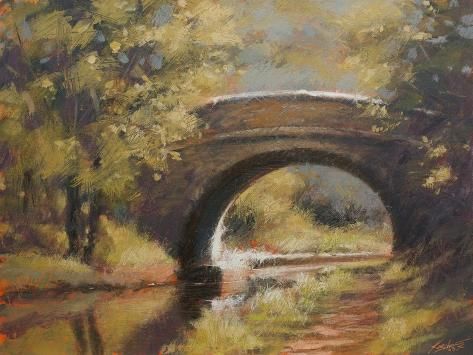
"'Albern'? Oh, he was definitely a Walljack. That's what Pa told me... heck, they even named the river after him!"
- Anonymous Walljack
Albern Crossing is a major landmark within the Southern Reach, a halfway point between The Spire to the south and the Walljack swamps to the north. A mere rest point for wayfarers making their way through the Reach, the Crossing boasts nothing more than a meager inn and centuries-old bridge providing mostly-safe passage over the Albern River. Though its history often eludes newcomers to the Reach, they’ve surely traveled it on their journey.
The bridge came before anything else. For one reason or another, it was constructed and maintained by the Aedall, making it upwards of 600 years old. As the first and main path over the river that cuts through the Reach from west to east, the bridge saw constant use by travelers, merchants, bandits, and even Aedall raiders targeting the southern Midlands prior to the construction of The Wall. Though this wasn’t the only path over the Albern, it persisted as the one that still stands, even now. But when the Aedall vanished, so did any semblance of maintaining the Crossing. Over time, it slipped into a state of disrepair, and now, it’s clear that the historic landmark may not survive the next half-century - especially if the Southern Reach keeps attracting more and more people.
Sometime between 1605 and 1610, an inn was constructed near the bridge, supposedly by a Walljack. What used to be a river crossing took on a new identity as a rest stop for travelers; “Albern Crossing” soon came to refer to both the bridge and this inn. As a variety of people passed through, the inn gained more use - a place for bounties to be posted, rumors of great beasts to be shared, and wares to be sold to travelers.
Credit: Electric
Ko'ram
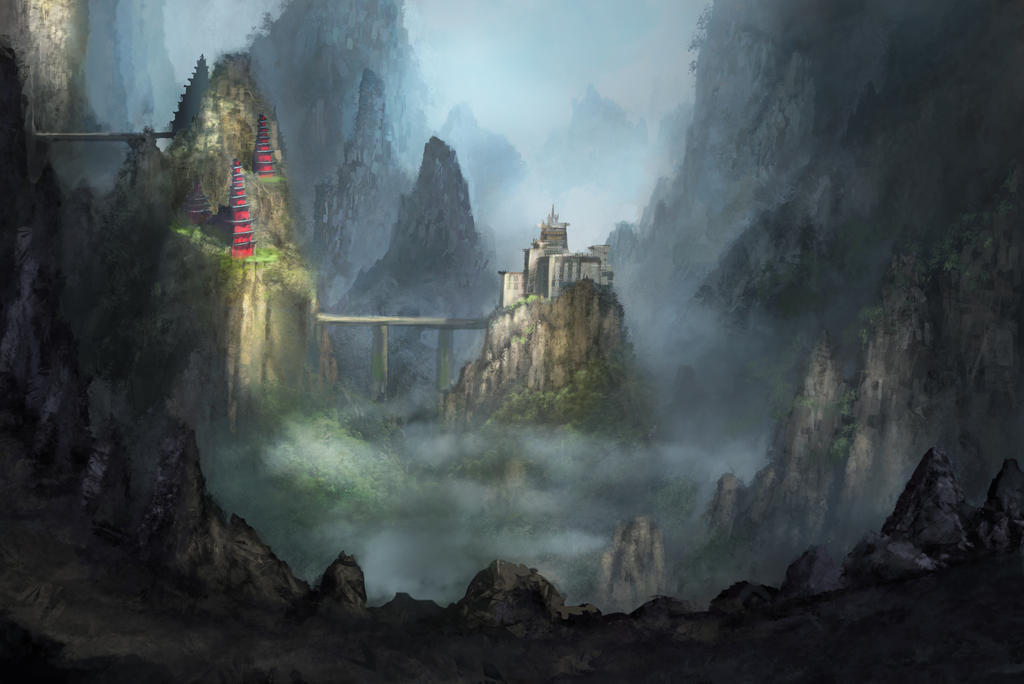
| Location: | Western Continent |
| Biome: | Varies |
"Where the leaves are tinted silver and the mountains are stained red, Sun will set upon the rivers and the steppes so widely spread."
- Excerpt from a Collection of Korami Poems
A sprawling, fragmented landscape with islands and archipelagos aplenty and mountains as far as the eye can see, Ko'ram is, surprisingly, one of the most populated regions of the realm. Having been settled before The Collapse by break-away groups of Arsa Sidhe, it has not faced the dark age that befell its eastern neighbour — though it certainly has seen its share of strife and war.
The meaning of Ko’ram is "Land of the Shining Sea". Some Korami believe the name came about because of the large number of islands and vast coastlines that adorn the eastern side of Ko'ram. Others believe the name has more ancient roots, coming from the vast mountains that make up the majority of the mainland. The reality is probably a mix of both.
Ko'ram is a politically fractured domain, with many clans holding various fiefdoms in neigh-constant tension with each other. Most of these, however, fall under one of the four Great Clans: Odokhi, Moon, Adarkhin, and Kensho.
Geography
Coinciding with the four Great Clans, Ko’ram is traditionally divided into four provinces: Iria, Mori, Sharuul, and Uul'san. Each region is controlled almost in its entirety by one of the great clans. These provinces follow geographical barriers that make it difficult to travel between them - thus, in each province, there is a large city from where the largest clans rule. As one travels away from these centres of power, smaller towns hold their own local power-struggles, but most of them pale in comparison to the bustling metropolises; many aren't even included on most maps.
Iria
"Land of the Thousand Terraces"
Iria is one of the only truly fertile swathes of land within Ko'ram, and has the most farmland and most suitable terrain for rice terraces of all the provinces. The castellans of this province always wield immense influence due to the amount of agricultural exports this province sees.
Uul'san
"Land of the Red Mountains"
Uul'san is a land of harsh mountains rich in metallurgic strategic resources but famished of fertile soil. It is bordered by Sharuul to the north and Iria to the south. Uul'san smiths are famed for their prowess both with a blade and forge.
Sharuul
"Land of the Golden Mountains"
Sharuul is the northernmost region of Ko'ram and is known for having golden grasses around the base of the mountains. These grasses are integral for the economy of Sharuul, as many of the clans in the region make their wealth through the herding cattle, sheep, and mountainous goats. As such, some of the biggest exports from Sharuul are milk, cheese, wool, and leather.
Mori
"Land of the Southern Sands"
Mori is a province known for its many islands. The largest island is known as Paksan and boasts a mix of beautiful lush mountains as well as the same warm beaches the rest of the isles in Mori are known for. Ko’ram Mori is well-known for the large amounts of fish exported by the local clans, but is most famous for the ship-building and pearl trade.
Notable Locations
- Shokyu, the largest city in the region of Iria.
- Aisin, the largest city in the region of Sharuul.
- Pyo, the largest city in the region of Mori.
- The Iron Bastion, a historic fort and surrounding city at the heart of Uul'san.
- Merinng'ro, once a city but now ancient ruins that lay on the border between lands held by the Kensho and Odokhi clans; it is the spot where clans meet for truces or their annual period of peace — Hangawi.
Bordering Locations
- To the north (and east) is the Ashlands, separated by a small mountainous region;
- To the east is the Mist Isles, and further still the eastern continent;
- To the south is the Ocean, where grain is often shipped from; and
- To the west is the 'Forgotten Ocean', said to be cursed and rarely travelled.
Sudvalkia
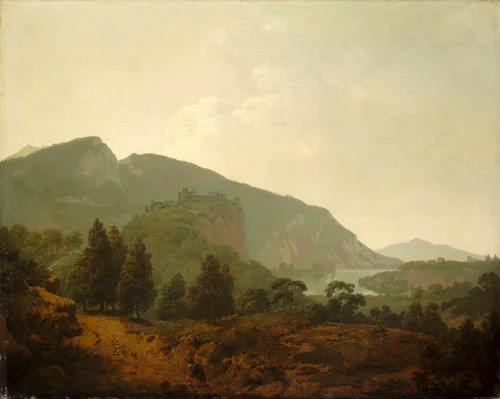
Western peaks of the Norparate, seen from the Fontedoro Valley.
| Location: | Midlands, West |
| Affiliation: | Valkian Realm |
| Rulers: | Represented by the Table of Lillies |
| Races: | Humans, Arsa Sidhe |
| Cultures: | Valks |
"Their competition is both their fortune and sin. Fortune blooms in rivalry.”
- Sabine Chastain, Sanguifleurian Historian
Nested between the Norparate and Rulanese mountain range lies the valley of the Venadoro river and her tributaries, a region renowned for its wealth, colorful culture, and fertility for intellectual thought; the ‘Southern Gem of the Valkian Realm’, Sudvalkia. Dotted with city-states and a history of rivalries and alliances, ambitions ranging from meritocratic to dynastic desires, all weave a tapestry of careful diplomacy, scheming, and conflicts. A land fallen from grace, in wake of a memory soaked in the blood of the unfortunate.
The geography of Sudvalkia ranges from golden fields and meadows, through rolling hills to high mountains, dotted with weaving passes and valleys. The most prominent landmark of the region being the Venadoro, ‘Golden Vein’ river, the lifeblood of the cities and towns, carrying their wares, people, and ambitions; a source of wealth, faith, and culture to the Sudvalkians. Joined by her tributaries across the land in their eternal journey to see the gleaming waves of the western ocean; Montessia, Monterive, Dolveo, Mezzonero, Adderive, Poviori, and many more. Their confluence, a soil rich with civilization. Sudvalkia can be broken up into four geographical regions; Norparate, Fontedoro Valley, Venadoro Valley, and the Sudnorparate Plateau. Whilst the Fontedoro Valley is regarded to be part of the Venadroro Valley, the former’s geographical structure compared to the latter’s earned it to be considered apart from it.
The land of Sudvalkia is known for its rather unique state of politics and structure compared to other regions of the Empire. Instead of large viscountcies and counties centralizing their control in the hands of a single liege or family, the region saw the power dispersed among local lordships, guilds, and city communes. This led to the formation of many self-governing communes, ruled by elected councils and officials, governing mere city-states instead of large swaths of land. Due to the absence of any unifying figures to represent the region to the crown, the states formed their own assembly of officials, the ‘Table of Lilies’, conveying the empire-wide interests, both politically and meritocratically to the states, seated in Mariza.
This unique condition led to many cities seeking self-sufficiency to ensure they prevailed compared to their ‘rivals’ in more ways than others. Over the decades and centuries states engaged in alliances, scheming betrayals, conflicts of conquest, and shows of strength, all leading to a fragile balance of power that saw states switch their sides based on the way of the wind and the ambitions of newly elected officials. This also ensured many towns and cities were heavily protected and fortified through the donations and investments of rich merchants and aristocrats, eyeing positions in the leading powers of these states as a means to further enrich themselves. Trade became just as powerful a tool as armies in the region of Sudvalkia. As of now, many states fell, rose up, changed over time, but the people remained, and so has the lands, their culture and beliefs persisting.
Norparate Mt. Range
The third largest mountain range of the Midlands, the Norparate stretches from the Ocean Road bend all the way to the western ocean with its jagged peaks and deep valleys. It is composed of three main sections: Western, Central, and Eastern, the latter being the most dense and arguably the longest.
Many passes line the mountain range, allowing safe passage across it, with four of them being regarded as the most reliable and established: Monteverde, Pietramare, San Edranno, and Terravecchio. The latter, historically called the ‘Gates of Sudvalkia’, also being the separator of the Central and Eastern section. Whilst there exists a fair few many more passes ranging in size, the above four remain the most commonly used ones for trade routes, travellers, and advancing armies.
Nearly all the region’s river’s headwater come from the Norparate: Montessia, Dolveo, Monterive, Adderive, Mezzonero, Scintillo, Oriante, San Doretto, Protione, and Azzuro, except, surprisingly the Venadoro. Rich in minerals, the mountain range since time immemorial has been the source of various metals for the region with multiple mines tucked away in the slopes and valleys.
Sudnorparate Plateau
Running in the western part of Sudvalkia north of the Venadoro’s delta into the ocean, the plateau formed from a split-off section of the Norparate, separated by the Firilo Pass. As the name suggests, the plateau sits higher than the Venadoro Valley, its cliff faces in the west casting shadows over the ocean with a dark, black cliff face.
Notable landmarks of the sub-region consist of the Azeratto Hills and the San Doretto and Azzur rivers, slowly flowing down into the ocean as they carve their path into the elevated ground.
The name is misleading as the Sudnorparate is only a section of the entire plateau, with hills and elevated plains making up most of the area instead of mountains, scattered with lush forests and woods. The San Doretto being the most prominent river in the area lacks any significant floodplain, thus the entire plateau is rather dry and only sparsely used for agriculture. Being the colder sub-region compared to the rest of Sudvalkia, the climate is on the chilly side with dry winds sweeping the fields and forests.
Fontedoro Valley
‘The Golden Fountain’ Valley, named such for being the source of the Venadoro river, the valley stands unique compared to the rest of the river’s valley, the largest and longest unbroken stretch of fertile plains in Sudvalkia, described as a ‘stretch of golden glimmer’.
Whilst not part of it, it is important to mention the Approccoi Plateau, the commonly regarded border of Sudvalkia. A heavily forested highlands that overlooks the valley from the east, and being the entrance into the valley itself through several roads and passages.
The only significant elevation of the valley is found in the north and the west, the former being the foot of the Norparate, the latter seated by the confluence of the Venadoro and the Montessia rivers.
Venadoro Valley
The stretch between the Norparate and the Rulanese, the bed of the namesake Venadoro river, is a vast area commonly regarded as the Sudvalkian Heartlands. Nearly all states hail from the valley, with the vast majority of the Sudvalkian population existing within its confines.
The notable landmark of the valley being; the Venadoro river itself, the Soliro Plateau, Adderive and Mezzonero rivers, the Mezzonero Valley, and the confluence of the Venadoro, Adderive and Poviori rivers.
Formed when the Norpalate and Rulanese pulled away from each other, creating the basin in which the valley sits, the land is highly diverse in its flow, with large forests, hills, meadows, and plains painting its canvas with colorful tones. The same is true for its population, boasting a large palette of identities within the region due to the nature of the Sudvalkian city-states.
Notable Locations
- Serenissima di Castariva, a merchant signoria (city state) hailing from the island city of Castariva, one of the oldest cities and states in Sudvalkia, and one of the richest and most influential ones as well. Through naval strong-arming and meritocratic influences, the sovereignty exerted a strong hold on any and all trade flowing through the Venadoro, being the source of their fortune through monopolies and tariffs.
- Signoria di Lirenzia, the second oldest city and state in the Sudvalkian region, Lirenzia for the longest time has been regarded as the cultural heart of the area, home of sciences, advancements, academies, and all artistic and scholarly pursuits that are associated with Sudvalkians. One of the first states known to stray from the feudal system in favor of electing their own officials through assemblies, the Accademia dei Saggi (Academy of the Wise) is one of the oldest, still standing institutions in the Venadoro Valley.
- Signoria di Montessena; Strung along in the Eastern-Norparates, stands a series of Fortepassagios (passage forts) nested in the valleys and cliffs. Overlooking the passes and roads, weaving through the mountains, all of them fly the same colours of the Signoria of Montessena. Once a mercenary company that sought refuge in a crumbling old passage fort, Montesenna has grown to be its own mercenary state, giving refuge to, forming, and lending mercenary companies all across Sudvalkia and even to the extents of the empire - all based in the safety of the very mountains that once saved them.
Bordering Locations
- To the north are Sudvalkia's Sanguifleurian neighbors, with the Doigt Céruléen between them;
- To the east lies Mairza and other Midland neighbors;
- To the south, past sprawling rivers, is the Duchy of Rulan; and
- To the west is an expanse of ocean, with the southern coasts of the Mist Isles a ship's ride away.
Credit: Insert
The Amafells
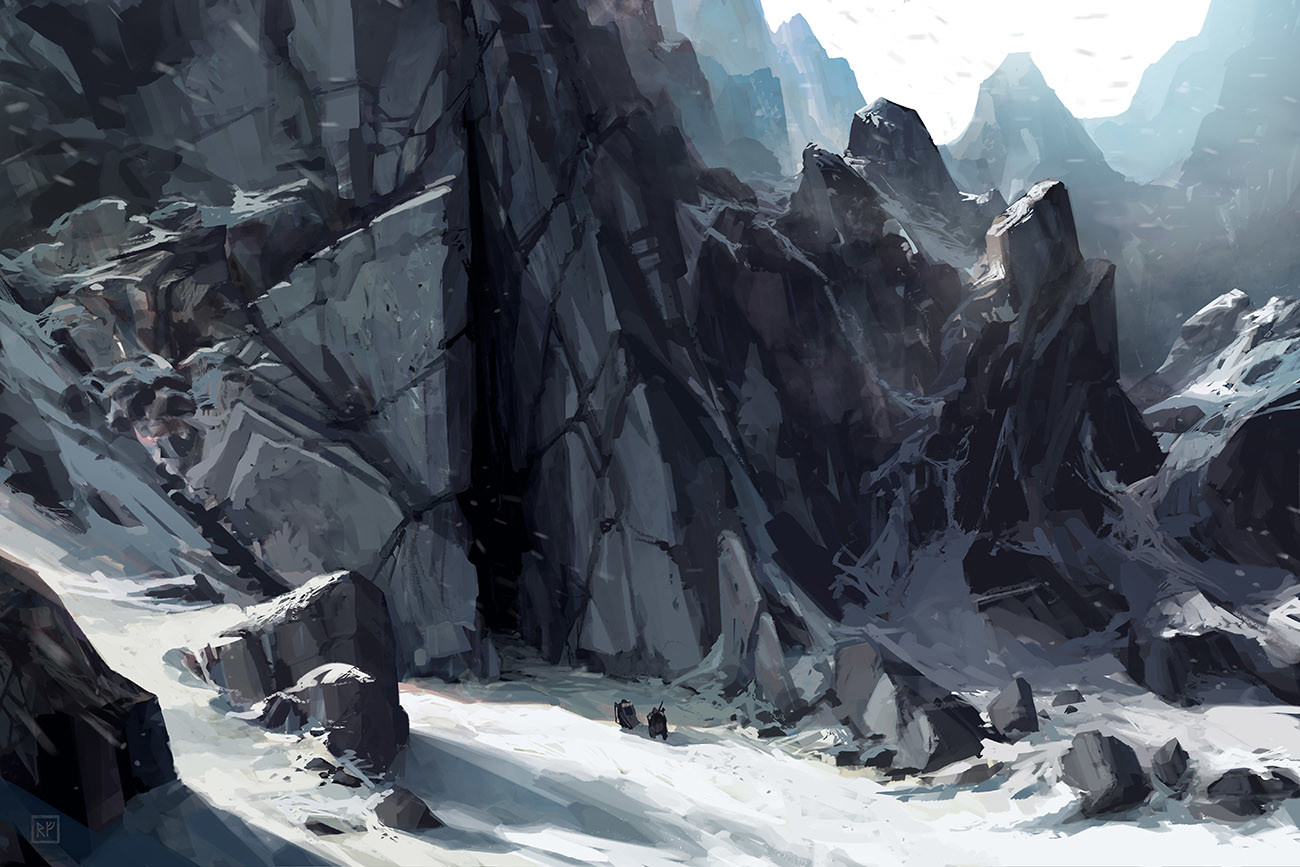
The daunting entrance of a long-abandoned Nephling stronghold.
| Location: | Eastern Continent, South-east/Mid-east |
| Biome: | Tundra & Mountainous |
"... Cold, stark, and desolate. Only Stonerunners could inhabit this place and fondly call it their Grandmother."
- Anne Threax-Paul, Renowned Nephling Archeologist
The relationship between the Stonerunners and their mountains, the Amafells, is deep and sacred. In the Greatling tongue, it is known as the “Grandmother Mountains” which hints to the familial bond the Stonerunners share with the land. The tall mountains are draped with evergreens that thrive along the high, cold peaks. Greatling lumberers utilize streams and sleds to move large amounts of lumber for constructing their long halls. And, greatling hunters often use skis in the midst of winter to navigate the slopes of the mountains.
When found, a Stonerunner village is usually a small assembly of longhouses within a valley, arranged as the terrain permits. Some Stonerunners will even utilize caves and form them into the most isolated halls of all, constructing walls and gates over their mouths. Typically these Mountain Holds, as they are called, feature murder holes for archers to fire at anyone who would approach the home without invitation. A Longhouse or Mountain Hold is usually occupied by a single large family or small clan with multiple generations living in one place.
Stonerunners typically wear white or gray heavy furs, with white, gray, or even green cloth laid overtop. This acts as a camouflage while hunting in the wilds of the Amafells. Often, a Stonerunner will wield a large longbow and wait in a spot for fresh game to reveal itself. Alternatively, some Stonerunners prefer a more active approach with spear hunting.
While known for its harsh environment, the Amafells are home to great beauty. Rising prodigiously as one of the tallest mountains in the world is High Isle. It is a great mountain held sacred by the Stonerunners, who sometimes climb to its peak to prove themselves. From High Isle you can see another notable trait of the Amafells, known as the White Sea. This great white blanket can only be seen from the high peaks, when the clouds hang low, covering the lowlands with a blanket of white. While looking over the White Sea, other peaks appear like islands over the figurative sea.
The Major Confederacies
There are Four major confederacies within the Amafells which exert some influence over the local regions. Each possesses a rich culture from many years of cooperation that define the various tribes within. While these confederations are large, they are not universal, and there remain smaller confederations and independent tribes still in the Amafells.
- The Byrn : The strangest collection of Stonerunner tribes. Concentrated and nestled in the north, the Byrn mainly reside in mountain homes, and regard magic in a higher regard than their southern neighbours. They are the most reclusive, and rarely seen further south. The confederation was formed to enforce ancient boundaries between each other and with outsiders. The Byrn are well known to the north, and often sought out for their wisdom by adventurers.
- The Nyr : The Nyr Confederacy is a highly cooperative and peaceful group. The confederacy was formed for mutual protection, as individual tribes lack a strong warrior class among the Nyr. The Nyr are prone to trade with their Valkian and Falstoner neighbours. They are more settled than others, marking a cultural trend toward greater organization, as a strong artisan class develops among them.
- The Fyrir : More isolationist than some other Stonerunners, the Fyrir Confederation is a group of adept survivalists. They are known for trading furs of game in the Amafells, as well as occasionally with outsiders. When trading with non-Stonerunners, they often use a strange practice known as “dead trading” in which neither side meets directly, but rather leave and exchange goods at a marked location over the course of a few days. The confederacy was founded to mark strict borders with outsiders and keep their lands sacred and safe. The Fyrir guard not only the temple at Notthof, but the sacred mountain High Isle.
- The Forn : Aggressive by Stonerunner standards, the Forn Confederation are dominated by the warrior class. Among them, a Matriarch’s greatest virtue is strength and bravery. Not outright hostile to their neighbours, they are however quick to settle any dispute with strength of arms. They come most often into conflict with the Fyrir, raiding many of their tribes at times. Though only a memory now, they had, at times, conflict with the Aedall. The confederation was formed to maintain peace among the bordering tribes, so that they did not diminish themselves with much war. Despite their warrior culture, they get along well with the neighbouring Falstoners who they often trade with, like their Fyrir brothers.
Notable Locations
- Erdehim, the largest Stonerunner settlement. It's nestled in an abundant valley with special privileges within the Nyr Confederacy. As an important trade hub, the Matriarch of the tribe is known as the Custodian of Erdehim, a special title within the confederation.
- Notthof, a mountain site of the highest temple of star reverence within the Amafells. It is the site of the Fara pilgrimage for those seeking a star reading from the Diviners. It is said that all trails in the Amafells lead to it.
- High Isle, the tallest mountain in the Amafells. It is a sacred site, for its peak stands tallest over the White Sea. Those traveling north regard it as part of the Fara.
Bordering Locations
- To the north are the Northern Realms, separated by a small mountainous region;
- To the east is the Faded Steppe, a vastly flat and oft tranquil land which with the Stonerunners generally hold friendly relations;
- To the south is the Ocean, largely unexplored by the residents of the Amafells; and
- To the west is the Midlands in the north and the Southern Reach in the south.
Credit: NOS402, Tomtomgags.

Overview
To interact with a Fable, seek a Fable's presence or ask questions about a particular Fable, visit the Fable forum.
A fairytale told to children, a lucky trinket found in a place that seems impossible: the world of Avalore is rich with the supernatural, with spirits, karma and divine-like beings that are always watching. These Fables, while not being 'gods' as such, nevertheless impart a divine-like presence in the world, and enforce a certain karma on those living within.
Varying from prophecies and trials that may grant boons to more personified beings who show themselves to those deemed worthy or necessary, Fables come in a wide variety of forms. While some Fables are found most strongly within certain areas or affecting certain people, others are more universal.
With the presence of Fables come Fabled Feats, a unique type of feat that grants both a boon (benefit) and bane (downside) to its recipient. Fabled Feats include granting usage of a mythical item, supernatural abilities, or a greater understanding of the world. Adventurers should beware however: each of these feats comes with some ongoing test, and they can lose their new-found powers as quickly as they gained them should they mis-step.
The cooldown for acquiring these Feats is 2 OOC weeks.
Fable Curses
Just as Fables bestow favour unto mortals, they can impart their ire, taking away granted power and marking one with a curse instead. Fable curses are exceedingly rare, as gaining the attention of a Fable and angering them to the point of intervention is a difficult task. Fables generally float above the conflicts of petty mortals, letting their followers carry out their wills instead. With this in mind, the Fable-blessed are those most likely to acquire curses, should they break their Fabled oaths or act in a manner that affronts the very beliefs they swore to uphold.
The current list of curses can be found here.
Notable Fables
(Note: A full list of Fables can be accessed from the page list on the left).
Lady Luck
To interact with a Fable, seek a Fable's presence or ask questions about a particular Fable, visit the Fable forum. All Fabled feats can be found on the Fabled Feats page.
The Fable of Lady Luck is a tale that began circling several centuries ago, as merchants grew rich and gambling filled the realm. With so many believing the wealthy to have supernatural origins, the tale of Lady Luck flooded the realm at large. A favored Fable of gamblers, smugglers, and thieves, Lady Luck is as much a symbol than she is any sort of entity. Some claim She exists as something tangible, others curse Her name as nothing more than an enigmatic rule of the universe. The truth, perhaps, lies somewhere in the middle.
All the same, earning Luck’s favor is a fickle thing. It ebbs and flows like any other unmeasurable power in the world—yet, there are those... Lucky enough to earn one of Her ‘Favors’.
Requirements
Obtaining a Lady Luck fable feat involves the completion of one of two trials: the Quickhand Trial or the Legendary Gamble.
Quickhand Trial
Accomplished thieves are given encrypted directions to what is claimed to be the heist of their life, often in the form of a note, a conversation, or even a vision. After decrypting the message, the location of a mark is revealed to them where all of their skills will be put to the test, as well as their ability to solve problems around them. Any who find their way to the end of the trial will find an item beyond mortal value.
Legendary Gamble
Tales spread far and wide of a mysterious stranger who roams the land, offering a game to those of renown in gambling halls or the more seedy locales. The game involves a test of skill, luck, and cunning for a mythic valuable. This can range from a game of dice, cards, or even a competition to see who can swipe the most items of value in a short period of time. Tales also warn of the danger of taking this game, as losing it can have consequences well beyond losing a few coins.
Lucky Charm
When you attain a Lady Luck feat you gain a lucky object of your choosing, either by winning it, finding it, or having the effect bestowed on a pre-existing item. This should be a mundane item (e.g. a coin, hat, good luck charm) and cannot be a weapon, tool, or consumable. This item is the focal point of your Lucky feat(s), with each feat binding to this one item. You only have access to your Lucky feats when in possession of this item, and it will always return to you the next day any time it is deemed missing (unless stated otherwise).
Contributions from Fryzbee
Spirit of the Fire Dragon
To interact with a Fable, seek a Fable's presence or ask questions about a particular Fable, visit the Fable forum. All Fabled feats can be found on the Fabled Feats page.
Within the ashlands of the realm, beasts and dangers are a common occurrence but one reigns supreme. An ancient dragon was once known to take residence within the molten rock, destroying or consuming threats to its claim to grow ever stronger — and now, it remains as the Spirit of the Fire Dragon. But even with its tendency to destruction, it held greater intelligence and was known to make deals with the mortal races. The Fireborne are one such group, providing worship and offerings to the beast in exchange for protection from threats beyond themselves or even the strength of the beast to a select few chosen.
With time, the beast was vanquished but its spirit lingered on within its home. The followers of the beast transitioned from worshipping its alive form to giving its spirit tribute. The first altars were constructed within the massive bones of the beast to keep close to its lingering spirit. Even far from the lands that it calls home, altars began to be found across the realm in its name. Coming upon one of these altars or those who worship at it, an individual may be inducted into the ranks of the dragon cult. Given time, and offerings in the name of the beast, they even may find themselves with the spirit of the dragon gracing their very being.
Requirements
Earning a Spirit of the Fire Dragon Fable feat requires a unique oath sworn in the name of the beast, alongside a material sacrifice.
Lady of the Lake
To interact with a Fable, seek a Fable's presence or ask questions about a particular Fable, visit the Fable forum. All Fabled feats can be found on the Fabled Feats page.
Throughout time, fairytales come and go, though few have been as everlasting as the Lady of the Lake. While her exact name and appearance have changed throughout history, the Lady has been a symbol of knights and chivalry across the realm. Distraught by the honourless who break their word and bring harm upon others, the Lady will grant boons to those who swear to maintain a cause on their honour.
In some knightly orders, such as those found in the Valkian Realm, those who make and maintain an oath under the Lady are oft given the title of Oathkeeper or Honourbound, a highly revered status.
Requirements
Forest Quest
Those seeking an audience with the Lady must have demonstrated a passionate, fiery heart for some cause. Travelling into the woods, they will oft be faced with some kind of challenge related to their sought-after Oath, and only after surpassing it will they come across a misty clearing and meet the Lady.
Shrinekeepers
To interact with a Fable, seek a Fable's presence or ask questions about a particular Fable, visit the Fable forum. All Fabled feats can be found on the Fabled Feats page.
Faith manifests in many forms across the Realm. Different subjects are worshipped: ideas, entities, objects, even things beyond comprehension. Regardless of the debated reality of these subjects, one thing holds true: the power of belief, the means it has to manifest that which was already assumed real.
Those dedicated few who devote themselves to such beliefs, enough to maintain whole altars and sanctuaries, are oft called Shrinekeepers, or alternatively, Shrine Maidens in some cases. One’s shrine could go by many names, but the purpose is always trifold: a place to meditate on their beliefs, a place to honour what they’ve dedicated themselves to, and a place to educate others on their unique view of the world. While many individuals create shrines, what makes Shrinekeepers special is their strict adherence to a belief system, powerful enough to earn a blessing over the grounds of their shrine.
Requirements
Earning the Sanctuary fable feat requires dedicated devotion and the consecration of a shrine.
Devotion
An aspiring shrinekeeper must first establish their belief: what do they have some fervent belief and devotion to, enough to warrant the toil of constructing and maintaining a space just for it? Some choose a Fable or other entity, others choose an idea. A shrine to the Lady of the Lake or a Hibernal Fey is just as potent in its divine power as a shrine to the concept of nighttime or the idea of craftsmanship. Once they have this in mind, they must construct a shrine and maintain it for a time, signalling their dedication. They may collect donations if relevant, educate others, and use their shrine grounds for purposes that align with its animus.
Consecration
It is said that on the first full moon after maintaining the shrine, a shimmer-fox will show itself at midnight, bringing a token of recognition to be planted within the shrine grounds. This item cannot be forcefully removed once planted, forever embedded unless the Shrinekeeper wishes to relocate it. It is this token that imbues the grounds with a unique blessing in line with the shrine’s devotion. Continued dedication is how the blessing is maintained; in time, should the Shrinekeeper neglect their duties or become disillusioned with their beliefs, the effects wither away, as does the token.
Shimmer-Fox
A fox with a unique tie to the forces of nature, shimmer-foxes are an incredibly rare sight. Never seeming to just wander freely or want for anything, these unique members of the canine family are symbols and messengers of nature itself, whose spark is seen in their shimmering-blue eyes and sparkling-white tail. They are said to bring good tidings and fortune, often seen in or around consecrated ground. Hunting a shimmer-fox is frowned upon across cultures due to their significance, and slaying one is sure to lead to a cursed existence.
Contributions by Chiarophinx, mageaegis, electric
Siren Serene
To interact with a Fable, seek a Fable's presence or ask questions about a particular Fable, visit the Fable forum. All Fabled feats can be found on the Fabled Feats page.
The Mist Isles have always been home to rumours of mythical creatures that live in the mists with alluring song and adept skills. Whether these creatures truly exist, some sort of presence nevertheless watches over the Isles, granting those within who respect the power of the seas abilities not unlike those fabled in these fairytales. This presence, called the Siren Serene by locals, is never seen itself, but her effects touch the islanders regularly.
Those who are foolish and selfishly take from the waters without care are said to have their boats bathed in fog and mist, losing their way and getting lost at sea as an act of her revenge. To others, especially non-islanders, this presence is seen as a curse. Fisherman who dare to fish more than they need find themselves in choppy waters, struggling to make it back to shore; this has led to something of a war, with many openly despising the being and taunting her, with numerous wives-tales of how to scare away the presence, such as dumping potash in the water before sailing out.
Requirements
Respect of the Sea
Travelling out to sea, the Siren Serene is said to grant boons even to those far from the Isles for committing a deed benefitting the seas; whether this is benevolent (such as aiding wildlife) or hostile (such as sinking or punishing those who pollute the seas or are unduly selfish, e.g. whalers), does not seem to matter.
Equinox & Phoenix
To interact with a Fable, seek a Fable's presence or ask questions about a particular Fable, visit the Fable forum. All Fabled feats can be found on the Fabled Feats page.
Twin birds fated never to meet, chasing each others’ tails around the world; as the Phoenix travels, so too does resplendent daylight—as the Equinox, glimmering dark. While they appear in multiple myths as advisors or catalysts, there is no confirmation of the two birds actually existing in their full glory. Cultures across the realm do have tales of smaller birds in the image of the pair appearing at dusk and dawn to usher in the turn of time. Others see them more as symbols reflected in the celestial bodies of the sun and moons: a natural cycle, order in the world.
The pair is often known to represent opposing ideals: motion and stillness, life and death, light and dark. Neither is wholly good nor evil, and one would be hard-pressed to find two identical interpretations of what the twin birds represent—but the concepts of duality and the undaunted inevitability of their cyclical chase are common themes. Although Twinbird worship is common among Korami, who find the cycle compatible with spiritual beliefs in reincarnation, it is by no means exclusive to the western continent. In Valkia, the birds are held as more literal incarnations of the sun and twin moons, with the phrase “may the Sun shine on you” finding use even from Valks uninitiated in the faith. Adventurous Mistan sailors journeying to far-off lands may find patronage from the birds, and the ruins and catacombs of the Southern Reach, often filled with murals and other references to Equinox and Phoenix, suggest that even the Aedall held them in high regard.
Though both inspire reflection in different ways and most followers will find themselves trending towards one or the other, the duality of the Equinox and Phoenix offers an important lesson to those who choose to pursue a deeper connection: a lesson about finding balance between extremes and seeing the beauty in both. After all, what would day be without the night?
Requirements
Earning an Equinox & Phoenix fable feat requires the completion of the Pilgrim’s Path.
The Pilgrim's Path
Those who aim to follow the path of balance and duality will make pilgrimage to find the birds. They might seek out a high point to reach the Phoenix, or a serene place like a tranquil body of water to commune with the Equinox. The scenery may vary, but it always reflects the spirit each bird represents. These pilgrimages may even present a boon to those who find themselves travelling far enough to grab more than the avians' passing gaze. Sometimes, it is the birds' spirits that call one to action—other times, an individual may need to take the initiative themselves.
There are very few consistencies between one person to the next, aside from the long distance and preparation required. Some may find bandits needing to be cleared out along their path, beasts to confront, weather to circumvent, a destroyed path, or even an illness along the way. Whereas journeys at the Phoenix's behest often require overcoming physical strain, exemplifying vigour, and committing to action—the Equinox often demands serenity, self-reflection, and a more measured approach.
No matter what they encounter, as long as the pilgrim finds their way to their goal they are said to be so close to either the Phoenix or Equinox that a sliver of their strength enhances their very being.
Contributions by mageaegis, Dee, DK
Wild Nature
To interact with a Fable, seek a Fable's presence or ask questions about a particular Fable, visit the Fable forum. All Fabled feats can be found on the Fabled Feats page.
“There is pleasure in the pathless woods,
There is rapture on the lonely shore,
There is society, where none intrudes,
By the deep sea, and music in its roar:
I love not man the less, but Nature more.”- Excerpt from Childe Harold’s Pilgrimage by Lord Byron
Fables of all kinds permeate the world, but none are more prevalent than Wild Nature. So ancient is the wilds' way of life that, to some, it is even considered the first: a concept so pure and universal that all other Fables must have derived from it. From the tallest tree to the smallest insect, the living world surrounds the realm, with not a corner untouched. Yet, only those who truly embrace all things wild, living, and free earn its favour.
As the world evolved, people tamed the wilds, making them predictable and safe. Those blessed by Wild Nature fight against stagnation, enacting the change that it has been denied. Dedication to this Fable requires a seed of their own creation: a vision for how nature should spread. Every practitioner of Wild Nature develops their own approach of how to best keep nature free, but the core belief remains the same. Let Nature be free: may the plants and foliage spread and grow, may new life come and old one go, and may the beasts of the realm reclaim their homes! There are no bounds to how an individual shapes nature, sometimes even at the cost of what is already there.
Various rituals are employed to meet these ends. Cleansing rites to purge sickness from the area, gifts given to gain the trust of wildlife, and ceremonies to feed the dead to nature itself are but a few. One practice that transcends cultural boundaries is that of grove-keeping. Groves are areas of wilderness in which one feels closest to Wild Nature, holding profound significance. Safeguarding and cultivating these particular wilds is considered of utmost importance, as more than one follower may dedicate themselves to a grove. Once known simply as ‘divine gardener’, those who tend to groves now refer to a myriad of different names to describe their duty.
Methods of Communion
In times of uncertainty, those that follow Wild Nature may seek out its guidance; be this through trances, meditation, or elaborate rituals. Various cultures throughout the realm have different methods, but only the most dedicated among believers will receive true communion.
Ant trails leading to curious places in the wild, wildlife coming to rest near the presence of a person, the rustling of the leaves; Wild Nature finds many different ways to commune with those who can truly understand the natural world. The strongest method of communion is undertaking a Weavewalk, a powerful ritual that deepens one’s connection to Wild Nature itself.
Requirements
The Weavewalk
The beginning of the walk is the same for all, starting with a trek deep into isolated, wild land, far from the contemporary touch of mortals. From here, a material sacrifice is made, something that connects the individual to the civilized world must be forsaken. Then, the true walk begins.
One must wander among the wilds over the course of several days and immerse themselves in nature, weaving their very being into its essence. This is done by listening to the guidance of the wildlife. From chasing a fox through the brush, to following where the leaves fall, what calls to a person differs from individual to individual. However, the wilds do not yield easily, and obstacles of various kinds will arise during the journey. The walk will end in a place most wild, where a talisman will be crafted with various materials gathered throughout the journey: the epitome of their connection to Wild Nature.
Fabled Feats
Talisman
In order to call upon Wild Nature’s boons at will, a follower must possess a talisman: a craft fashioned from the natural world and a vessel for Nature's favour. Each talisman is unique to its bearer, taking the form of some small object with a meaningful connection to the wild—anything through which its creator finds communion with Nature. So long as the talisman is held or worn, a follower may use their Wild Nature Fabled feats at will; without it, their feats cannot be invoked. A follower may only carry one talisman at a time, and creating one requires a ritual.
In dire circumstances, a talisman may be sacrificed to call upon the full power of Wild Nature's blessing. The blessed must sacrifice their talisman in some manner—crushing it, burning it, or otherwise destroying it—and only then will Nature respond in full force, the offering accepted and a strength beyond mortal reach bestowed.
Further information can be found on the Crafting page.
Rituals
For followers of Wild Nature, rituals are of high importance. Not only are they used to show reverence and further one’s connection, but also to fashion talismans. The specifics of a ritual are unique to an individual and their interpretation of Wild Nature; they may be as simple or as complex as they deem fit, as brief or as lengthy as they wish.
Contribution by lovelyninja, ShinyBlue, Electric, DropOfLove, DerKommissar
Overview
The beasts of the continent come in many shapes and forms, and vary from place to place. With the wilds left mostly untamed, the land retains a distinctly monstrous nature, not always friendly to those going for an afternoon stroll. Primarily, creatures of the realm are divided into two main categories, the Natural Order and the Aberrations, with further categorization within.
Below are the broad categories of beasts. A full catalogue, along with DMing guidance, is available through The Bestiary. Unless noted otherwise, these creatures are fully available to be DMed by Player DMs.
The Natural Order
Those of the Natural Order are, simply put, meant to be in this realm: beasts born of nature, the remaining lineage of ancient behemoths, and even the Fey themselves. Many are scary, even an outright danger to mortals, yet still, they are natural.
Beasts
Real-world animals may be assumed to exist where climate- and environmentally-appropriate. For an official verdict, contact Lore Staff.
Ranging from the entirely mundane to the wondrously spectacular, a variety of beasts roam the land, sea, and skies of the realm. Their existence is often known, and many are even met on a regular basis.
❈ Subforums: Beasts, Marine Life, Insects
Lesser Dragons
All lesser dragons listed in this category are only available to Lore Staff
Though true dragons, fearsome and behemoth, are long gone, their lineage persists. Lesser dragons, as they are called in scholarly circles, are spread across the realm but rarely seen. Most only read of these creatures in stories, simply accepting them as dragons and never even learning of the existence of their ancestors.
❈ Subforum: Lesser Dragons
The Fey
Etherbound Fey are only available to Lore Staff, Lesser Etherbound to Staff DMs, Elemental and Changelings to Staff DMs, and Lesser Worldbound to Player DMs
The Fey are magical creatures. Sliding in and out of our plane, exploring all the ether has to offer, the Fey have esoteric origins that give them unique abilities, though often manifesting in strangely ritualistic or limited ways. Being effectively immortal from the perspectives of the mortal races of the continent, Fey tend to have a mischievous side due to their long lives. The Fey include faeries, nymphs, will o' wisps, and so on.
❈ Subforums: Guide to the Fey & The Fey
Aberrations
Cursed, unwanted, abominations—Aberrations stand in stark contrast to creatures of the Natural Order. These are things which have died yet refused to stay at peace, been constructed from unnatural origin, or faced the end of a Fey’s lifecycle. Even if dormant, many, like those who follow the Fabled Dragon Spirit, believe these must be culled, by force if necessary.
The Undead
The undead are quite self-explanatory: they simply persist, roaming across the realm even though they ostensibly shouldn’t. Taking the form of either shambling, decomposing corpses or sometimes invisible, vengeful spirits, they vary in temperance, appearance, and power. These are the things of horror stories, not just those told to children, but the sort told around a campfire amongst weathered warriors. No corner of the realm is safe from the undead.
❈ Subforum: The Undead
Hybrids
Much like undead, for hybrid creatures or hybrid beasts, it’s plain to see they do not belong, that they aren’t natural. Often, clearly visible stitching or twisted arcane scarring is what binds their mismatched parts together: head of one creature, body of another, appendages of yet a different one. Somehow, they persist through the world, with unholy life imbued by Fey or rogue magic users. They tend to be more dangerous than natural beasts, bearing the instincts and abilities of multiple creatures in one.
❈ Subforum: Hybrids
The Fey
Hibernal Fey are only available to Lore Staff
Hibernal fey are a sort often only referred to in hushed, wary voices. While the typical courtly Fey can be described as mischievous, or even malicious, Hibernal Fey are notably different. They are sometimes said to be corrupt, devoid of their purpose. Some say they only exist to spread despair.
❈ Subforums: Guide to the Fey & Hibernal Fey
Guide to the Fey
Fey are only available to Lore team for events unless otherwise permitted. Read about the breadth of Fey here!
“A primer for those unlucky enough to find themselves encountering fey on a regular basis. While this is by no means a comprehensive account, it should provide a firm basis of understanding to interact with and protect oneself from them.” - Guide to the Fey, Foreword
“Where’s the fun in just knowing everything? Instead…”
This compendium entry only provides information that the denizens of the Spire have discovered. It will be updated accordingly when new discoveries are made.
What are the Fey?
“A question with many answers, all of them wrong and right in equal measure. In my studies, however, I have discovered these common threads…” - Guide to the Fey, Beginning of Chapter 1: What are the Fey?
Fey are ████ manifest. A half-step between the Ether and the Material, fey are unbound by the natural laws which govern mortality. That does not mean they are lawless; instead, they are bound by a strict set of rules and circumstances, the most important of these being their ██, though other mortal terms for it are █████ and ███.
A fey’s ██ is their purpose for and source of existence. It can be near-anything; concepts, places, duties, things, and more. As the source of their existence, it too is often the deepest source of power any individual fey will possess. Fey are most commonly empowered and weakened through the relevance and spread of their ██ and it being empowered, or tended to will thus empower the fey. This oft means that the more specific a fey’s ██, the less powerful they are, and vice versa for fey who’s ██ is more conceptual. A fey of forests thrives when nature does; a fey of a forest thrives only when that stretch of woodland does.
To discover a fey’s ██ is to discover what they are. It may grant direct power, though not as much as a name might; though what it primarily gives is understanding. To know a fey’s ██ is to be able to better predict their desires, their goals, and what may be done to curry their favour, gain more beneficial terms within a deal- or to threaten and perhaps even dispatch them. The more tangible a fey’s ██, the easier it is to harm them via damaging it.
“...in summary, fey grow as their source does, and a broader and more abstract source will nearly always mean a more powerful fey, bound less to the whims of the Material than those beneath them.” - Guide to the Fey, Ending of Chapter 1: What are the Fey?
Rules of the Fey
“To describe this chapter as rules is inherently misleading; the fey follow no rules, but the comparison is apt. It would be more appropriate to dub them guidelines…” - Guide to the Fey, Beginning of Chapter 2: Rules of the Fey
In addition to the concept of a ██, there are three other things important to fey: the nature of lies and language, the nature of markets and value, and the nature of names and epithets.
The Nature of Lies and Language
To be of the Ethereal is to be subject to the whims of consciousness and perception, and to be known as a liar is to be poisoned by that very well. Fey can not lie, for to be found lying is to be tainted by it, becoming grounded further to the Material. This results in a dramatic loss of power for the lying fey, no matter how strong they may have been before; in the event of the lie being an oath or promise, this loss is calamitous, and may result in the total undoing of the liar.
To find a fey lying, however, is a difficult task. They often use turns of phrase that remove certainty, such as ‘I believe that…’, ‘It’s probably…’, or ‘You may call me…’. Even when a fey utters a blatant falsehood, so long as it was couched in these turns of phrase, they are not necessarily bound. Fey are masters of belief and other means of deception; if a fey states that ‘I believe the sky is green.’, perhaps they truly do believe that; or, perhaps, they believed it only for the moment of utterance.
There is another side to this that applies to both fey and mortal alike. Honesty is a gift given; to be caught in a lie is to render that gift rotten, to owe a debt. A mortal may do many things with a debt owed by fey; a fey may do many more with a debt owed by mortal.
“Do not lie to the fey. Honesty is a gift given, and when that honesty proves to be rot gilded gold, you will see how truly cruel fey can be.” - Guide to the Fey, The Nature of Lies and Language
The Nature of Markets and Value
What's equivalent exchange?
“I’ve been unable to discover why the fey value the nature of exchanges as they do, but in my observations this truth underscores many of the ways they interact with humanity…” - Guide to the Fey, The Nature of Markets
A thing freely given is worth more than something traded, and something traded is worth more than something taken. A fey of forests benefits more from a mortal choosing to fertilize the woods than doing so themselves, whether directly or indirectly. If you know an individual fey’s ██, it becomes possible to attempt to ingratiate them to you through such acts. Caution should be taken, however; the way a fey’s favour manifests is wildly dependant on the temperament of the fey in question.
Fey deals are the most well-known example of the fascination fey have with markets. They hold significant value as a trade, and many fey choose to interact with mortals through the exchange of goods for services, though what specifically those may be vary wildly from fey to fey, from mundane exchange of items, to pieces of one’s self. When seeking out or being offered one such deal, it is crucial to understand the meaning of what is to be given for what is taken. Be as specific as possible if negotiating a deal with the fey; they are bound only to what is spoken, not what is intended.
The Nature of Names and Epithets
“A name you chose is worth less to the fey than one given to you by another. That’s why, when interacting with the fey, it’s common practice to utilize an epithet- though it should be noted that there’s value to the sincerity offered in sharing one’s names freely.” - Guide to the Fey, The Nature of Names
Epithets are a frequent occurrence in interactions with fey, on both sides of the exchange. Fey often introduce themselves using them, while mortals do so with the intention of withholding the power a given name might grant. They can come in any manner of form, but it is important to note that epithets still hold value. The only way to avoid this entirely is not to provide a manner of reference at all; to speak of oneself only in non-specifics.
A common misconception is that knowing a mortal’s name provides a fey power over them. While this is not true of █ fey, it is true of ██ fey; determining which is which provides a great measure of flexibility in interactions with them, as sharing a █████ freely can improve a fey’s opinion of a mortal. There is also quite a large difference between a fey learning of one’s name through another, and the name being offered to a fey directly.
“I’m quite confident there’s aspects to each of these natures that I’ve failed to note. That is one of the true rigours of studying the fey; so much varies between them that finding common threads makes even the most determined of sages go mad.” - Guide to the Fey, Ending of Chapter 2: Rules of the Fey
The Fey Courts
“Fey are not monolithic. They divide themselves into groupings called Courts, all of which are distinct from each other. Do not expect those within the same Court to be the same, however; much like the courts of mortals, they all hold their own aims and goals.” - Guide to the Fey, Beginning of Chapter 3: The Fey Courts
There are three Courts that fey can be grouped into, two of which can be further divided into four Courts, opposite and parallel. The third is ostracized, avoided by the fey of other Courts at all costs. These five Courts are, by name: Near Monsoon, Far Monsoon, Near Drought, Far Drought, and Hibernal.
Terminology of the Courts
Study hard, lest your tongue slip
Many texts refer to the Courts interchangeably as High or Low; High Monsoon, Low Monsoon or Near/Far; Near Monsoon, Far Monsoon. I find neither to be entirely accurate- No Court is above another, nor is one necessarily nearer or further away. Perhaps this confusion is by design…” - Guide to the Fey, Terminology of the Courts
There are two pairs of terms that are important when discussing the Courts, the first being Near and Far. These refer to relatability; how easily a mortal might come to relate, sympathize, or empathize with the entities therein. This is, certainly, not a hard rule- and applies differently to different Courts- but is a general guide. A fey that walks in the skin of humanity is more likely to be part of a Near court than a Far court.
The second pair of terms is Monsoon and Drought, and refers to which of the two ‘greater’ Courts a fey is part of. These, broadly, refer to the balance between Dream and Waking. The Court of Monsoon lies closer to the Nocturne, while the Court of Drought lies closer to the Material. A fey that expresses little in the way of mortal understanding is more likely to be a member of the Court of Monsoon than of the Court of Drought, whereas one that ███████ is more likely to be of the Court of Drought.
Contribution by Chiarophinx, Avajin, catmerization, Nerdocalypse, Moony, and Dinonono
Beast DM'ing Guide
PvP and PvE are meant to feel relatively distinct on Avalore. For this reason, many of the bestiary statblocks do not include Evade or Block actions or feats; instead of playing with a mix of defensive and offensive actions, beasts will typically have a list of special abilities and a larger HP pool than players to compensate for a lack of defensive actions. They are also not subject to death mechanics and are killed or incapacitated upon reaching 0 HP, lacking Death Saves and Bleedout rounds. Fighting a beast should feel significantly different from fighting a 200 XP player.
For attacks, bestiary statblocks will often suggest weapon templates, such as /roll arming. This has no bearing on feat interactions, damage, or the flavour of the attack itself, and serves only as a convenient method to roll attacks. In the statblock, the actual damage and flavour of an attack will be listed. Natural attacks (e.g. not from an actual weapon) are considered covered by Shieldmaster and Quickfooted unless otherwise specified.
Not every spell, feat, or ability interaction is defined for beasts. DMs are expected to use their discretion when adjudicating interactions that are not explicitly covered. Additionally, the mechanics of bestiary creatures are set in stone and not open for adjustment unless specific issues are noted through DMed encounters.
Written by Electric
The Collapse
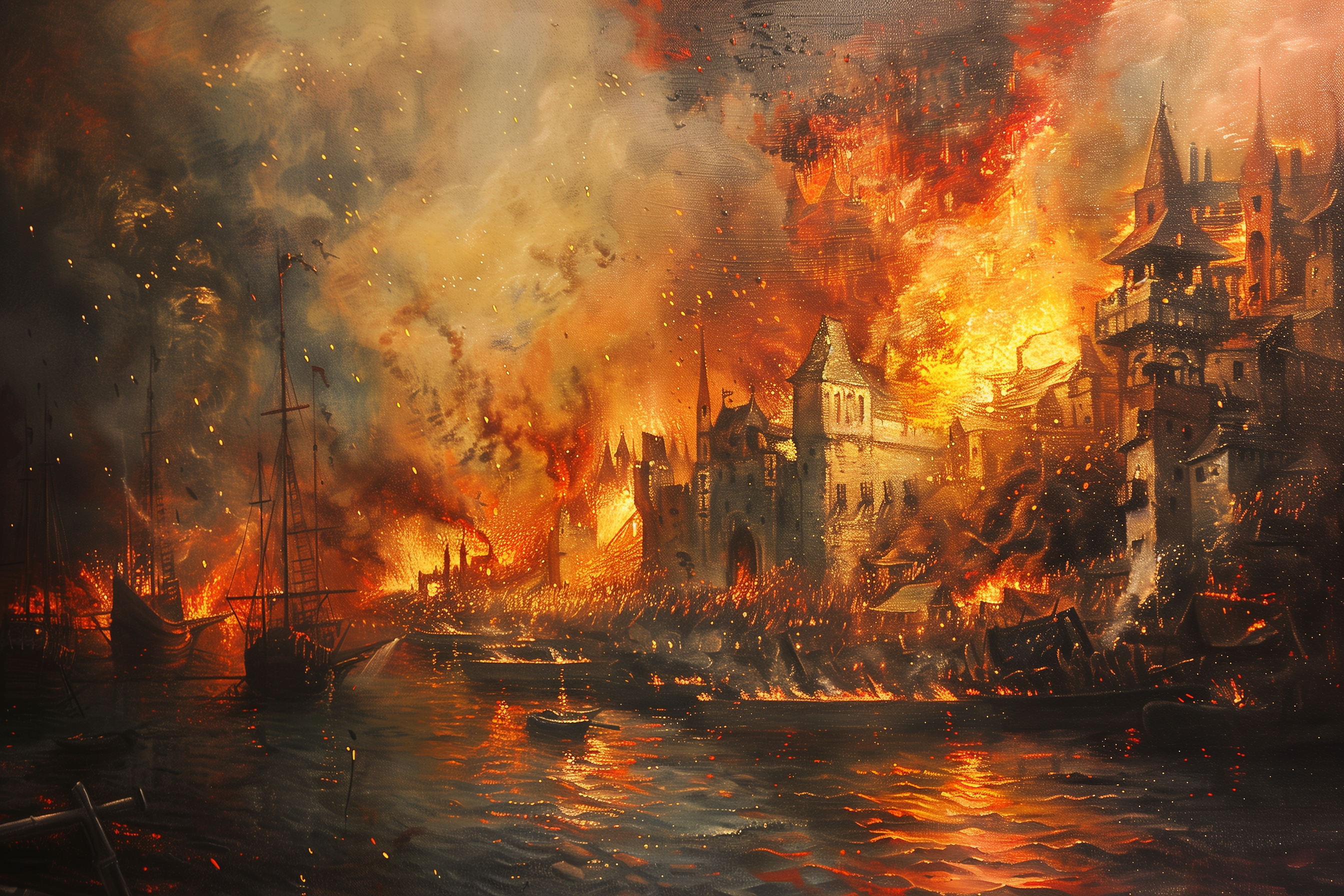
Burning of the Citadel, 1 B.C.
The Collapse of the Ancients, or simply The Collapse, was a year-long event that ended in the collapse of the continent-spanning empire of the Arsa Sidhe that had stood for millennia in the year 0 A.C. A series of riots lead mostly by the labouring Nua Sidhe (later-called Humans) led to total collapse and the ushering in of a dark age.
Background
The rule of the Arsa Sidhe has stood since time immemorial; no-one exactly knows when or how it was founded. A mostly rural, idyllic landscape gave rise to a humble existence — the stuff of fairytales, with errant knights wandering the countryside and fighting beasts, and stone palaces on hilltops that overlooked it all.
After so long, however, things were bound to change. Thousands of years of varied lifestyle led to the different members of the realm to change: those who laboured in the working classes — bakers, miners, farmhands — found themselves acclimatizing to their work. Growing hardier, tougher, and more resistant, but also losing their height, with a strange mutation causing shorter ears to become more common. These workers, calling themselves the Nua (New) Sidhe, continued to drift apart from their ruling classes.
End of an Era
After demands for increased food and drink for the peasantry went unanswered (or pushed back by 'noble' knights), the Nua Sidhe began a popular uprising across the continent, and with overwhelming numbers quickly pushed back and dismantled the ancient regime, with one of the most famous battles resulting in the burning of the Citadel, an 'undefeatable' fortress built centuries prior.
With the realm in ruins, the Nua Sidhe began to create new realms of their own, distancing themselves from their history. The ancient tongue was simplified into modern common, and along with it a new name for their people in the Common tongue: the Humans.
The Great Disappearance
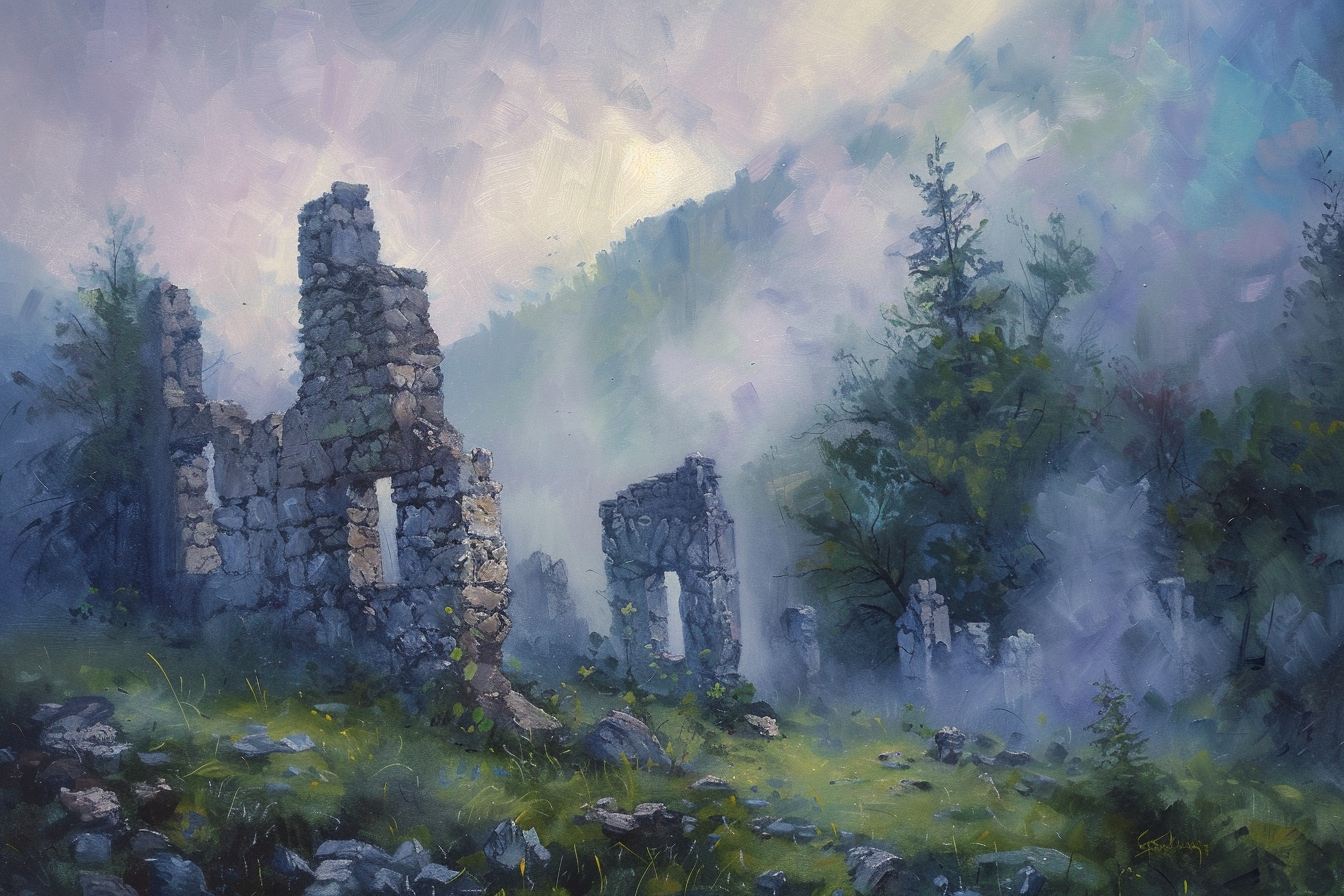
No one is sure where the Aedall went ...
The Great Disappearance, or the Disappearance of the Aedall, is an event that occurred in 1590 A.C. when the Aedall, a group of Arsa Sidhe who inhabited the Southern Reach, seemingly vanished into thin air, leaving their settlements and villages abandoned. It is speculated to be somehow connected to The Spire.
Background
The Aedall kept outsiders out of much of the Southern Reach, but only inhabited a small part of it, including The Spire. For several years before 1590, adventurers in the region (mostly Walljacks) noticed that small villages in the forests were home to fewer and fewer people, with some being left abandoned entirely. While this was certainly odd, many considered the Aedall's traditions bizzare as-is, and were not able to find much on the matter.
The Disappearance
The exact date of the disappearance, or if it even happened all at once, is not known. After Walljacks in the spring of 1590 noticed that they were not being attacked by Aedall patrols when travelling south, they began to venture further into the Reach, expecting to be led into a trap. When no trap came however, they found that every village they visited was empty, and there was no sign of where the former inhabitants had gone. It didn't take long for word to make it up the continent that the Reach was now empty, and new adventurers quickly found themselves making their way south.
The Long Winter
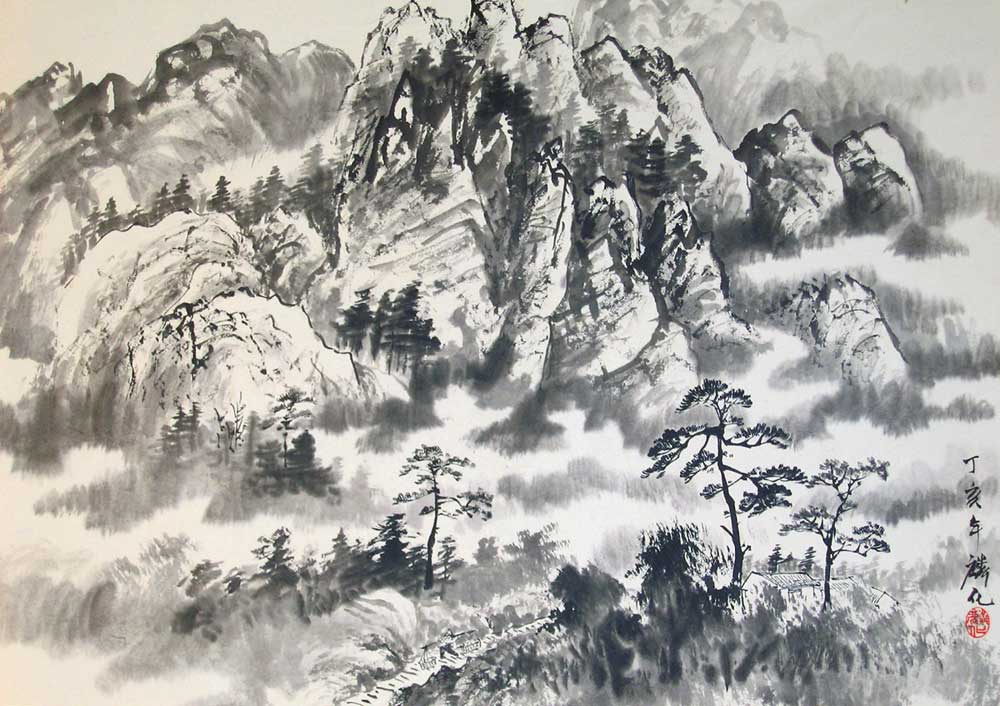
In the war-torn lands of Ko'ram, the harvest season of 1634 was particularly poor. Few are struck as hard by crop failures as those living in the red mountains of Uul'san Province, where lie the domains of the Odokhi princes. While there were usually abundant resources to import or withdraw from the stockpiles, the poor harvest also led to a general failure to meet the tribute targets set by Clan Odokhi for the year - leaving the treasury emptier than normal, their vassals thoroughly scourged and drained, and much of the realm teetering on the knife's edge with unrest and shortage. This was made worse by the fact that the farms and terraces of Iria Province, the breadbasket of Ko'ram, were controlled by the Odokhi’s old rivals to the south - Clan Kensho. The longstanding animosity between the two Great Clans led to increased attempts by the Kensho to economically isolate their warlike adversaries. From this perspective, the harsh winter of 1634 would only play into that interest and allow for a superior position to demand concessions in exchange for the relaxation of export regulations and tariffs as a form of aid to the struggling realms of Uul’san; Clan Kensho had no reason to offer a helping hand to the aggressive Odokhi.
With the questions remaining unresolved at the Hangawi, the natural outcome of such a set of circumstances in Ko’ram would be a state of war. Seeking to direct internal unrest towards a more potent goal, Odokhi leadership raised their banners for a renewed campaign into Iria with the intention to plunder and avoid the looming disaster by paying a blood price. Somewhere north of sixty thousand pikes and sabres were raised under those banners, led by many of the most prestigious minor Clans of Uul’san. This was the Kensho-Odokhi War of 1634, otherwise named "The Longest Winter."
Xhonhai Pass
Of the routes through the mountain ranges between Iria and Uul’san, the most direct and oft-embattled is Xhonhai Pass. A site of many skirmishes and massacres between many ancient Clans, control of the pass and its fortifications had fallen to the Odokhi leading up to the winter campaign. The strategic road was manned by an elite garrison of Odokhi warriors, which made it a prime target for the first engagement of the conflict. While the Odokhi warbands were still mustering, a rapid assault by a smaller Kensho host overwhelmed the garrison, killing or capturing all of the defenders and placing the most direct route into Iria under firm Kensho control. This initial surprise set the pace of the Odokhi campaign back by nearly a month as the war council deliberated alternate routes or planned for a battle within the narrow gorge.
In the end, by the time that the Odokhi arrived at Xhonhai to do battle, the temperatures had significantly dropped and the harsh reality of this winter season had begun to set in. To their surprise? Xhonhai had already largely been abandoned. The few who remained in that unsettlingly quiet pass which had become a grave for so many were found huddling for warmth among thousands of corpses. Hungry, freezing, and diseased. Those who were not writhing in agony from illness told of a sudden bout of plague which had spread through the Kensho force stationed at the pass in the previous month. By some estimates, nearly a third of the Kensho army had been destroyed in one grim cut by fate, leading to their abandonment of the region.
The road into Iria lay open for plunder and glory - but few seemed to consider that the misfortunes of the incidents at Xhonhai Pass would set the macabre tone for the remainder of what would come to be known as ‘the longest winter.’
General Information
The war was mostly fought in northern Iria following the opening stages of the conflict. Using their numerical superiority to their advantage, the Odokhi split their army into various warhosts under the leadership of many different prestigious clans, plundering and extracting tribute from the myriad Kensho fiefs and vassals in the north. Towns and villages that paid tribute were spared, but some that refused were sacked or razed in reprisal attacks, leading to increasing popular indignation among the relatively pacifist Irian shrine keeper populations at the conduct of the war. The difficulty of supply and increasingly harsh conditions of the winter had begun to put a strain on the Odokhi war effort, too, which only exacerbated issues of control. The general goal was to force a surrender from Kensho leadership to demand further economic concessions - but the weather conditions made Odokhi leaders wary of conducting large scale pitched battles or protracted sieges for fear of a lack of supply. In turn, the increasingly independent leaders of the Odokhi warbands were harder to organize for a concerted advance to a destination such as Shokyu. Few large battles were conducted, with both the Kensho and Odokhi opting instead for small-scale skirmishes at key positions.
Despite any positional advantages that the Odokhi were able to gain on the field, the prospects of success for the campaign had significantly soured over time. By Darkmoon, it had become obvious that they simply lacked the strength to win a decisive battle or siege at Shokyu. The strength of the warhosts had also been sapped by incessant skirmishes with the Kensho, illness, hunger, and (despite the famed discipline of the Odokhi armies) mounting desertions as a result of terrible winter conditions. Less than half of the initial army - roughly thirty thousand pikes and sabres - remained. Odokhi Anjikhin was satisfied enough with the results of the campaign to recall the hosts back to Uul’san. The one major battle of the war was yet to come.
Battle of Mount-Tumu Naek
“A hailstorm of arrows descends once again,
Hundreds will pay for the lost lives of ten.
Yet sword betrays not when the bows bend and break,
And gore stains the slopes of Mount Tumu-Naek.”
Fought between 16-20 Darkmoon, 1634, the Battle of Mount Tumu-Naek was the last major engagement and perhaps the most crucial moment of the war. While tribute and plunder had successfully been pillaged, it still had to be returned to the royal treasuries alive with a significantly diminished train of pack animals. The united Odokhi warhost began the perilous trek back home to return through Xhonhai Pass - and their adversaries understood full well that this presented an opportunity. Pursued and harassed by a Kensho army that for the first time outnumbered them, the Odokhi were outmaneuvered and trapped in a valley while attempting a daring crossing by Mount Tumu-Naek in northern Iria. The ensuing multi-day battle was fought in sub-zero temperatures and tested the spirit and tenacity of the regular soldiery and officers on both sides. It is said that Kensho Eiji himself was present and in command of his forces at this battle, and was responsible for the brilliant maneuver which trapped the invading army at the foothills of the mountain.
After an initial failed attempt to break out through the Kensho line that encircled them, the Odokhi fell into a defensive position and withstood unrelenting assaults over the next three days. Despite mounting heavy casualties and wavering morale, both sides refused to break. For reasons not entirely clear to those outside of the war councils on either side, on the fifth day of the battle, the Kensho were given the order to withdraw from the mountain after a small morning skirmish - leaving what remained of the Odokhi army free to lick its wounds at last retreat from Iria. Many theories circulate about the outcome; some say that Kensho Eiji feared his own force was so badly demoralized and diminished that it would not be able to withstand an Odokhi counterattack, others say that a bribe or backroom deal was cut - or that division within his own council and mounting unrest or conspiracy at home necessitated a withdrawal. A few of the more superstitious or spiritually inclined believe that visions or prophecies of doom for both sides turning into necrophages forgotten in the rubble of an avalanche from that mountain somehow influenced the decision. Regardless, the outcome was not particularly lamented by those who survived the ordeal. Most were simply happy to have managed to walk or crawl out alive.
While it was certainly bloodier and proportionally more fatal than many battles in recent Korami history, most casualties at Tumu-Naek were due to the cold and, particularly, frostbite. The personal investment and loss of many members of Clans, both grand and small, have also led to the mountain’s entering in the popular consciousness as a ‘coffin washed in noble blood.’ Though still fresh in the minds of many, some myths and rumours have begun to spread about spirits and ghosts wandering its slopes. On the other hand, many who participated also earned fame for the valour and grit that they demonstrated in the fighting - on either side of the battlefield.
Outcome
By Snowmelt, hostilities had largely ceased and the winter campaign was over. What remained of the Odokhi army returned with their plunder, while the Kensho dispersed to their own fiefs. In a sense, this conclusion could be considered both a victory and a defeat for each side: The Kensho successfully forced their invaders to retreat over the mountains, but the devastation in northern Iria was severe; meanwhile, the Odokhi returned with enough loot to fill the treasury and provide some relief to the troubles plaguing Uul’san, but failed to force any lasting changes in the situation with their southern neighbours. Indeed, perhaps the only result was a furthering of animosity and a stage set for further bloodshed between the two Great Clans.
Credit: DerKommissar_
Standard Calendar
The Standard Calendar or Standard Year is, as the name suggests, the standardized calendar used across cultures in Avalore. Dates are fixed around Year 0, the year of The Collapse of the Ancients, or simply The Collapse. Years are counted upwards since the Collapse, and are marked with A.C. (After Collapse). Events that transpired before the Collapse are noted with B.C. (Before Collapse). Some scholars prefer to use the notation A.E. for Ancient Era and C.E. for Current Era, though this is less common.
Structure
Seven days are grouped into a week, with each of the days given a unique name: Sunday, Wakeday, Restday, Cartday, Blessday, Washday, and Ashday.
The standard year is broken into 13 months, with each month spanning 28 days. Designed initially by the Arsa Sidhe before being taken on by the Nua Sidhe (Humans) for newer iterations as time progressed. Each Month coincides with respective Zodiac signs, which are assumedly predated by the calendar — however documentation is sparse to clarify in eras of predominantly oral recording.
Each of the first four seasons lasts 3 months, but the final season, Typhon, occupies only the final month of the year. Each of the seasons and months with their respective zodiacs are as follows:
Vernus
The first season, remarking growth and regrowth, begins each calendar year. Life flourishes in verdant green and prepares its buds for the Summer season to follow.
Snowmelt (Zodiac: Pale Steed)
Firstide (Zodiac: Duel)
Greenrain (Zodiac: Lantern)
Summer
The second season is that of abundance and bloom, remarking a blossoming, cultivated crop. The season of colour and lasting sun, of ripe fruit and good health.
Highsun (Zodiac: Magpie)
Bloomburrow (Zodiac: Knighting)
Lowsun (Zodiac: Griffon)
Autumn
The final day of Summer gives way to the harvest season; the stockpile that will last until next Vernus. When the food is reaped, stored and sealed, and the plants begin to dry and crispen from lively green to bright orange, red and yellow.
Falltide (Zodiac: Paramours)
Goldleaf (Zodiac: Beast)
Harrowing (Zodiac: Masque)
Winter
The first day of the Winter season remarks the presumed deadline for the harvest; anything left unsewn shall not be reaped and anything unreaped shall not be sewn. Some preliminary crops are laid out in the mid-late Winter in preparation for Vernus, but the primary trait of Winter is death — stockpiles are exhausted, climates are harsher, and days are shorter. Those unprepared shall not last the cold unscathed.
Skybright (Zodiac: Siren)
Frostfall (Zodiac: Hart)
Darkmoon (Zodiac: Dark Horse)
Typhon
As the snows turn, the season of Typhon brings the rain that wears away the Winter death to usher forth the life in Vernus. While Winter is death and Vernus is life, Typhon sits between — the spirit adrift as the body breaks down. The seasonal storms wash away Wintery rot abated by cold while stocking water and nourishing the crops that will one day grow in Vernus and Summer.
Reflection (Zodiac: Ouroboros)
Contribution by Dee
Currency
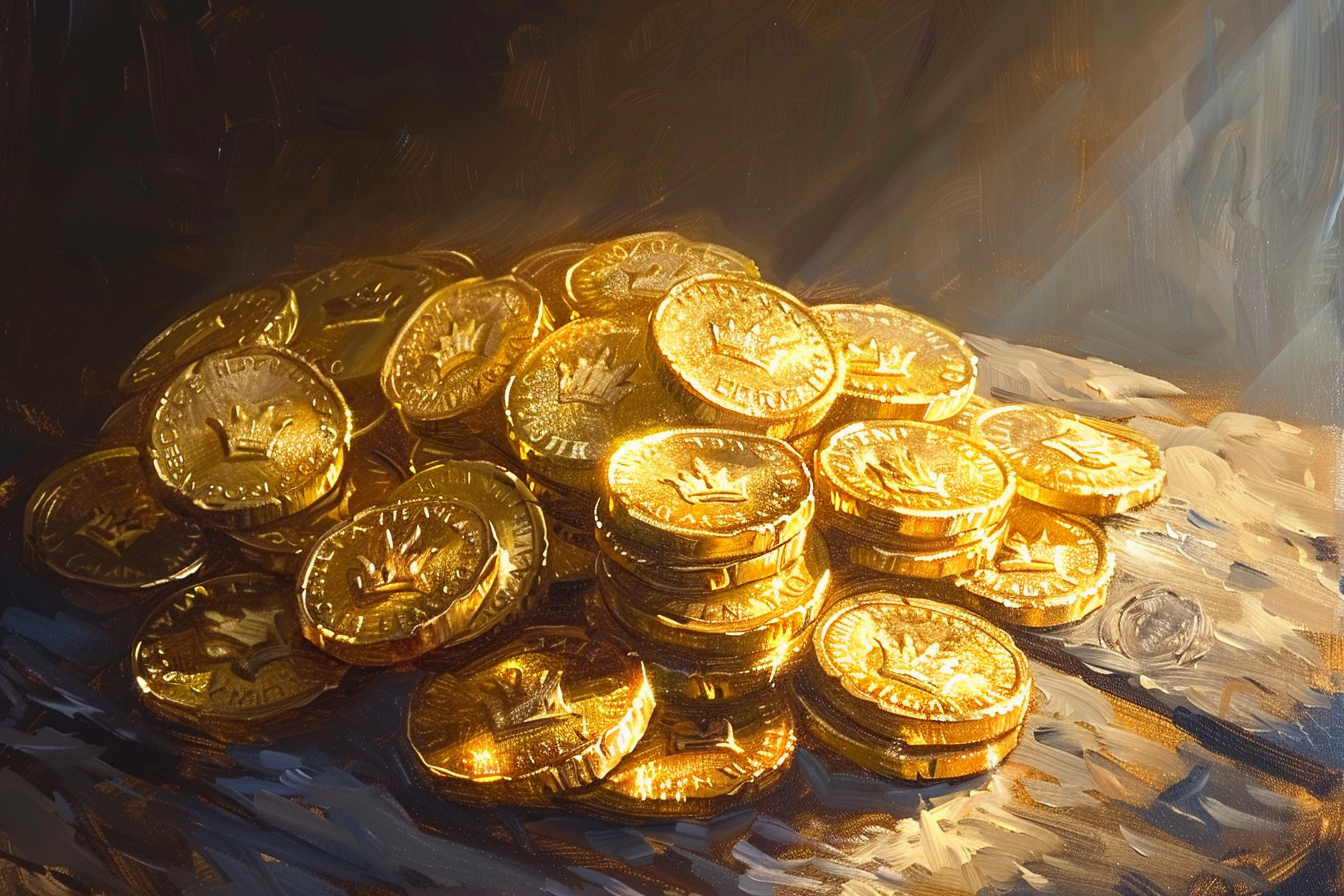
Currency takes many forms across the world, though almost always in the form of gold (and sometimes silver) pieces, formed into coins. For larger transactions, bars of gold may be forged and exchanged.
Within the Southern Reach, the primary currency is the Crown, coins minted by the Valkian Realm and used by traders in the region, as well as widely accepted by the Falstoners to the East. The coins vary in design from where they were minted, though they universally have a crown on one side, and often a symbol of the area where they were minted on the reverse.
Most of the gold for Crowns is mined in the far mines of Frostpeak in the north.
Constellations & The Zodiac
A dark sea that glitters as the sun falls, stars remark superstition, spiritualism, and utility from years of study. Star signs, horoscopes and prophecy stem from patterns observed and acclaimed by seers and sages alike. The creation of astrolabes, calendars, star charts and other tools strand from the practical study of the celestial.
Charting & Navigation
The Southern Reach is remarked with star charts for traversal of both sea and land; the keystone navigation tool being the Southern Star cluster, translated from the ancient tongue as the Sleeping Serpent. Shown to writhe and shift in iterative positions over the generations, the Serpent's Eye is consistent in its position directly due South. Once considered a dour omen to follow, the Serpent's Eye is now regarded as one of the most important navigational tools in a traveler's toolkit.
The Zodiac
Thirteen specific constellations are elected as the Zodiac, representing spans of 28 days between each sign. Each is a purported omen for children born during such a time, though to abide by such is superstition to some. Further, deeper delving into the placement of each Zodiac sign can be levied by fatemakers that portent destiny in others.
- The first sign, the Pale Steed, is an omen of early blooming; its presence signifies promise and prodigy at an early age, but foretells tragedy and forestall later in life.
- Duel, the second sign, is tied to pairs and dualism. Twins born under this sign are predicted to be either inseparable or rivals; perhaps even both.
- Lantern, thirdly, is the sign of revelation. Truesight, fresh perspective and intuition are seen as inherent to those born beneath the Lantern's light.
- Magpie, fourth, is a sign of fortune gained or lost. Wealth is not limited to monetary value, but rather a heavy sum of anything that may be treasured.
- Knighting, fifth, is the sign of loyalty and honour. The constellation itself is oft sworn upon by knights; "by the stars above".
- The sixth sign, Griffon, is representative of nobility, but remarked as a mosaic as well—disparate emblems coincide within a powerful being, representative of a diverse world.
- Paramours, seventh, reach forever for one another, but their hands never meet. To be born under this sign is indicative of charisma, but can be the curse that desire is never achieved with charisma alone.
- The sign of the Beast varies in interpretation, ranging from a bear to a wolf to a lion—it is nonetheless used as representation of potent instinct and dominance.
- The ninth sign, Masque, tells of insight; seeing the intent of others or hiding one's own. Introspection upon the self is considered a tell of the Masque, whether it be the guise put on or what lies beneath it.
- The tenth sign, Siren, symbolizes draw. Unlike the Paramours, the Siren sign is indicative of a particular talent that attracts others.
- Hart or Stag, the creature of high regard that stands either proud in nature or mounted upon a wall. The beauty of a single life can be snuffed just for the display of vanity for another. Innocence or innocence sullied.
- The twelfth sign, Dark Horse, the counterpart to Pale Steed, stands inverse; it is suspected that those born under this sign are like to come into their prime late in life, should they will live long enough to see it. They are the hidden trump card revealed in the last hand, rather than right at first deal.
- The final sign is Ouroboros; serpents eating their own tails are coiled around one another, and unable to disentangle. They are representative of cyclical habits, and notably mark the end and new beginning of the cycle.
Portents & Fate
"The stars tell a tale that no mortal alone could fabricate. They have seen all that has been, and all that there will be."
- E. Erynor’s Life Amongst the Cosmos
Parsing and reading the fates is where astronomy delves into astrology; the thirteen zodiac signs are utilized alongside unassigned or otherwise minor constellations and stars through resonance with the superstitious star-seers to help foresee the future and tap into the eyes of the past.
- Archway: A quintet of stars aligned in an arc, often taken as an omen of change.
- Hydra: Aligned stars that seem to reflect multiple heads and necks conjoined at a single body; meant to represent being of multiple opinions or emotions — called “ambivalence” to some instead.
- Lock/Keyhole: Missing pieces hidden away are tied to the stars aligning like a lockbox, with a key to accessing them being any amount of things.
- Murder: Adjacent to the “Magpie” Zodiac are similar, more stunted clusters seen as a group of crows by creative minds. Stripping something bare to the bones, scavenging anything left to salvage.
- Coronet: A pointed regal crown or jagged teeth, made to show authority withheld or upset.
- Harp/Lyre: The sound of the stars. What appears like four sets of parallel stars in lines is considered representative of occult communion with beyond.
The Sun & Moons
The Sun and Moons both play an important role in the life and spirituality of the inhabitants of the realm. While being almost alive as part of the Fable of the Phoenix and Equinox, others simply mark them as bringers of fate, a signifying of the ever-lasting march onwards of time, or the domain of some greater being above.
The Light & Dark Moons
The light of the moon basks in contrast to that of the sun, which paints the sky in lumination — conversely, moonlight is less potent or perhaps just given less generously; moonbeams sooner draw attention to the sky than they would light the world below.
The phase of the Light Moon is dictated by the passage of the Dark Moon, both encapsulated in elaborate dance with one another night after night. The Dark’s eclipse of the Light permits the sight of crescent and gibbous phases, with no notable absence if Light should eclipse Dark.
In daylight, neither moon is visible, each outshined by the splendor of the sun unless they should eclipse it.
The Sun & Eclipses
A celestial body stronger than moons or stars, the sun arcs from horizon to horizon each day unfailingly — the gold-white light remarks daytime, and rests as night comes. Warm and kind or blistering and cruel, defined by circumstances far beneath it; in its own way, the sun is stronger than any magic or divine. Beyond the reach of mortal hands, touched only by the moons.
If eclipsed by the Light Moon, the Sun serves as a radiant golden corona around a silver beacon skyward — if laid behind the Dark Moon, the sky is painted a vibrant indigo, with creeping light encircling the stigma moon like petals of incandescent violet. To behold an eclipse in the rare event it occurs, is blinding — but the blinded have spoken of light that breaks through the moons. Cracks, seen only for moments. The last thing to ever be witnessed by such a beholder.
Contribution by Dee
The Storyteller & Revival
To request revival, post in the Revival Thread on the forums.
For some, death is not the end of their tale. Indeed, while many stories come to a meek and final end, some are simply too engrossing to conclude prematurely, with loose ends to tie and chapters still unwritten. This is embodied most literally by the intervention of The Storyteller. The phenomenon – a return from otherwise final death – is known to the world and as rare as a miracle, but the enigmatic figure behind it is not. No stories make mention of him, not a soul knows to utter his name. It is this benevolent bard of tales, that seeks to weave a thrilling epoch, that wills some stories to continue on. For that he requires actors, both hero and villain – but these titles are just a matter of perspective, aren’t they?
For those deemed important for the tale to go on, The Storyteller intervenes after death, whisking the soul of the fallen to a spiritual campsite of sorts. Given an opportunity to reflect on decisions made and goals outstanding, The Storyteller grants a brief respite from life’s worries before piecing their soul back together, bringing them back to life. When they finally awake, they remember nothing of this, but The Storyteller leaves their mark: some unique element added to the character’s story (see Storyteller Consequences). Neither are the circumstances of their death fully known, with the character only remembering a hazy retelling of the day’s events leading up to their death; related details (the killer, the location, etc.) spark a gut wrenching feeling of unease or dread when they are encountered.
A character will not revive with memory of their death or what directly caused it, and cannot return to roleplay until at least 5 days after their day-of-death, even if the revival roleplay concludes before then.
Revival
Storyteller Consequences
Upon reviving through the Storyteller, characters receive a Storyteller Consequence. This is an effect picked from the list below.
Storyteller consequences are not boons. Neither are they always banes. They should, at most, be neutral. When considering what your character’s consequence should be, think of what would be most thematic given the circumstances of their death and the story you are wanting to tell.
Lore Team has final say on approving consequences, and can help workshop a consequence if your original idea doesn’t pan out. However, when making a revival request, you should already have a clear idea in mind of what you want your character’s consequence to be, using one of the templates below. Feel free to present this idea before or after the revival roleplay in the ticket a staff member opens for your revival.
Should your character die and be revived by The Storyteller multiple times, you may either choose to receive an additional consequence, or worsen an existing one.
XP Cost
Additionally, the cost of revival increases with each death, as it takes more energy to weave the fragmented soul back into the story of life.
- 1st Revive: 10 XP
- 2nd Revive: 20 XP
- 3rd Revive: 30 XP
- 4th Revive: 60 XP
- 5th Revive: 100 XP
- 6th Revive: 160 XP
- 7th Revive: 200 XP
Physical Consequences
- A [minor physical change]/[mundane symptom] manifests whenever [blank] happens.
Examples of mundane symptoms: itchiness, coughing, light fever, turning pale, nausea, a limb not responding. The symptom should not incapacitate the character in any major way or outright kill them. The symptom should disappear as soon as the character walks away from what triggered it. - A prominent [mark/brand/scar] somewhere appears on your character’s body. Optionally, when in [blank] situations, it may be seen through clothing and armour as a stain, soft hue, or in its entirety on top of the wearable.
- A [body part] is now missing from your character. This may not be regrown/replaced even through magic.
- Your character’s previously [lost limb] is now regained, but it never feels like it belongs to the rest of the body. This brings a feeling similar to phantom pains as it's being used, making one prefer not using it at all if possible.
- Your character loses the ability to perceive [blank]. If they lose the ability to see one or more colors, they will now appear in shades of black and white.
Psychological Consequences
- The emotion of [blank] becomes much more prominent in your character. This emotion is quick to trigger within your character, and becomes unable to be masked.
- Your character develops a severe phobia of [blank].
- Your character develops a fanatic superstition that [blank]. (ex. Character now genuinely believes that a certain number, like 13, is inherently cursed)
- Your character develops an obsession with [blank]. This obsession may not be directed towards other characters.
- Your character remembers the past differently. Not true amnesia, but key [events/characters] have been altered.
Supernatural Consequences
- The spirit of [blank] now haunts your character. This spirit is only visible to you unless revealed with Cursesmithy and any apparition-related abilities. However, it only regards and interacts with your character, ignoring all else, and cannot be exorcised away.
- Your character’s reflection is now altered to appear as [blank]. Others are able to see this alteration, but it will not show to be magical if investigated.
- Your character is haunted by visions of [whatever caused their death]. The memory of these visions fade into nothing before the character has the opportunity to try to explain them to another, including viewing them through magic.
- Your character occasionally hallucinates, seeing visions of [blank]. These hallucinations last only briefly.
- Your character hears unsettling whispers coming from [blank]. No one else notices this phenomenon.
Written by Reedie, ShinyBlue, Meg, DropOfLove, and Electric
Divining Cards
The Deck of Divining
Used for both mundane playing and the tradition of divining, the cards have taken root especially in Valkian culture, but have been pervasive enough to make their way to near-universal status; that is not to say that all will know about the all-knowing cards, but that knowledge of them may come from anywhere.
O - An Omen
Called “Foreboding” in some circles, an Omen card holds a specific (and perhaps the most transparent) meaning among the deck of cards. A traditional upright draw of it refers to something to come, oft prompting another card be drawn—but an Omen reversed speaks of something that has passed, returning once more.
The card depicts a white raven either flying or falling when reversed, with any amount of setpieces behind it, such as arrows, fire, rain and so on.
I - A Merchant
Referring to the process of bargaining, a Merchant card speaks to someone or something compromising in the face of adversity—which may come in any stripe including simple things like guilt or greed. When drawn upright, it refers to a transaction turning positive for the diving subject or both parties—but reversed, it speaks of a sour result for the same.
The card depicts a silver-robed merchant weighing crowns and goods either by scales or in-hand, with the wry grin of a huckster—or perhaps the easygoing smile of an honest trader, if such a thing exists.
II - A Magister
A Magister wields strength outside of the physical, made arbiter of choices bound to send ripples to others—upright, the card tells of the divining needing to make a choice; reversed, a choice has been or shall be made for them.
Art upon the card varies between that of a Valkian noble and a gaudy magician, clad in decadent garb and drifting fabrics reflective of authority and power unseen. They stand upright, as is their station, wielding a rod of authority decorated in scripture or runewords.
III - Pennon
A card of virtue. Whatever good exists to the diviner is meant to be solicited in its meaning. Upright, altruism and devotion are elevated as key articles of import, but reversed, the card speaks of excessive moderation—pedantic care over the wrong victories or disputes.
The card depicts a wing crossing with a banner. Whether it be upon a bird, a beast, or adorning a person’s frame, the wing remains constant and juxtaposed beside the banner of varying heraldry.
IV - Lindwyrm
A serpent of wings and talons, a Lindwyrm is a card of monstrous greed and gluttony. Upright, it speaks to the pursuit down upon others in search of material gain—but reversed, belly-up, the creature is ripe for killing, leaving its horde up for grabs.
A lindwyrm is depicted in cerulean and vermillion scales, with wings and claws akin to a bat—tipped just the same as fangs baring out of the hungering maw of the beast. Its serpentine body is depicted twisted into the shape of an ampersand, the symbol of “more” in any circumstance.
V - Ostler
A stallion and his keeper, holding it by the reins. Upright, the card is of the keeper, able to tame and hold back a powerful will—reversed, the card tells of the stallion, kept in check by force over its defiant muzzle. An Ostler card speaks of wild strength, controlled or uncontrolled.
The card seems to always depict a Falstone man, carrying a spear and shield upon his back while still adorned in the equipment of his profession. Departures from such a depiction are not unheard of, but seem to contest its validity. He holds the reins of a resilient horse, each fighting strength with strength.
VI - Spire
A pillar that reaches the sky—it is unclear if the location in the Southern Reaches prompted the name, or the card was the source of the structure’s colloquial title. It speaks of ambition and of mystery. Upright, the card divines untold reward, but reversed speaks of unknown consequence—whatever the aim that brings this about is ambiguous.
While recent depictions of a Spire may use the structure in the Reach, other, older cards depict a pillar in the clouds that reaches downward—or something as simple as a tower outpost.
VII - Precipice
A gorge reaching the depths of the world, akin to a swallowing abyss as it reaches deeper than light. Where a Spire card depicts intentional follow-through, a Precipice foretells an unintended fall—no matter what precautions are taken, upright, something tragic will befall the divined subject, but a reversed card tells of unsought fortune.
The card is a twin of the spire, art always depicting the opposite perspective of it as a swallowing depth that sinks beneath the earth.
VIII - A Vagrant
A card of traveling fortune and misfortune, speaking of the crossroads into the life of the divining subject. To draw this card upright tells of a new arrival into the subject’s life, and reversed it speaks of a curt departure. This may be as definitive as life and death, or as ambiguous as a traveler unlikely to be seen again.
The card depicts a hive of crawling creatures in amber and scarlet that scuttle along a wizard in a lousy gray-brimmed hat—a black hole in his left cheek may denote where from they crawl, as if the vagrant himself is a puppet of pests within.
IX - A Vampire
A Vampire card, also called “Courtesan”, refers to parasitic transactions or relationships—one party taking advantage of another to their own detriment. When drawn upright, it speaks to a drain on the subject of divining; when reversed, it tells of their drain upon others.
The card shows a woman clad in red and black with a shower of lampreys about their personage. The bestial, vampiric aspects will vary based on the depiction and naming of the card itself.
X - Shelter
Protection from outside forces, the shield exists as a symbol of conserving and safeguarding. Upright, the card speaks of straightforward safety, but reversed the card shows missed opportunity—telling of too tight a grasp for the sake of protecting what may not need to be stable and sacred.
The card depicts a knight wielding a shield to block a beam of light—oft over a protected subject, guarding from harm in the safety of darkness.
XI - A Hag
The card of storytelling, also called “A Seer”, is a card of emotions and spurs—provocation of deep wants and unwants in the subject of divining, as well as the ends in which their story will reach. To draw upright, the card depicts a hollow victory; reversed, a defeat that gives greater reward. This card is not sought out for the self often, and more appreciated when divining for others—like a hex to beset upon them.
The card seems to always depict a mousy woman clad in a shawl of black and white, wily black curls corralled under indigo headdress. Her eyes are those of glass, one or both stained white by worldly blindness. If diverging, the other eyehole may hold a trinket or bauble within.
XII - Chrysalis
Transformation, whether desired or a curse upon the subject of divining, is foretold by this card—this may not be physical, speaking of any degree of metamorphosis of ideals, belief, sense of self and so on; but it ushers change no matter the state. To draw upright is cause for unnecessary change—the freedom to have chosen or be subject to chance. To draw in reverse speaks to necessary change: something that will not function as it is, and must alter or be altered to continue.
Depictions vary between a woman becoming a moth and a moth becoming a woman, always divided in aspect by a glassy cocoon that has begun to hatch. The woman features hair of green, akin to kelp.
XIII - Bannerman
Bannerman, called “Campaigner” in some circles, speaks to the responsibility of leadership and following—it is a card of trust and trust misplaced. Upright, a Bannerman is indicative of loyalty, and of trust earned and followed—reversed, it is the card of folly and fools’ errands, of poorly placed belief or a cause doomed to fail.
A knight or page waving a banner decorates each card—the colours and stylings of both will vary based on the nobility it means to impress, but the common “good luck” depiction is merely a silhouette of a banner-wielder before sun, flame or moonlight.
XIV - Mediciner
A Mediciner, called “Shaman” or “Druid”, by some, is the card most referential to wisdom and to substance. The card speaks to healing and recuperating, whether it be from a known wound—upright—or an unknown harm—reversed.
Depictions of a Mediciner upon this card may vary—a traditional variant may show the grim masque of the plague on their visage, akin to a crow or vulture, whereas a Shaman or Druid may have ornamental avian features: feathered half-masks or headpieces, or simple adorning trinkets. In each hand, a Mediciner holds a bottle and an herb, offered outwardly.
XV - Aurochs
That of persistence and stamina, an Aurochs card speaks to great labour as a precursor to abundance. Upright, the trial has yet to come, but will hold some degree of fortune when it does—reversed, the trial has passed, and rest and reward are due.
The card depicts a bull pulling a plow alongside a farmhand to guide it, holding a scythe, sickle or pitchfork. The great beast shows no sign of tiring in most depictions, even if the farmhand does.
XVI - Falconer
Despite the name, a Falconer card features the falcon itself more than the titular keeper. Upright the card is one of trained focus, tunneling in on one goal, whereas reversed the card tells of ignoring true fulfillment in such pursuits. Neither meaning is necessarily exclusive of the other, but can illustrate what matters to the subject and to fate.
A falcon flies with one set of talons outstretched, bound for wherever the keeper intends it—if a Falconer is even present in the card’s depiction, they are always left in the background of the piece. Within the other claw, the falcon clutches a bell of gold or silver to announce itself.
XVII - Temptation
An internal call upon the self—to give into a true nature and forget whatever restraints set one upon their current path. Upright, the card speaks to dark desires and malice, but reversed the card is one of burdens on the soul—a call to be a better person for any degree of reason.
A golden-eyed demoness with banded golden horns swaddles a child with care. Her wings shroud around them both, but the babe is depicted content in each variant of the card.
XVIII - Scapegoat
A Scapegoat, also called “Scrapegoat” by the unfamiliar, is the card of blame. Upright, there is something falsely attributed to the subject, and reversed, the subject is guilty of casting blame. It does not speak of an innocence in the creature, but rather action or circumstance that make otherhood easier.
A creature with horns of unwieldy, heavy size that gouge the ground beneath it as they drag—the scapegoat initially looks as any goat does, but a universal addition to it are non-goat features—some with hands, some with cloth, most depicted stood upon hind legs.
XIX - Twin Moons
The dark and light moons are constantly eclipsing one another, however one eclipse is noticed primarily through absence versus the presence of the other. Upright, the card tells tale of undue credit for the work or efforts of another—reversed, it speaks to deliberate obfuscation, remaining in the cloak of dark.
The dark and light moon needn’t be depicted in overlap, but to do so is most traditional. The dark is commonly in front of the light, or given special detail that is otherwise unnotable if observed in the true night.
XX - Twin Birds
A card of Twin Birds tells a tale of duality—upright, it is a sign of an external dilemma of two ideals or groups, but reversed it is internal—of conflict or disharmony within the self that must be reconciled.
Although the most common depiction is of the Phoenix and Equinox, the card may display any two birds—young and old, predator and prey, great and small, or perhaps just two of the same.
XXI - Dragon
A Dragon may be many things, manifesting as some ultimate obstacle to be overcome rather than a true titanic beast—it is a rival, a place, a group, or perhaps even the self—but it is something that needs be overcome for the subject, for failing to slay a Dragon will leave it to consume uncontested. Upright, the card is about a personal opposition in the drawer’s life, but reversed may indicate the subject of divining (or something affiliated with them) is the great beast another must overcome.
A great draconic being with jaws around the sun in the sky, the card is not necessarily depicting the great fable, but may instead refer to any amount of beasts or figures of history; what matters is the depiction encompasses the metaphoric dragon—a great adversity stood between the self and peace.
Flora & Fauna Beyond the Reach
Fauna of the Amafells
Glacier Ant
Native to the Amafells and other icy mountain ranges, glacier ants make their underground colonies inside thick sheets of ice at frigid, higher altitudes. These types of ants have adapted to withstand colder climates, however their colonies can only survive in environments where ice stays frozen year-round. Like other ant species, glacier ants are social insects with roles such as workers, drones and queens. Unlike other ants though, is their appearance. To blend in with their surroundings, glacier ants are light blue and near translucent.
Unique to glacier ants is a behavior known as friction warming, or more commonly called clustering. Clustering is when a large group of ants huddle together and continuously move, often in circles, to warm each other up. Clustering is essential for keeping glacier ant eggs alive, as without heat they are unable to hatch and can permanently solidify.
Frozen glacier ant eggs are considered quite beautiful, as when they solidify they resemble opaque pearls with distinguishing blue hues to them. They are often harvested and sold under their common name, glacier pearls. The more round and blue the pearl, the more valuable they are considered.
Fauna of the Ashlands
Molten-crusted Bombardier Beetle
One of the few insects that can be found in the Ashlands and other similar volcanic landscapes, the molten-crusted bombardier beetle can be quite dangerous to encounter. These beetles have adapted their exoskeletons to be as hard as volcanic rock with a similar look for camouflage. As with most bombardier beetles, molten-crusted bombardier beetles possess a defensive mechanism where they eject a hot chemical spray from their rear.
Molten-crusted bombardier beetles are able to create and eject this spray at a much higher temperature than regular bombardier beetles as a result of their volcanic adaptation. Instead of at 212°F (100°C), these beetles are able to eject a chemical spray at double that temperature, resulting in instant third degree burns and potentially further complications without immediate medical attention. Despite this dangerous defense mechanism, these beetles will not attack large creatures, such as people, without extreme provocation. Other bugs, insects and small animals are not so lucky, as these beetles are known to be quite territorial and will spray these smaller creatures should they cross into their territory.
Fauna of Ko'ram
Bó
“Battle was upon my clan as the moon rose above Gakaiyō. Where once we believed our defenses impenetrable by cliffside nature, we had not imagined our foe so fearless as to tame the beasts thought untamable. As they leapt from height over our walls, we knew it was over before the beasts' teeth drew close.”
Kappa
“Father always threw a cucumber into the spring before we bathed. As it floated, we laughed. He always said 'one day, you will not be so careless.'”
“That day arrived yesterday”. The waters splashed violently as we roared our usual mockery, only to watch the river child consume the fruit before leaving us to bathe in peace."
Kesaran-Pasaran
“Gentle wind mountains
A fuzzy kesaran drifts
Bringer of the bloom.”
Korami Longhorned Beetle
The Korami longhorned beetle is, as its name suggests, native to the lands of Ko’ram. It can be found on most islands and thrives in coastal and tropical environments. The female beetles are completely black, while the males have their head horns colored bright red. The larvae of these beetles are considered a delicacy, with a savory and fatty taste when cooked and properly prepared. Korami longhorned beetles are easy to care for and, as such, can be found domesticated both in the lands of Ko’ram and across the realm.
Domesticated Korami longhorn beetles tend to have shorter head horns to prevent damage from infighting that may occur between beetles kept in captivity together. Oftentimes, these beetles are not kept as pets, but instead are used to harvest larvae from.
Inmyeonjo
“During my pilgrimage to the summits, I believed myself ready to face my fears, to overcome any encounter. Instead, upon the peak, I found a new fear.”
Upon the peaks of Ko'ram's many mountains, the inmyeonjo roost and fly from mountain to mountain during the seasons. They are large avians, around 8-foot tall with wingspans up to 32 feat with large, elongated, feathery and snake-like bodies, griffin-like talons and, most notably, a pale, humanoid face. A point of most Korami nightmare tales, the inmyeonjo's remarkable facial similarity to people is an evolution to ward away predators, including Korami hunters. Interestingly, the inmyeonjo are neither carnivores nor herbivores, instead subsisting primarily on metal. Their feathers and skin take on a metallic hue and harness as a result, insulating them from the extreme colds of mountaintops. Farmers often lose their tools and blame the inmyeonjo for their misfortunes.
“It did not taste very nice. It was like chewing steel... coated in chicken broth."
Fauna of the Mist Isles
Mistan Shrouded Butterfly
Native to the Mist Isles, Mistan shrouded butterflies are a unique species that cannot be found naturally anywhere else in the realm. They are rather small and are nearly entirely white save for a varying amount of black dots on the edges of their wings. While not visually stunning, these butterflies are widely sought after due to their unique defense mechanism. When stressed or under duress, Mistan shrouded butterflies will rub their wings together and create a powdery mist to hide themselves from predators. This mist can allow them time to escape, or create an illusion that they are much bigger than they truly are.
Some people capture Mistan shrouded butterflies and keep them as pets. Others capture them and put them in small cages together. People will wear or otherwise adorn themselves with these butterfly-filled cages, allowing the mist to envelope them and give them a mysterious aesthetic. This is considered extremely unethical as it often involves putting these butterflies under unnecessary stress and in unsafe conditions.
Featuring contributions from Wake and Shinyblue.
Illness & Diseases
Saltblood Disease
A name born of the initial treatment of blood wasting—leeching. Something about the blood of those with this disease will sooner kill a leech than nourish it, counting out the treatment as wasting wears away the body.
In much the same way as salt will shrivel and kill a leech, the blood has such an effect upon the creature—that is the way to tell it apart from traditional wasting sickness and fever. Symptoms upon the body can include frailty, recurring nosebleeds, pallor skin, and dizziness.
The disease is one of the heart, causing the output of blood to take on the relevant symptoms as it flushes through the body. Abated by transfusion and bloodletting, without the heart being wholly healed in some way, the disease is only treatable—not curable. While blood under this condition has no distinct change in appearance or feeling, its interaction with blood-consuming beings is its primary giveaway.
Seldom is it terminal on its own, but the long-term harm of the symptoms may leave the afflicted vulnerable to other causes of death.
Trivia
- Due to the belief that the change of the blood yields a combination of blood and salt—both traditional ingredients and implements in some occult esoterica—saltblood is treated as high value among superstitious mediciners and potioners even if not of practical use.
- Vampires cannot feed on it; to do so leaves them in much the same place as a leech—shriveled and poisoned. Should a vampire feast upon saltblood, they would detect the difference in it in immediacy and find themselves unable to heal as feeding would traditionally permit. This hinderance persists up to seven days before it is purged from their bodily systems.
- Other pestilence, i.e. leeches or mosquitos (and other biting/blood-sucking fauna) are harmed by this condition.
Morsanguis
Morsanguis, or more commonly known The Scarlet Plague is a treatable yet deadly wasting infection that withers the body from within exponentially, starting from mere coughs to debilitating impairments and eventual death. The name came to be from the late signs of the illness where the sick’s coughs became misty and scarlet red, by which point the illness is untreatable.
The disease itself is mostly known as Morsanguis on the eastern continent, especially within the Valkian Empire, the moniker Scarlet Plague only caught on a decade or so after the 1544 outbreak in common-speaking circles. Due to the widespread nature of the disease, it acquired many names across the realms it spread to and still lingers in.
❈ Main article: Morsanguis