
“Their coexistence with other creatures in the forest form a sort of symbiotic relationship, with the krackerstag serving as the warning bells of the flock. It is apparently quite the nuisance when hunters go out early and the whip-cracking wakes up local game before dawn.”
Krackerstag
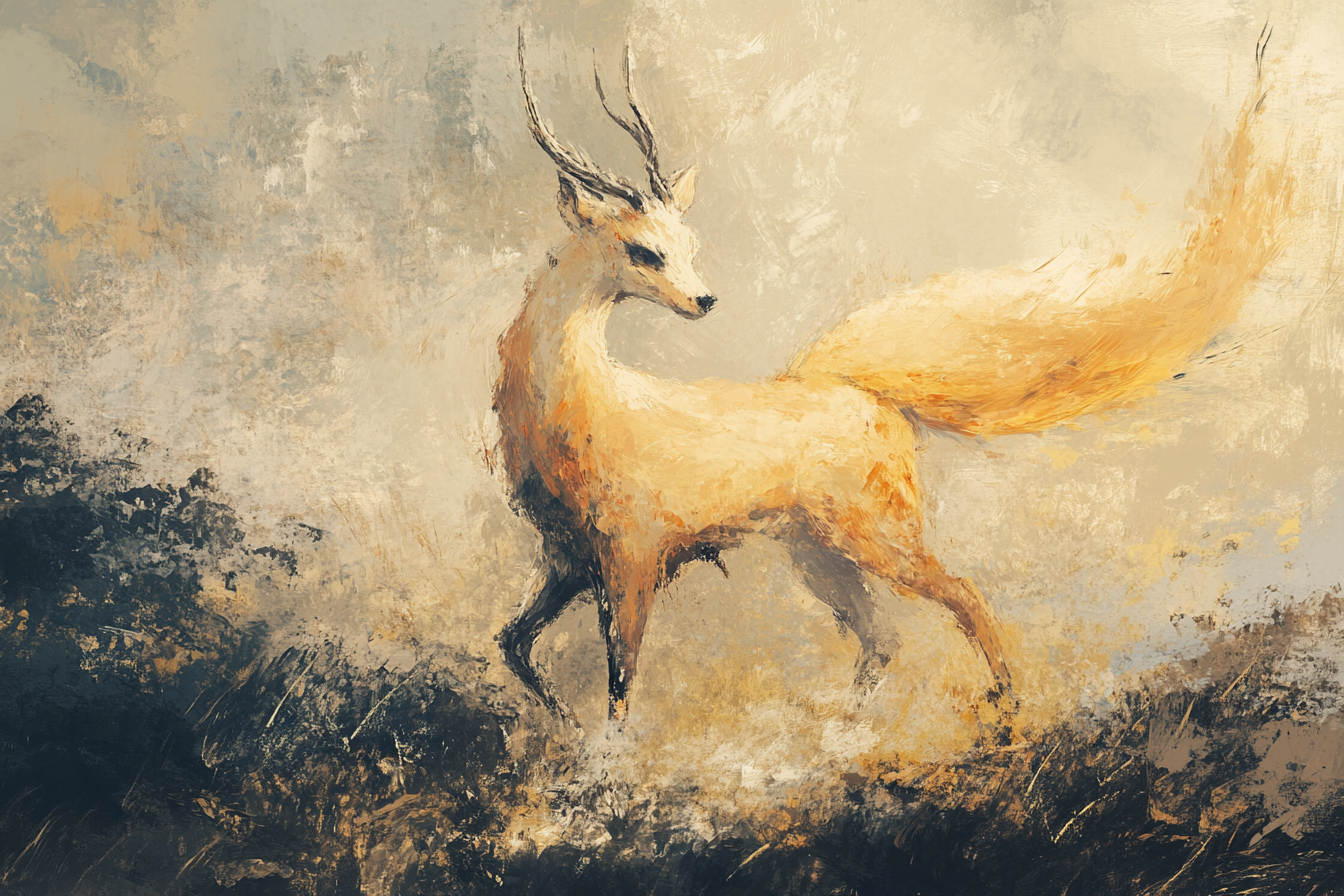
Largely resembling the common stag or doe with a golden tan coat, the krackerstag is a petite Cervidae with a bifurcated tail. This twin tail has queer ridging down either side, allowing the animal to produce a whip-like cracking sound by lashing both tails together. Herd members use this 'whip' to alert one another, causing a cascade of rolling thunder that can be heard from almost a hundred meters away. As a consequence, mournshades will typically track them by this distinct sound.
Herds are often made up of six or more krackerstags, composed of at least one to two stags, the rest all being does. Unlike most Cervidae, the fall denotes a mating season for the krackerstag. During this time, stags shed their horns and become highly territorial. Though lacking the facilities to fend against mortals or predators larger than themselves, stags use the cracking of their whip-tails to try and appear more imposing. A mix of low calls and rapid cracking is usual to hear when approaching a stag’s territory in the fall. Otherwise, more muted cracks and quiet chirping is used to communicate amongst herds.
Written by Ropefish and Electric, contributions from Reedie and Book