
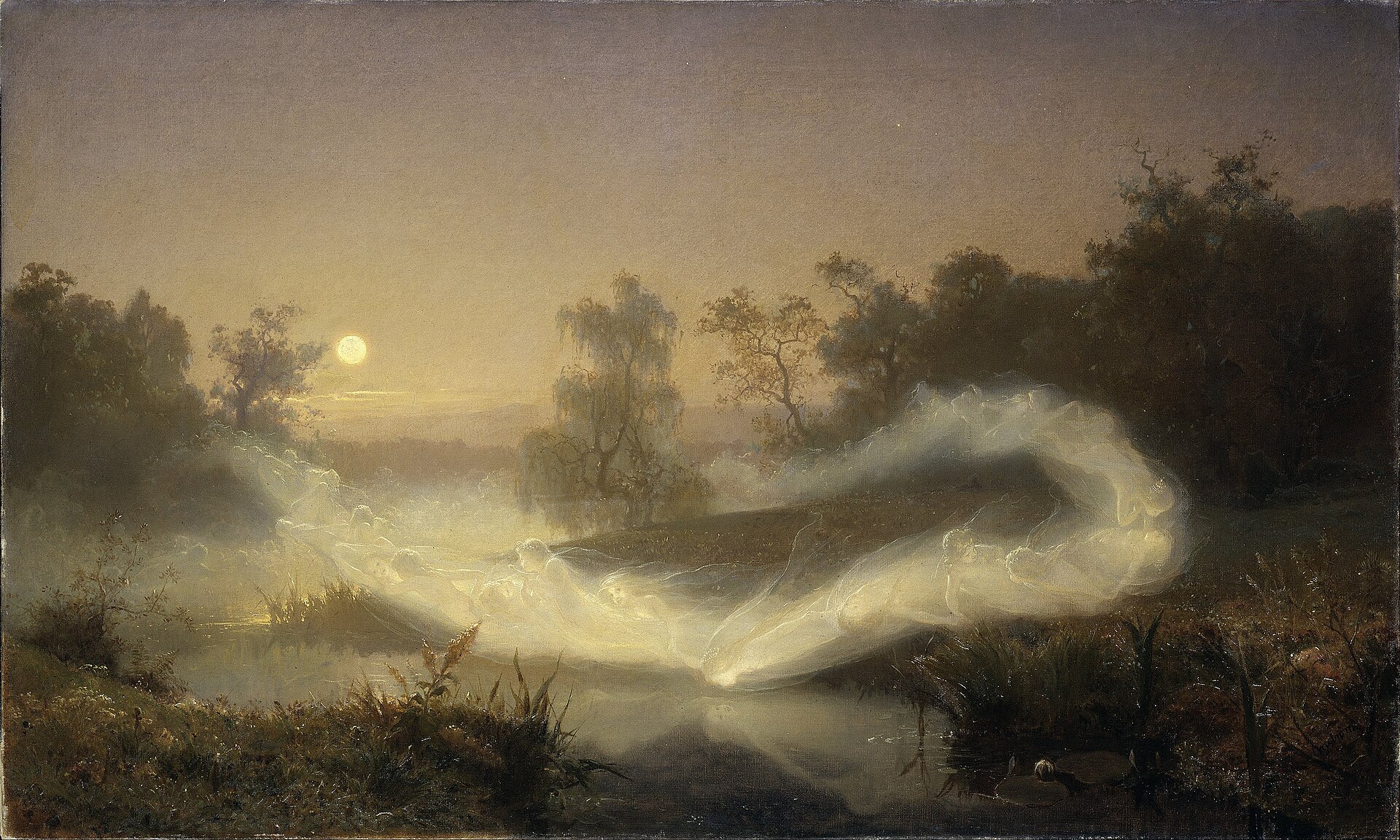
Dancing Fairies by August Malmström
Worldbound Fey
“Rare to meet one that’s as crafty as those Ether Fey. Never met one I couldn’t fell with the right tools either…”
- Galweir, Walljack and Fey-Hunting Expert
Worldbound Fey are still Fey in the traditional sense. They make deals, can be a dangerous quarry, and can overpower mortals with ease, both physically and in a game of wits. However, as a whole they are weaker than Etherbound Fey and cannot travel to the Ether of their own accord. Further still, some of them were created by Etherbound Fey themselves. Worldly Fey deals tend to be less about trickery and often are seen as more fair and mutually beneficial than those deals made with Etherbound Fey. As such, they also tend to have greater limitations on what can actually be bargained for.
Changeling
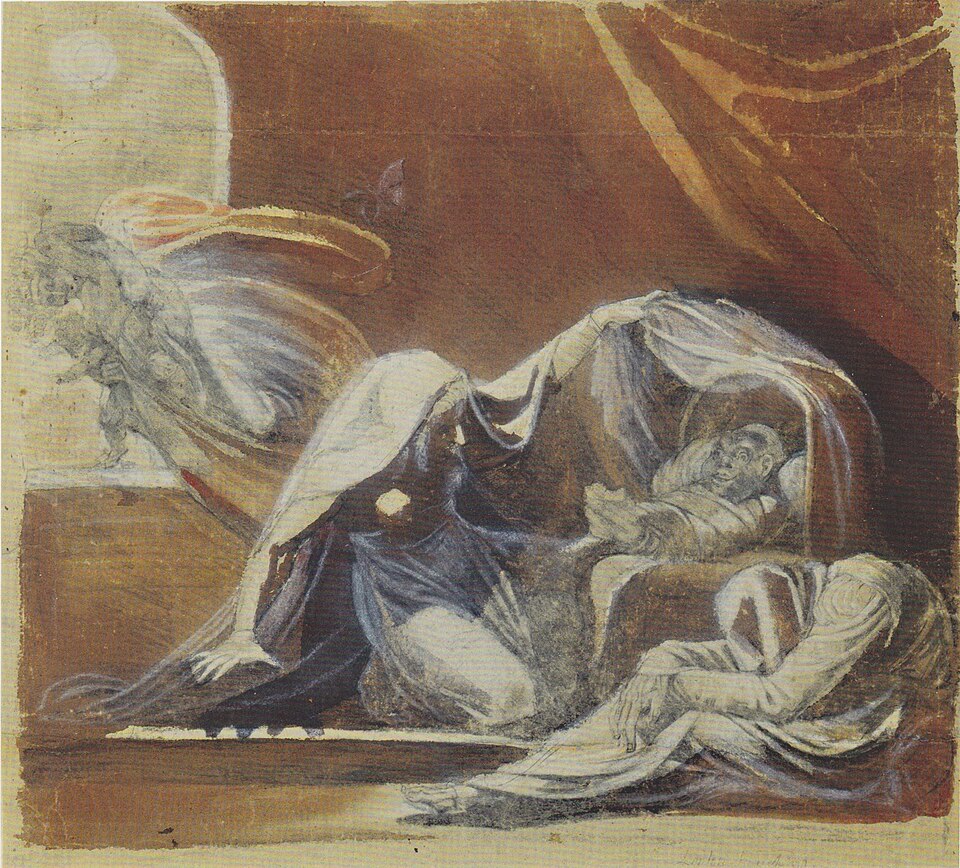
"It wasn’t him. It looked just like him, it talked just like him but - but I knew. It couldn’t be. Why… why do they do it? Don’t they get tired? Don’t they think it’s wrong? I’m not sure I’ll ever understand them. Just hope I never see one again.”
A tricky fey to spot, the changeling can shift their appearance to look like anyone they have seen. Near impossible to spot in a crowd, they frequently seek to steal isolated children or even whole families, causing them to disappear to who knows where. Faces sculpted like they were made of clay, a craft pinned down to a tee. One would think they sat for hours in front of a mirror to make themselves look as perfectly identical to their target counterpart as possible. Often malicious, the best test is to check how they speak, seeing if they truly state their name over just referring to a made up title. Beyond that? Be wary, and if one is known to be in the area, trust no one.
Elemental Fey
Though categorizing fey outside of Courts is difficult, some are relatively easy to group together. Elemental Fey are those which resemble or draw from the natural elements of the world: fire, ice, air, water, nature, and more.
Elemental Fey are notable for their relation to the Fey-Touched: most often, these are the creatures who either played tricks on a child in the womb, or, in rare cases, paired with the people of the continent to give birth to the unique race.
Dryads
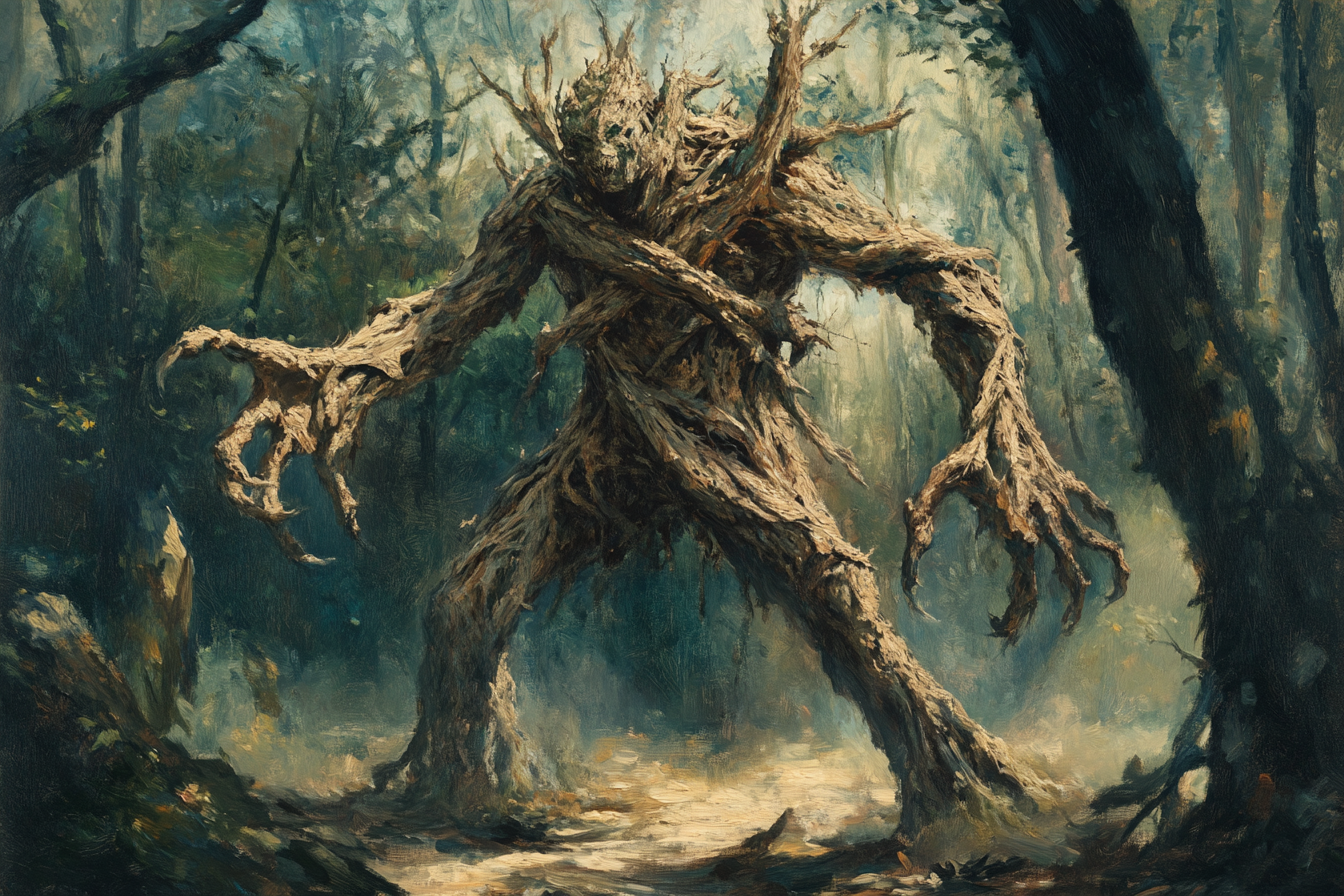
"Dryads are the epitome of nature come to life."
- Guide to the Fey, Elemental Fey
Embodiments of dedication itself, these fey formed of the woodlands around them are guardians of nature and of other fey. At first appearing like warped trees, these creatures rarely speak, and instead focus on their task of protection. Formed of multiple layers of bark protecting the fey’s form, dryads are incredibly tough and hard-hitting creatures, though their slow pace and habit of staying near their kin or other fey makes running into one unlikely.
Garrasi
To say these fey are aggressive is an understatement, often found bringing storms and thunderous cracks of lightning wherever they go. Garassi live near crags, cliffs, and rugged terrain upon mountains. They build nests to come and preen in, but seemingly not much else, though all accounts of seeing such a nest close up are lost as the witness usually perishes before recording their sighting. Their wings when fully spread possess the length of a fully grown stallion, able to create harsh winds as they fly about. A curious thing about this fey is that they are frequently found fighting another type of fey known as the virago, for some reason or another.
Hetrite
A peculiar long lived fey of the elemental variety, these stone behemoths are particularly sedentary, living upwards of centuries just to seek to grow their hoard of materials around a megalith. These hoards can vary from crystals and precious metals, to a type of rock or even shapes eroded over time that look interesting. They almost never leave their hoard, sticking with it in their cave or den. Should anyone stumble upon one, your best bet is to barter to add to its hoard for survival, as they are extremely protective of their collection and megalith. However, they are unable to speak, so it is best to keep an eye on their body language to see if the barter is going well.
Naiad
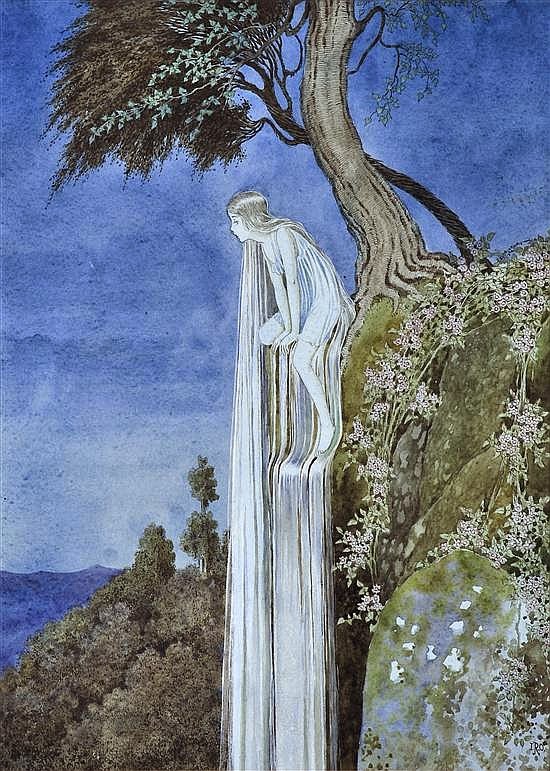


“He lost his leg to a shark - oh, don’t feel sorry for him. Decided to try to hunt down a Naiad, thought he’d bring home a trophy of a unique star-shell for his beloved. You can imagine how that went.”
- Guide to the Fey, Account of a Naiad Attack
Formed from water and decorated with moss and shells, naiads are fey of the sea, rivers, and ponds. When compared to other similar elemental fey, naiads are relatively timid and kind, and even on occasion aiding drowning souls in their waters. This is not to say that they are defenseless; sometimes hunted for their unique shells and medicinal mosses, naiads are able to call other creatures of the sea to their aid.
Nymphs
Beings of nature, these woodland fey often take the form of either wooden or plant-formed people. Traditionally depicted as plant-like women, nymphs can actually come in all forms and shapes that roughly resemble any of the races of the continents. Fiercely protective of their domain and not particularly trusting of mortal species, a visitor should beware; the enchanting beauty of nature can often be more violent than appearances suggest.
Viragos
Fierce of spirit, these mountainous fey are empowered with the contrasting elements of either fire or ice. Sharing the features and habits of their nymph cousins, the virago are far less willing to talk or warn off interlopers. Those who find themselves encountering these creatures- whether in lava pits or snow-covered summits- will have to pay the price of their transgression, either fighting or fleeing with singed or frost-bitten fingers.
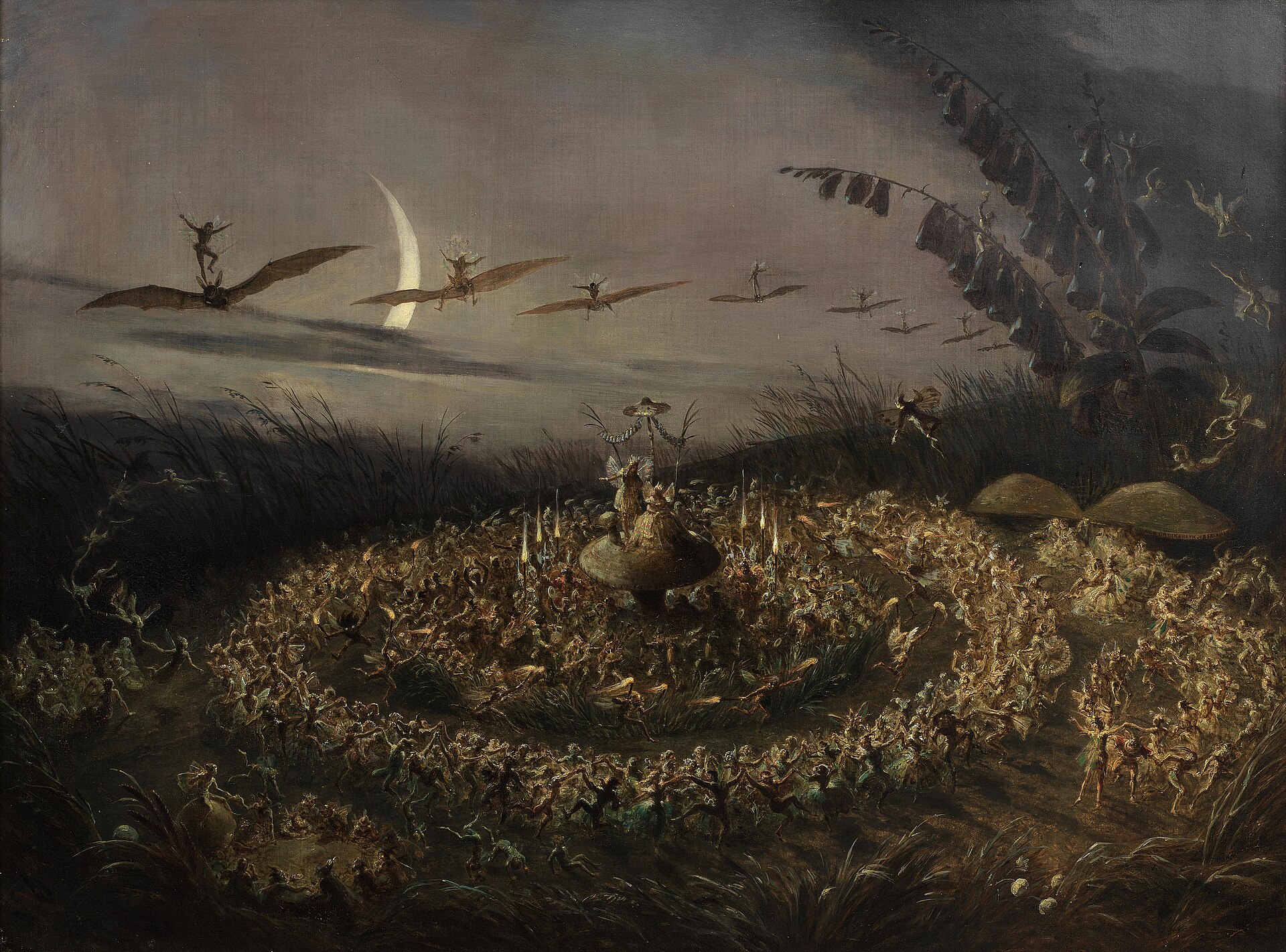
The Fairy Ring by George Cruikshank

Lesser Worldbound Fey
These are fey the most far removed from the grandiose and near-incomprehensible power of Etherbound and even of the Worldbound Fey. Lacking the motive to craft twisted deals and sometimes even limited in speech, they roam the earth and are more often encountered, often inspiring the wealth of stories of Fey encounters and mischief.
Grumpkins
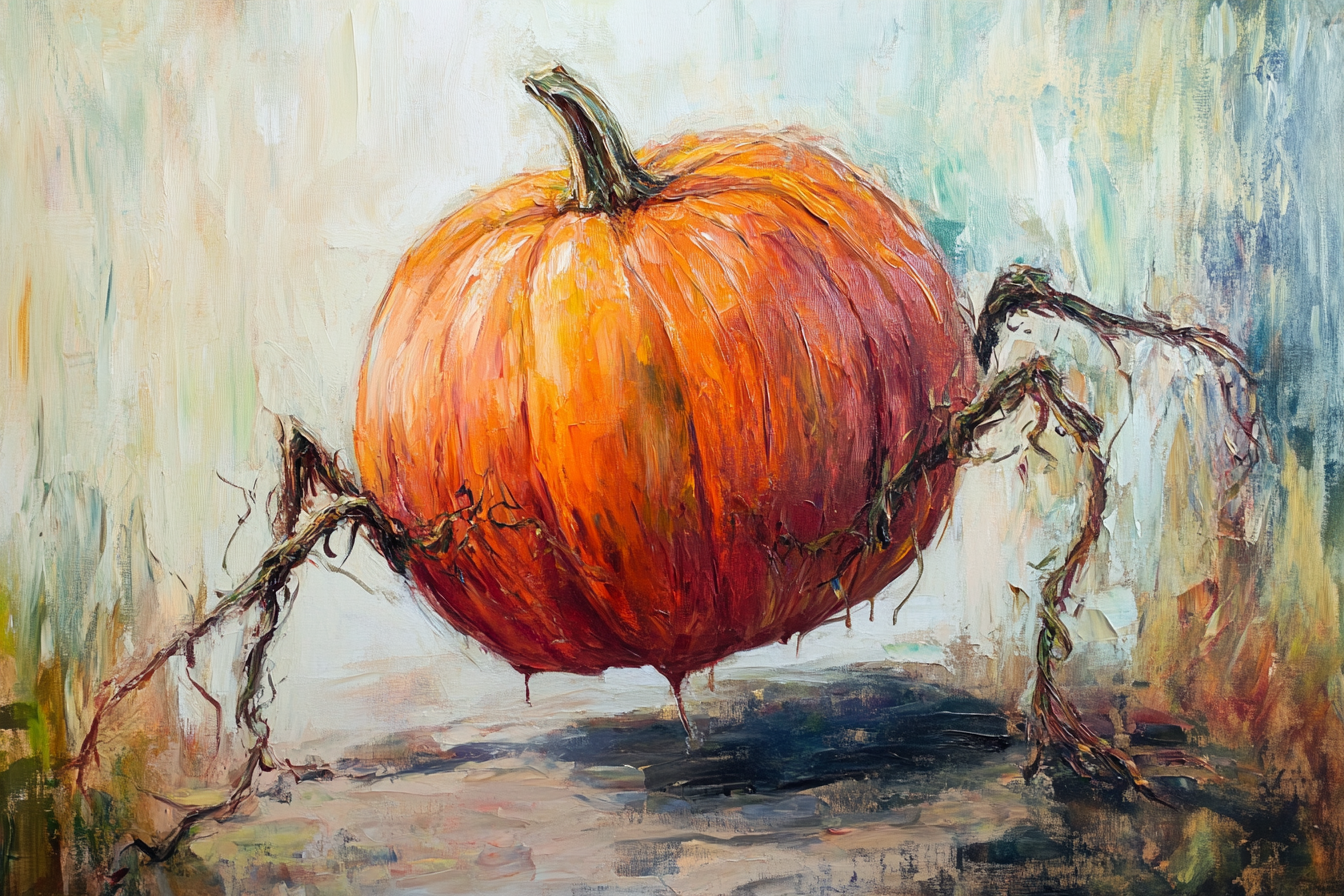
“The bane of many a Falstoner farmer, I was pleased as pumpkin pie when I got to see one in person, and then the subsequently squashed form of it. Touched by the lingering magic of fae mischief, these short little creatures can wreak havoc when undetected, spoiling produce and finding joy in the misery of others. One little miscreant misplaced my favorite pair of boots I left drying outside!”
Animated by fae magic, the grumpkin is considered a pestilence in most of the Faded Steppe. It is uncertain as to their true origins, but they are known to be a natural occurrence in areas of concentrated magic in the Steppe-lands. Originally a gourd or pumpkin, once animated their vines elongate into limbs and they seemingly come to life. It is unknown whether the grumpkin is sentient, or if it’s directed by the power of fey-magic alone. As they’re relatively harmless beyond their crop nuisances, it’s a favorite pastime of children to take newly formed grumpkins and paint faces on them in the fall, before setting them free to run amok. Some of the earliest nursery rhymes and fairy tales in the Reach include stories of the grumpkin, such as Grumplestiltskin, a grumpkin that tricked young children into spinning cursed straw. How wondrous!
Knuckers
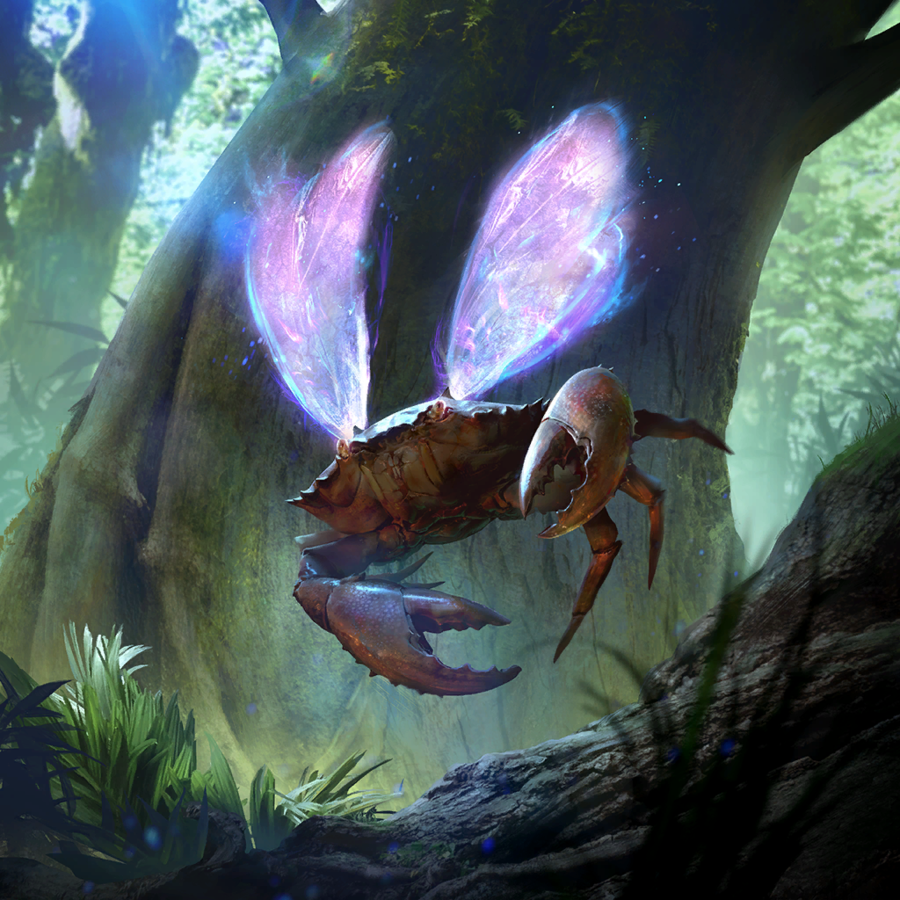
Who doesn’t love a knucker? These small fairy-like fey are similar to many different kinds of crustaceans, able to sprout wings and come in a variety of colors. Any fey worth their salt knows how to play a knucker in some fashion, as these small fey are used as instruments by their greater counterparts. The sounds can range from percussion to strings to woodwinds, all of which are delightful to hear at a fey gathering. While not worthy of death, fey will see anyone who kills a knucker in a worse light as it is highly taboo.
Motes
"There I was, just minding my business, when the light caught my eye. I was curious, so I followed. Up to a beautiful outcropping like none I had ever seen: the full moon that night inspired me to become a painter, in the end.”
- Guide to the Fey, Account of a Mote Encounter
A beacon of light, at first oft mistaken for a large firefly. These spheres of lights with an ethereal aura float on the breeze, seeking to guide those they encounter. Their guidance is not always helpful; oft at the whims of other fey, they can guide travelers into tricks and traps just as often as they may lead them from danger. Either way, the sparkling lights of a mote bring a special life into the forests at night.
Muisi
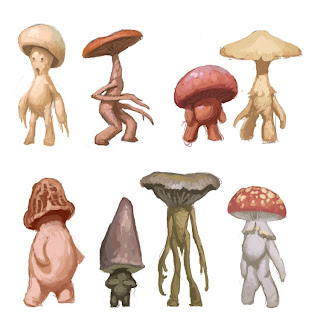
The muisi’s origins can be traced back to an association with the court of Low Drought. Unlike grumpkins that originate from the Fey and cause mischief in the world, they are known for their hospitality, helping those lost deep within the bowels of the earth to survive. They will tend to the wounds of the lost and provide them with food and water, but are otherwise incapable of properly communicating due to their limited intelligence.
While there are many different sub-species of muisi, they all stand somewhere below a meter tall. Each sub-species seems to With their limited intelligence, they may make and use stone-age tools and know how to find and harvest food, but are incapable of advancing much further. Since they lack any sensory organs or mouths, the muisi are only able to sense movement and communicate with one another through the expulsion of spores. These spore clouds are the main reason why, despite their amicable nature, other creatures are not able to live alongside the muisi.
For mortals, these spores lead to numerous symptoms when ingested: trouble breathing, bouts of brain-fog, and chiefly, a feeling of euphoria that convinces many to remain among the muisi. With each day that passes the effects become more and more prevalent. After about a week, non-muisi will asphyxiate and collapse. The more spores are ingested, however, the quicker death comes. From the corpse, then, spores emanate and newborn muisi begin to sprout - restarting the cycle.
DM Guide
As low-stakes, friendly creatures, the muisi should not normally be in combat with players unless agitated. Should they be encountered in combat, they have low HP (falling after being struck once or twice, and especially if hit with high damage, such as by a greatsword) and have a very minimal use of weaponry. Their stone-age weapons will not be effective enough to pierce armor or bypass grazing, and even if they are accurate, they will not do much damage. After an encounter with muisi, characters may ingest enough spores to feel a brief “emptiness” when they reach aboveground - this would represent the encroaching desire to stay that those who are exposed to spores for longer have.
Sootballs
Creatures of labour, sootballs are named after their appearance; spiked, small black balls with equally-small arms and legs. Some speculate these balls are really just bits of coal dust animated by the fey; either way, they exist to fulfill a purpose, such as carrying an object, pruning dead leaves, or splashing saplings with water. These creatures are rarely seen alone, almost always serving as helpers to other fey.
Sprites
Contributions from Chiarophinx, Avajain, Catmerization, Moony, Nerdocalypse, and Dinomono